KATHMANDU: Nearly six months into Prime Minister Balen Shah’s tenure, a pattern has become hard to ignore in Kathmandu’s diplomatic circles. India, China and the United States, three nations that rarely agree on anything involving Nepal, each have a running list of complaints against the same government. Some of these grievances overlap. Others contradict each other entirely, which tells its own story about a foreign policy operating without a clear compass. Shah rose to power on the promise of doing things differently, of moving away from the transactional, personality driven diplomacy that defined his predecessors. Nearly six months on, the question being asked in foreign ministries from New Delhi to Washington is whether doing things differently has simply meant doing them worse.
Why India feels sidelined
New Delhi’s frustration with Kathmandu did not arrive overnight, and it did not arrive over any single incident. It has built up in layers, each one reinforcing the last until the relationship now carries an unusual weight of mutual suspicion for two countries bound by an open border and a treaty that predates most of the region’s current political map.
The most visible flashpoint has been trade. In April, the Balen government began strictly enforcing a long dormant customs rule requiring duty on any goods brought in from India valued above Rs 100, a threshold so low that it effectively criminalised decades of routine cross border shopping. Families who crossed into Bihar or Uttar Pradesh for lentils, sugar, medicine or fertiliser suddenly found themselves paying duty at checkpoints that had previously waved such purchases through without a second look. Border markets on the Indian side reported turnover falling by more than half within weeks. Nepali officials framed the move as economic sovereignty and a long overdue fix to revenue leakage. Indian traders and ordinary border residents experienced it as an unannounced blockade dressed up in bureaucratic language. The government in Kathmandu never quite explained why this enforcement drive began precisely when it did, or why it targeted the pettiest of daily transactions rather than the larger smuggling networks that actually cost the exchequer serious money.
Indian officials also point to what they describe as a shift in who actually has the prime minister’s ear. Traditional bureaucratic channels that have long managed the India file, staffed by career diplomats and civil servants familiar with the relationship’s sensitivities, appear to have less direct access than before.
Layered on top of that is a perception, widely shared among Indian officials and commentators, that the Prime Minister’s Office in Kathmandu has become difficult to read and even harder to access. Shah initially declined the customary one-on-one courtesy calls that Indian ambassadors have held with every Nepali prime minister for decades, choosing instead to meet all seventeen resident envoys together in a single group session in April. The intention, by his own account, was to signal that Nepal treats all its partners as equals rather than granting India the informal first call it has traditionally enjoyed. The effect, from New Delhi’s vantage point, was closer to a snub. Friction mounted further in May when a planned visit by the Indian Foreign Secretary was postponed after Prime Minister Shah indicated he did not wish to see him. It was not until August, nearly five months into his term, that Shah finally sat down separately with the Indian ambassador. By then, the damage to the relationship’s normal rhythm had already been done.

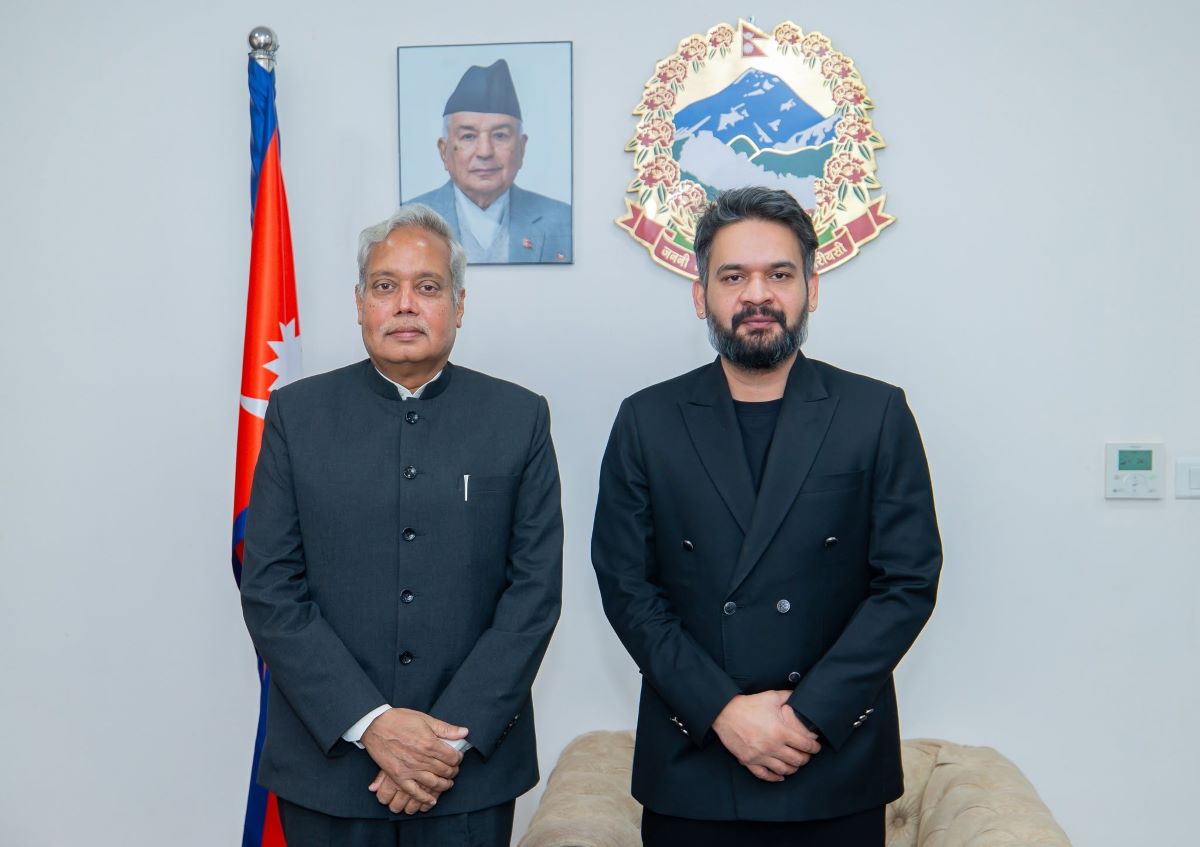
Indian Ambassador to Nepal Naveen Srivastava (left) with PM Balen. Photo courtesy: PMO
Indian officials also point to what they describe as a shift in who actually has the prime minister’s ear. Traditional bureaucratic channels that have long managed the India file, staffed by career diplomats and civil servants familiar with the relationship’s sensitivities, appear to have less direct access than before. In their place sit newer figures from Shah’s own circle whose approach to India remains a matter of guesswork rather than established pattern. That uncertainty over who actually speaks for Kathmandu on any given issue makes it harder for New Delhi to resolve problems through the usual quiet channels, and easier for small irritants to calcify into larger disputes.
There is also India’s continuing discomfort over incidents targeting traders of Indian origin, particularly the Marwari business community that has operated in Nepal’s cities for generations. Sporadic raids and enforcement actions against these business owners, often carried out with more visible force than similar actions against others, have fed a narrative in parts of the Indian press that Kathmandu is applying its new assertiveness selectively. Whether or not that perception is entirely fair, it has taken root, and perception in a relationship this sensitive often matters as much as fact.
Why Beijing feels shut out
China’s complaints run along a different track, but they share a common thread with India’s. Both capitals sense that access to the prime minister has narrowed, and both are uncertain about who around Shah actually shapes decisions that affect them.
Beijing’s specific concerns centre heavily on Tibet. Chinese officials have long treated the activities of Tibetan exile communities in Nepal as a first order security concern, and they expect Kathmandu to actively monitor and restrict any organising by those communities as part of the price of good relations. There is a belief in Beijing that the current government, distracted by domestic priorities and less experienced in managing this particular sensitivity, has not kept up the level of vigilance that previous administrations maintained. Reports that the Prime Minister’s Office approved and then abruptly withdrew permission for a Tibet related program have added to this sense that Kathmandu’s positions on the issue lack consistency, which from Beijing’s perspective is almost as troubling as an unfavourable position taken with conviction.

Prime Minister Balendra Shah met Chinese Ambassador Zhang Maoming on August 10. File photo/PMO
Ambassador-level access has been another sore point, even as Kathmandu attempted a sudden calibration. China’s envoy, much like his Indian counterpart, was initially kept at arm’s length for months, restricted to the same collective group session arranged for all resident diplomats in April. For a government in Beijing that places enormous value on face and the traditional protocol of bilateral relations, the absence of a dedicated meeting read as a deliberate statement on priorities. When Shah finally granted a separate audience to the Chinese ambassador in August, he arranged it for the exact same day he sat down with the Indian envoy. Rather than projecting balanced neutrality, the calculated double-booking came across as performative symmetry, leaving both Beijing and New Delhi equally unimpressed by a prime minister who seems to view high diplomacy as a game of optical tit-for-tat.
There is also a strand of suspicion in Beijing, harder to verify but persistent in background conversations, that the current Kathmandu government leans more naturally toward Washington’s orbit than its predecessors did, given the political roots of several figures close to Shah that received Western support over the years. Whether this suspicion reflects reality or simply Chinese anxiety about losing ground in a country it has invested in heavily is a separate question. What matters diplomatically is that the suspicion exists and colours how Beijing reads even neutral gestures from Kathmandu.
None of this amounts to a rupture. China’s investments in Nepal, its interest in the Belt and Road connectivity projects that have moved slowly for years regardless of who sits in the prime minister’s chair, and the basic geographic reality that Nepal will always share a long Himalayan frontier with China ensure that the relationship carries its own institutional momentum. But momentum is not the same as warmth, and several Chinese officials who have dealt with Kathmandu across multiple governments describe the current period as unusually opaque.
Why Washington is unimpressed
The United States arrived at 2026 with genuine optimism about Nepal. A young, reform minded prime minister with a background outside the traditional party establishment seemed like exactly the kind of partner Washington had hoped for after years of frustration with Nepal’s older political guard. That optimism has curdled somewhat over the following months, for reasons that are partly about substance and partly about style.
The most concrete irritant in Nepal–US relations has been the long-running saga over military assistance. Washington offered six Bell helicopters to the Nepali Army as part of a USD 100 million Foreign Military Financing package first floated back in 2024. Rather than swiftly resolving the inherited file upon taking office on March 27, Shah’s administration allowed the paralysis to drag on for another three months. Kathmandu spent that crucial window fruitlessly negotiating for heavy-lift helicopters and aerial cranes instead of the rotary-wing craft on offer, citing disaster relief needs. American officials, who had already secured congressional approval for the original package, found themselves repeatedly pressed to alter a gift tailored to Nepal’s prior requests. By the time the government finally endorsed the original offer in June 2026, it had burned several months of diplomatic goodwill only to end up exactly where the process began. For a prime minister who campaigned on decisive leadership and administrative speed, failing to resolve a straightforward file for nearly half his early tenure read to Washington not as strategic deliberation, but as unforced executive delay.
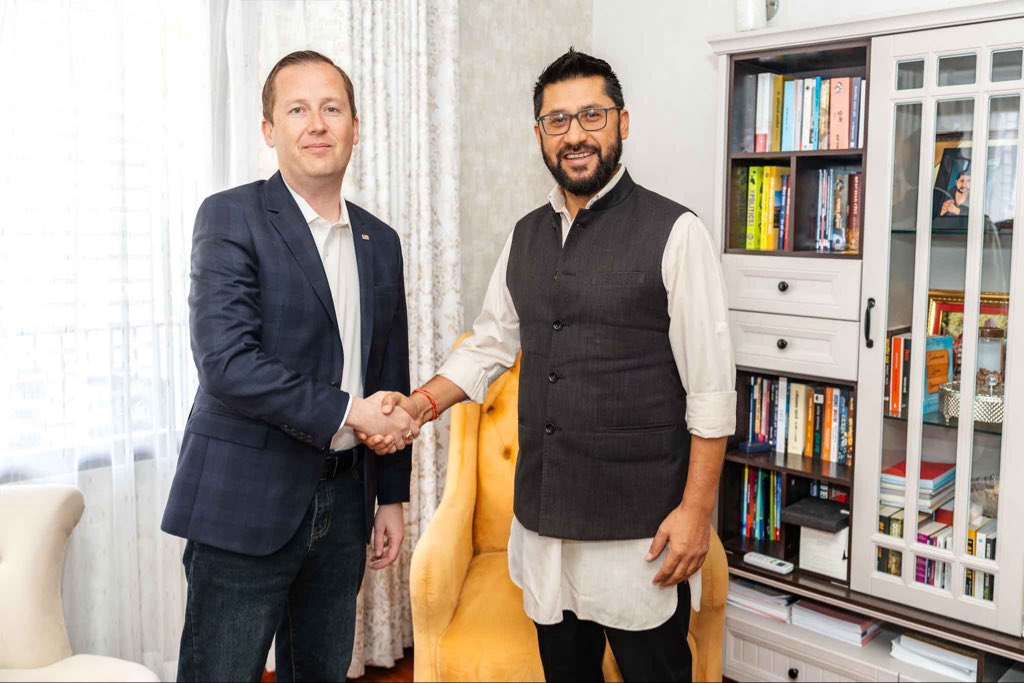
US President Donald Trump’s Special Envoy for South and Central Asia, Sergio Gor, with Rastriya Swatantra Party Chair Rabi Lamichhane. File photo
Access has again been a recurring theme. Prime Minister Shah has not met with senior American officials during their visits to the region, including figures involved in broader South Asia policy, have registered in Washington as part of a pattern rather than an isolated scheduling issue. The same reluctance toward individual courtesy meetings that frustrated India and China applied just as much to the United States, and American diplomats, who tend to read direct access as a proxy for the seriousness of a bilateral relationship, have drawn conclusions accordingly.
There is also lingering irritation in Washington over what officials there see as inconsistent signals on Tibet related programming and civil society support, areas where American funding has historically flowed with an expectation of at least tacit space to operate. Approvals granted and then reversed, or programs that stall in ministerial review without clear explanation, create the impression of a government uncertain of its own red lines, which is arguably worse from Washington’s standpoint than a government that simply says no from the outset.
American frustration extends beyond formal diplomacy into the commercial sphere. US technology companies exploring entry into the Nepali market, including satellite internet providers who have expressed interest in expanding service to Nepal’s remote and mountainous regions, have run into a regulatory environment that has been slow to adapt or clarify the rules under which such ventures could operate. Washington views this kind of friction as self defeating for a government that talks often about attracting foreign investment and diversifying its international partnerships.
What is unusual this time is that all three of Nepal’s most consequential relationships are showing simultaneous strain, and for overlapping reasons that trace back to the same governing instincts rather than three separate policy failures.
Finally, and perhaps most damagingly given the scale of the disaster, the American response to Nepal’s handling of the Bhote Koshi floods in late August has been one of quiet disappointment rather than outright criticism. When the flash floods killed more than a thousand people and left thousands more missing, including a large number of foreign nationals, Washington was among several governments that offered search and rescue teams. Kathmandu declined those offers, choosing instead to rely on its own security forces while accepting financial contributions through official channels. Nepali officials justified the decision by pointing to the coordination difficulties experienced during the 2015 earthquake response, when a flood of international personnel and equipment created its own logistical bottlenecks. That reasoning has some merit, and disaster management specialists genuinely debate the tradeoffs involved in large scale international deployments. But the optics, hundreds of foreign citizens unaccounted for while the government turned away offers of specialised rescue capacity, did not play well internationally, least of all with the countries whose nationals were among the missing.
A government pulled in three directions by its own instincts
What makes Nepal’s current predicament unusual is not that one relationship has soured while others hold steady. That would be a familiar story in South Asian diplomacy, where balancing India against China has always been the central preoccupation of any Nepali government. What is unusual this time is that all three of Nepal’s most consequential relationships are showing simultaneous strain, and for overlapping reasons that trace back to the same governing instincts rather than three separate policy failures.
Shah came into office with a genuine and understandable critique of how Nepali diplomacy has traditionally worked. He was right that foreign policy in Kathmandu had become excessively personalised, run through informal channels and individual relationships rather than durable institutions. He was right that the Ministry of Foreign Affairs had become politicised in ways that hollowed out its professional capacity. His instinct to treat major powers with a more even hand, rather than granting India the reflexive first call it has enjoyed for generations, reflects a legitimate strategic argument about Nepal’s sovereignty and its room to manoeuvre between competing giants.

The problem is that Shah’s government has applied this critique unevenly and, at times, without adequate preparation for the consequences. Refusing routine bilateral courtesy meetings with all three major powers simultaneously does not read as principled neutrality to the countries on the receiving end. It reads as inaccessibility, and inaccessibility breeds suspicion faster than almost anything else in diplomacy, because it leaves each capital to fill in the blanks about Nepal’s intentions using whatever information happens to be available, often unflattering and rarely accurate.
The government’s decision to prioritise domestic governance ahead of foreign engagement, a defensible choice on its own terms given the scale of reforms Shah promised at home, left ambassadorial posts vacant for months and gave career diplomats less political top cover to manage day to day friction with foreign missions. Analysts who track Nepal’s foreign ministry have noted that this vacuum coincided precisely with the period when trade tensions with India were escalating and when American patience over the helicopter negotiations was wearing thin. A foreign policy apparatus running short staffed and under resourced compounds problems that might otherwise be managed quietly through professional channels before they reach the level of ambassadors and prime ministers.
There is also a deeper structural issue at play, one that predates Shah but that his government has not yet resolved. Nepal’s constitutional and institutional arrangements leave considerable ambiguity about who ultimately controls foreign policy, particularly in a government where the prime minister’s own advisors, some without formal diplomatic training, appear to exercise real influence alongside the Ministry of Foreign Affairs and Foreign Minister Shisir Khanal. When foreign capitals cannot easily identify a single, consistent point of contact whose word reliably reflects government policy, every interaction becomes a guessing game, and guessing games erode trust over time even when no single decision was actively hostile.
Signs of course correction, and the test still ahead
To Shah’s credit, there is evidence that the government has begun recalibrating, even if it has not fully articulated the shift in public. The August meetings with the Indian and Chinese ambassadors, held separately after months of insisting on group only formats, suggest an acknowledgment that the earlier approach was not working as intended. The eventual acceptance of the American Bell helicopters, after months of counter proposals that went nowhere, suggests a similar recognition that some fights are not worth prolonging. Foreign Minister Khanal has spoken publicly about the need for institutional reform in Nepal’s diplomatic corps and a shift toward economic diplomacy, an emphasis that, if followed through with actual ambassadorial appointments and resourcing, could address some of the structural gaps that have made the last several months so turbulent.
There is a certain irony in Nepal simultaneously asking all three of these powers for climate assistance while each of them privately nurses a list of grievances about how Kathmandu has treated them over the preceding months.
The most immediate test of whether these adjustments amount to genuine course correction comes later this month, when Shah leads Nepal’s delegation to the eighty first session of the United Nations General Assembly in New York, his first foreign trip since taking office in March. The visit was originally planned as a modest affair led by Foreign Minister Khanal. It was elevated to a prime ministerial trip only after the scale of the Bhote Koshi disaster made a personal appeal from Nepal’s head of government politically and diplomatically necessary. Shah is expected to use his address to press wealthier nations for climate compensation, arguing that countries responsible for the bulk of historical emissions bear some responsibility for the glacial and flood related disasters increasingly battering the Himalayan region. Nepal has pointedly named India, China and the United States among the countries it wants to see contribute to recovery costs that officials estimate could run as high as five billion dollars.
There is a certain irony in Nepal simultaneously asking all three of these powers for climate assistance while each of them privately nurses a list of grievances about how Kathmandu has treated them over the preceding months. Whether Shah can use the UN platform to reset the tone of these relationships, presenting Nepal’s case with the kind of clarity and consistency that has been missing domestically, may matter as much for the country’s diplomatic standing as the substance of what he actually asks for.
A short, single city visit built around one speech offers limited room for the kind of relationship repair that months of drift have made necessary, but it does offer Shah a chance to demonstrate, in front of the very audiences whose patience he has tested, that his government is capable of engaging seriously when the stakes are high enough.
What happens after New York will likely matter more than the speech itself. Filling long vacant ambassadorial posts with credible, professionally qualified appointees, restoring the routine bilateral access that all three major powers have been requesting since the spring, and giving the Ministry of Foreign Affairs the political backing to manage these relationships without every decision routing through an inner circle of advisors would go a long way toward repairing the damage of the past several months. None of that requires Shah to abandon the core insight that brought him to office, that Nepal deserves a foreign policy less captive to personal relationships and factional interests than it has had in the past.
It simply requires recognising that access, consistency and institutional follow through are not relics of the old system to be discarded, but the basic mechanics through which any foreign policy, however principled its intentions, actually gets implemented.