
Education offices are seeking public input on whether students may use smartphones during lunch and breaks after a nationwide classroom ban.
With phones now banned during class, education offices across Korea face the next question: What about breaks and lunch?
Korea has banned the use of smart devices during class in elementary and high schools since the beginning of this year. Now, regional education offices are preparing public forums to hear from students and teachers on questions left unanswered by law, including how smartphones should be collected and stored and whether their use should be allowed during breaks and lunch.
The Ministry of Education has instructed metropolitan and provincial education offices to ensure that elementary, middle and high schools establish rules governing the use of smart devices by Aug. 31 and report on their progress, according to education officials on Tuesday.
Under an amendment to the Elementary and Secondary Education Act passed by the National Assembly in August of last year, smartphone use during classes has been prohibited since the beginning of this school year.
The amended law, however, does not stipulate how smartphones should be collected and stored or whether they may be used outside class hours. It left individual schools to determine those details through school rules and student conduct codes.
“Until now, detailed restrictions outside class hours have been left to individual schools, which resulted in wide variations,” an Education Ministry official said. “There is a need to bring some order to the rules in line with the implementation of the amended Elementary and Secondary Education Act.”
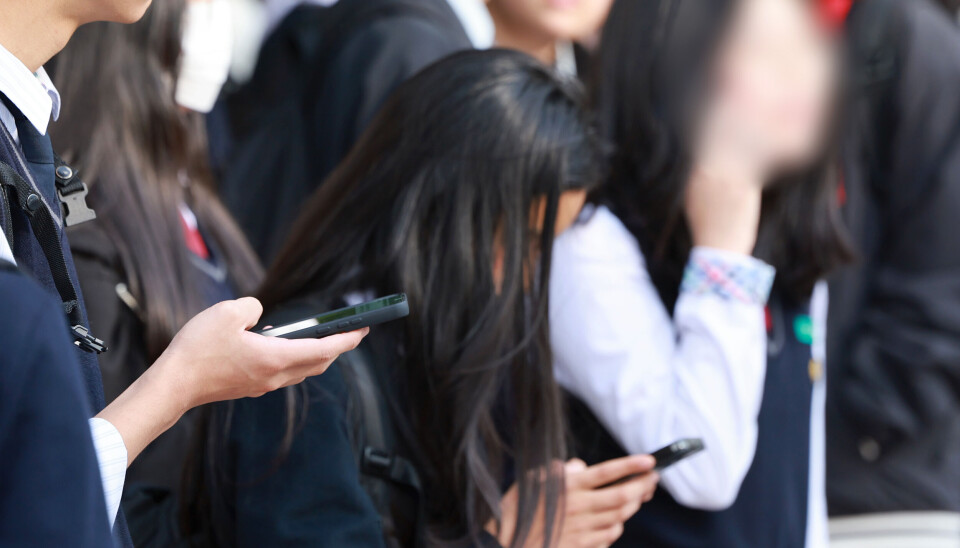
Education offices and schools differ somewhat in their approaches to smartphone use outside class hours.
The Gyeonggido Office of Education favors what amounts to a near-total ban. Ahn Min-seok, the Gyeonggi superintendent of education, had pushed a “smartphone-free” campaign before taking office. After his election, he called for tighter restrictions.
“The principle of self-management outside class hours has made it difficult for schools to restrict students from carrying mobile phones,” Ahn said. “Phone use outside class hours should also be regulated by law.”
The Gyeonggi education office plans to designate 300 “phone-free schools” this year, where students will refrain from using smartphones during breaks and lunch. It will hold a forum under the theme “Phones Off, Thinking On” (translated) on Aug. 24 to hear further insights from students and their parents, teachers and experts.
Seoul, however, is taking a somewhat different approach from Gyeonggi.
“Rather than approaching the issue through a blanket ban, the forum is intended to start a conversation among members of the school community,” a Seoul education office official said.
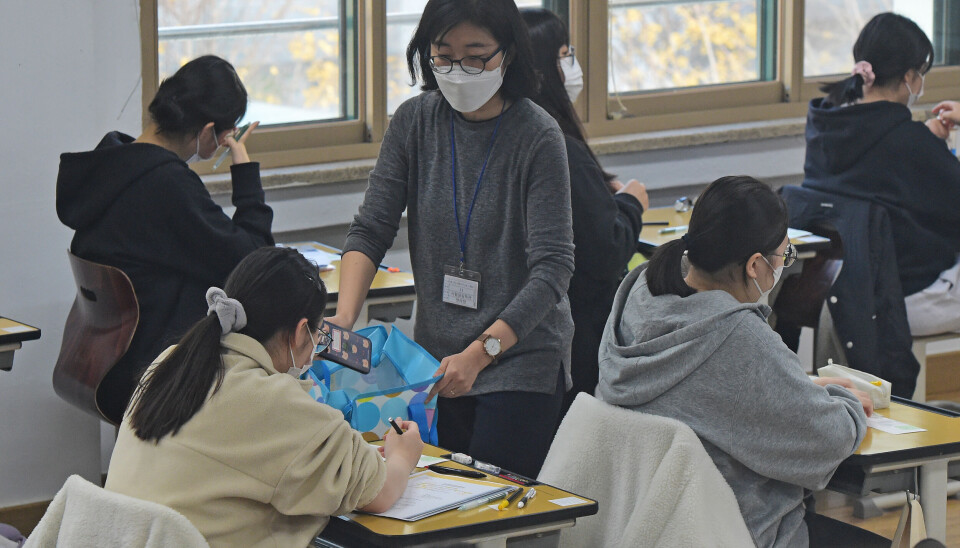
The Seoul Metropolitan Office of Education will also hold a forum Thursday to gather views on the restriction of smart devices. The discussion is expected to explore options ranging from collecting all students’ phones to allowing schools to set their own rules through consensus.
Concern over children’s excessive social media use has led many parents to call for students to hand in their phones upon arrival at school.
“On weekends and during school breaks, my child can spend three or four hours or more a day on a smartphone, and that worries me,” said Park, a working parent in their 40s from Seongdong District, eastern Seoul. “At the very least, I’d like to see smartphones banned entirely at school.”
Among teachers, the prevailing view is that education authorities should provide uniform guidelines to ease the burden on schools and teachers tasked with regulating smartphone use.
“If neighboring schools have different rules on mobile phones, it could create confusion and prompt complaints from students and parents,” said Jang Seung-hyuk, a spokesperson for the Korean Federation of Teachers’ Associations. “The Education Ministry should provide a standard set of school rules and do more to shield schools from the disputes that could follow.”
Some education advocacy and youth rights groups, however, argue that voluntary agreements involving students are preferable to sweeping, uniform restrictions imposed by education authorities or schools.
“Banning mobile phone use outside class hours through compulsory measures without first seeking students’ views excessively infringes on their constitutional rights, including freedom of communication, privacy and the right to pursue happiness,” said Gong Hyeon, an activist with the “Youth-Citizens’ National Action for the Student Rights Act and Youth Rights” (translated).
BY KIM MIN-SANG [lee.soojung1@joongang.co.kr]
