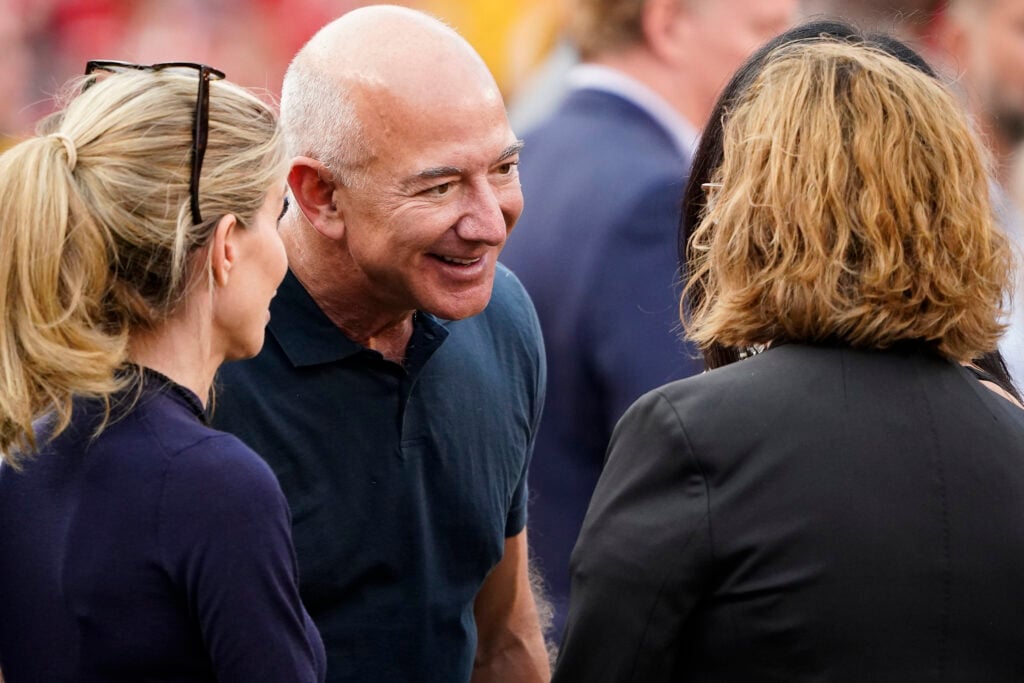
While other CEOs chased performance bonuses and stock grants, Amazon founder Jeff Bezos said he took a different route—and made it official.
At the 2024 New York Times DealBook Summit, Jeff Bezos said that for his entire tenure as the company’s CEO, he asked the company’s compensation committee to cap his salary at $80,000 a year.
“I asked the comp committee of the board not to give me any comp,” he said. “I just didn’t feel good about taking more.”
Don’t Miss:
He didn’t need a reason beyond that, but he gave one anyway. Bezos, who built Amazon from scratch and remains its largest shareholder, said his massive equity stake already aligned his incentives.
“How could I possibly need more incentive?” he said. “It’s already—the comp that I cared about was making Amazon more valuable.”
He wasn’t interested in the optics or public pressure. He said his decision to reject extra pay wasn’t about appearing modest—it was personal.
“I just would have felt icky about it,” Bezos said. “I’m actually very proud of that decision.”
That “icky” factor stuck with him. He only said it once in the transcript, but it hit hard—and summed up his entire pay philosophy.
Bezos used the moment to explain why founder compensation looks different from hired CEOs. As a major shareholder, he already had all the motivation he needed to build value—for himself and others.
Trending: It’s no wonder Jeff Bezos holds over $250 million in art — this alternative asset has outpaced the S&P 500 since 1995, delivering an average annual return of 11.4%. Here’s how everyday investors are getting started.
“Founders tend to own big chunks of the company,” he said at the summit. “They don’t really need more incentive. They just want to make the equity they have more valuable.”
He added that Amazon’s total market cap was about $2.3 trillion—and roughly $200 billion of that was his. “So I created $2.1 trillion for other people,” he said. “And that’s great.”
Bezos stepped down as Amazon CEO in 2021, but still remains involved as chairman. He described his current role as something like a parent whose kid just left for college—still close and invested but no longer making the day-to-day decisions.