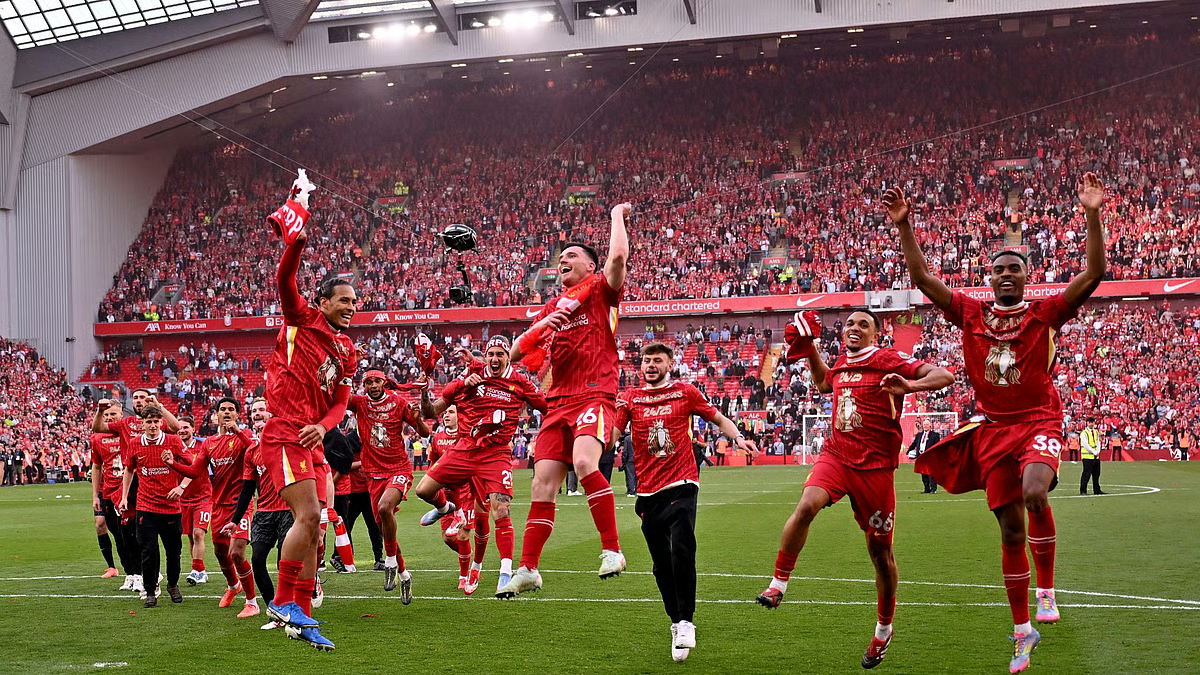
Liverpool could soon have a very different kind of billionaire club.
Amazon founder Jeff Bezos and Facebook co-founder Eduardo Saverin are part of an investor consortium led by Amit Bhatia, the son-in-law of steel magnate Lakshmi Mittal, that is reportedly close to acquiring roughly one-third of Liverpool Football Club, according to Sky Sports.
The deal could be announced by Fenway Sports Group (FSG), Liverpool’s controlling owner since 2010, as early as this week, although sources cautioned that the announcement could slip into next week.
If completed, the transaction would value Liverpool at around £4.4 billion ($6 billion), making it one of the biggest deals in sports and giving the club a remarkable new constellation of billionaire investors.
The consortium’s stake could also end up being larger than 30%, according to a source cited by Sky Sports.
For Bezos, whose estimated fortune stands at around $280 billion, the move would mark his first major association with football ownership. Saverin, estimated to be worth around $32 billion, had previously been linked to an unsuccessful consortium bid for Chelsea in 2022.
Bhatia’s group is therefore not simply bringing money into Liverpool. It is bringing together three exceptionally wealthy investors around one of football’s biggest global brands.
FSG acquired Liverpool in 2010 for around £300 million, when the club was struggling financially. Since then, the club has undergone a dramatic commercial and sporting transformation.
The last significant change in Liverpool’s ownership structure came in 2023, when Dynasty Equity bought a minority stake, valuing the club at more than £3.3 billion.
FSG has previously confirmed that a consortium led, managed and represented by Bhatia had expressed interest in making a strategic minority investment in the club, but has declined to comment on the latest timing.
The reported transaction does not amount to a takeover. FSG would remain in control.
But the arrival of Bezos, Saverin and Bhatia would make Liverpool one of the most intriguing ownership stories in global sport, and underline something football has increasingly become: not just a game, but a very serious billionaire asset.