TOKYO – Japan needs its own grand view and strategy based upon a broad and long-term perspective, particularly at a time when the world faces profound strategic reorientation. Prewar Japan’s disastrous failure was caused because it lacked such a grand view and strategy. We cannot repeat it.
Japan’s national strategy must be comprehensive in realizing Japan’s consensus national goal to achieve Japan’s peace and prosperity. And it must maximize, in totality, the various “national interests” that sometimes conflict with one another.
In this national strategy, our policy toward China occupies an important place. As President Trump’s visit to China in May showed, China can now be regarded as a superpower. This means, for Japan’s peace and prosperity, its relationship with China has gained further importance.
Having achieved such rapid development in such a short period of time under the unique mixture of one-party rule and market economy, China has always been in a process of trial and error and adjustments, searching for its own way in every area. This means it has to adjust all the time, and there exists room for Japan to exert influence. With these points in mind, the main thrust of our China policy should remain to build a peaceful, stable and cooperative relationship as we have done in the last half a century.
Following the Senkaku Islands dispute in 2012, Japan and China entered into a direct military face-off for the first time since the end of World War II. Until then, military issues had been discussed in the context of the Japan-U.S. security arrangements. Now military- and security-related issues have emerged as the fourth major pillar in the Japan-China relationship in addition to diplomacy, economy, and cultural and people-to-people exchanges.
Japan-China relations must be handled in the totality of these four pillars. No single pillar should be allowed to dominate the entire Japan-China relationship. Only by increasing the positives and reducing the negatives in each area can Japan maximize its overall “national interests.”
Each field has its own logic. In the military, it is correct for Japan to take the necessary measures in the face of China’s rapid and opaque military buildup. But Japan’s proper defense strategy should be exclusively defense-oriented. This should be the defense strategy of a peace-loving nation, and it must be firmly maintained.
At the same time, direct contacts between the Self-Defense Forces and the People’s Liberation Army are extremely important. There is much to be done including the establishment of reliable crisis management mechanisms to avoid contingencies, as well as confidence-building measures.
Good relations between states also contribute to enhancing national security, forming an indispensable part of it. In the 1980s, in the midst of the Cold War, the Japanese Diet debated whether the Soviet Union constituted a “threat” to Japan’s national security. It concluded that a “threat” should be the result of the other side’s “capability” multiplied by its “intent,” and that because the Soviet Union had “capability” but no “intent” to invade Japan, it did not constitute a “threat.”
This understanding of “threat” still underlies Japan’s three key security documents, including the National Security Strategy. Through diplomatic efforts, it is possible to influence the other side’s “intent” and reduce the “threat.”
Japan has no future without economic development. The prerequisite for such economic activity is peace and stability, and the mission of diplomacy is to realize peace and stability in East Asia and, by extension, the world. This mission cannot be accomplished unless Japan faces China squarely and comes up with a common agenda inclusive of a future security framework in East Asia. Building good relations with China will open the way to such a common agenda, and greatly help economic ties as well as cultural and people-to-people exchanges.
Dialogue between Japan and China has been suspended since Prime Minister Sanae Takaichi’s remarks last November in response to questions about a Taiwan contingency. Japan cannot afford to hesitate in resuming dialogue with China and should initiate the dialogue right now. I am sure good relations with Japan are also in China’s own best interests. It takes two to tango. Japan’s position on Taiwan is unchanged. I sincerely hope China will open its eyes again and see Japan as it truly is.

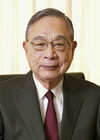
Yuji Miyamoto was born in 1946. He graduated from Kyoto University’s Faculty of Law in 1969 and joined the Foreign Ministry. He served in such posts as director of the Disarmament Division, director of the China Division, director-general of the Arms Control and Scientific Affairs Bureau, ambassador to Myanmar and ambassador in charge of Okinawa affairs, before serving as ambassador to China from 2006 to 2010. He is currently chairman of the Japan-China Friendship Center.