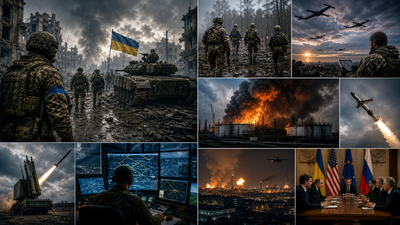
By mid-2026, Russia’s invasion of Ukraine has outlasted the Soviet Union’s entire Great Patriotic War against Nazi Germany. What was supposed to be a swift, decisive operation has stretched into a grinding conflict that has reshaped European security, exhausted two nations, and left the world watching an endgame with no clear resolution in sight.But 2026 is not simply a continuation of what came before. The weapons are different, the tactics have shifted, and both sides are fighting a meaningfully different war than they were twelve months ago.The most significant battlefield change in 2026 is one of pace. According to the Institute for the Study of War, Russian forces seized an average of just 2.9 square kilometers per day in the first four months of 2026 compared to 9.76 square kilometers per day in the same period of 2025. That is a two-thirds collapse in the rate of advance, driven by a combination of Ukrainian counterattacks, harder terrain and a series of specific 2026 developments that have disrupted Russian operations.
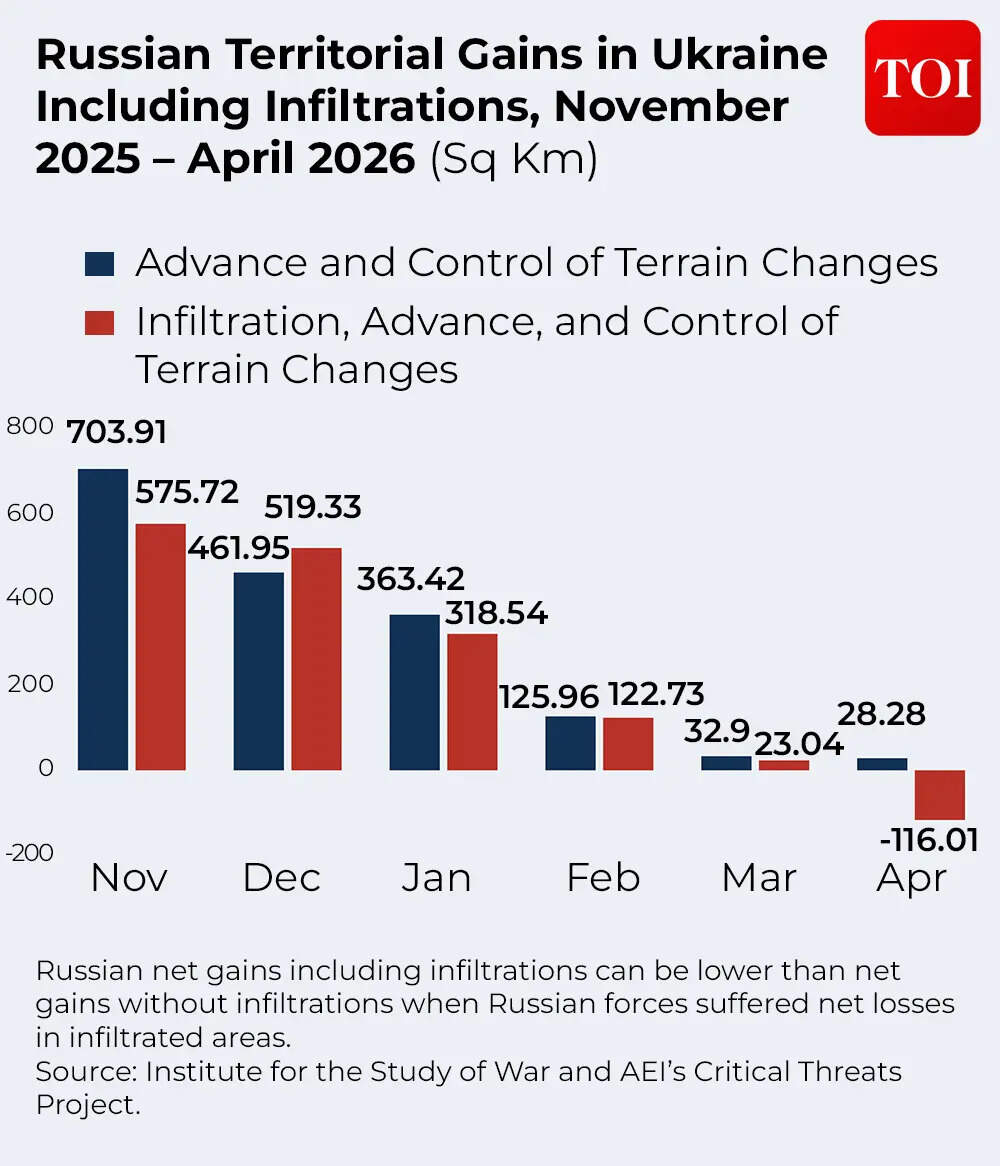
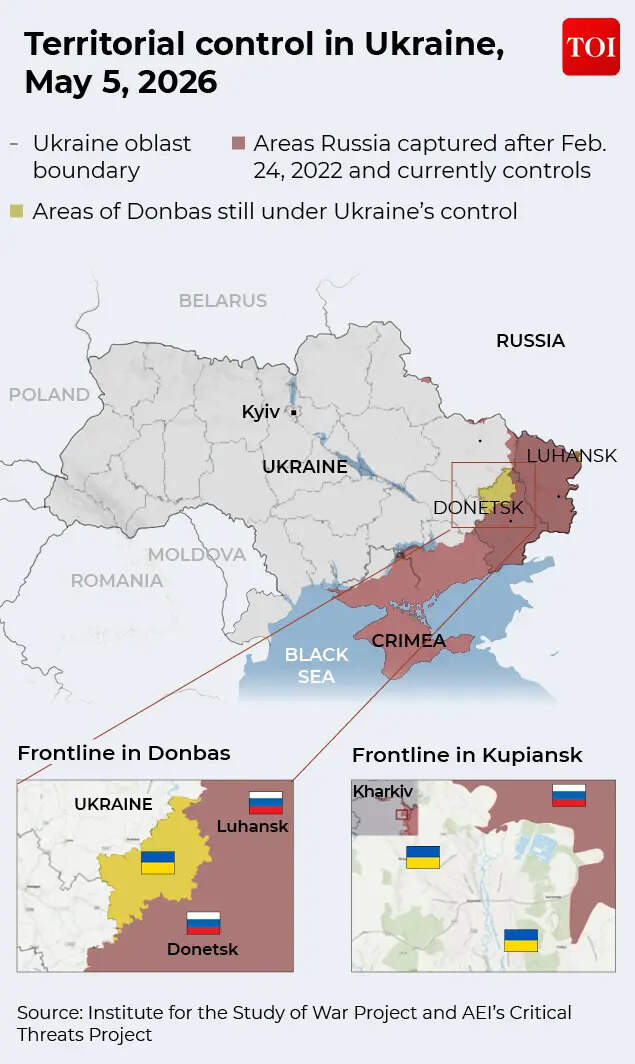
In February 2026, Ukraine blocked Russia’s use of Starlink terminals on the battlefield. Combined with the Kremlin’s own decision to throttle Telegram, which frontline Russian units had relied on heavily for coordination, this dealt a meaningful blow to Russian communications. The effects showed up almost immediately in slowed assault tempo.In April 2026, for the first time since Ukraine’s Kursk incursion in August 2024, Russian forces suffered a net territorial loss, ceding approximately 116 square kilometers in a single month. Ukrainian ground counterattacks, particularly in the Kostyantynivka-Druzhkivka area, were central to this reversal.None of this means Russia is losing. The Donbas fortress belt remains under severe pressure. Siversk has fallen. A renewed battle for Lyman is developing, with Russian units advancing through Yampil and Drobysheve. On the Zaporizhia front, Russian forces have taken Stepnohirsk and are pushing toward the Kinska River, with the city of Zaporizhia a plausible medium-term target. But these are the gains of a military grinding forward at great cost, not one building toward a decisive breakthrough.
Russia’s new tactical playbook: Infiltration and drones
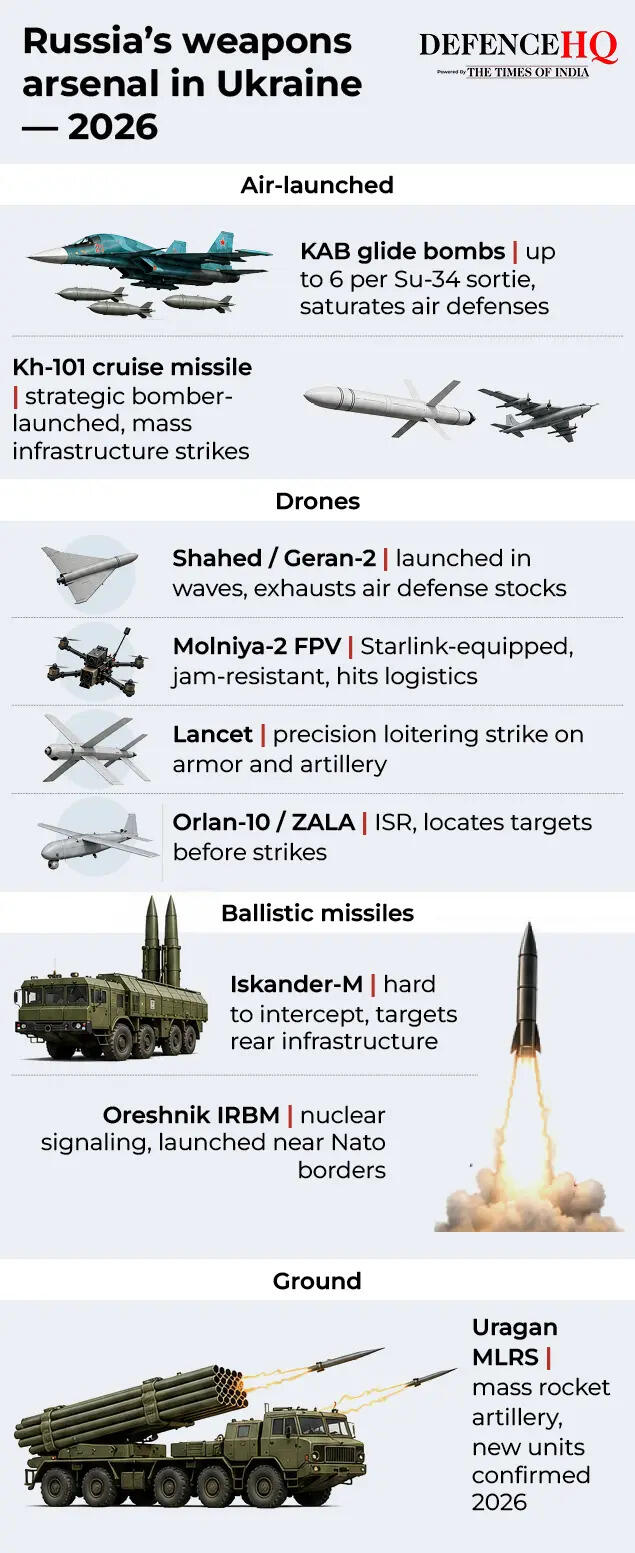
One of the clearest tactical shifts of the past year has been Russia’s systematic move away from mass mechanised assault toward small-unit infiltration. Dispersed teams of just two or three soldiers now probe Ukrainian forward positions looking for gaps, accumulating behind defensive lines to force withdrawals.As a detailed analysis by the European Policy and Information Centre noted, Ukrainian units are conducting 7,000 to 9,000 tactical drone strikes every day. It is extremely difficult to find and kill every small group of soldiers that bypasses a position. Russia has recognised this and adapted. These infiltration tactics, combined with sustained glide bomb strikes, create a dual pressure that frontline commanders find extremely difficult to manage.Russia’s glide bomb campaign has expanded dramatically. In 2024, Russian aircraft dropped roughly 40,000 glide bombs; by 2025, that number had risen to approximately 60,000. Russian forces have also begun fielding Molniya-2 fixed-wing drones equipped with Starlink terminals, dramatically improving their resistance to electronic warfare jamming. These drones have been effective in targeting Ukrainian logistics, troop rotations and medical evacuations- systematically cutting the link between rear and forward positions.
Ukraine strikes back: A new long-range war
The most dramatic change in 2026 may not be on the frontline at all. Ukraine has fundamentally shifted its strategy toward hitting Russia economically through deep, sustained long-range strikes and it is doing so increasingly with domestically produced weapons that require neither Western permission nor Western supply chains.Ukraine’s drone manufacturer Fire Point, a startup founded in 2022 by a film producer, IT developer, and architect, went from producing a few hundred units in 2023 to tens of thousands in 2024. Its FP-1 drone has become Ukraine’s primary long-range strike platform, and the company now employs around 3,700 people. Ukraine has also deployed its new Flamingo cruise missile — capable of carrying a 1,000-kilogram warhead — against Russian weapons plants and oil infrastructure as far as 1,200 kilometers from the Ukrainian border.In April 2026, Ukraine struck Russian oil infrastructure so severely, including repeated attacks on the Tuapse refinery on the Black Sea coast, that Russia issued formal warnings to European countries against funding Ukrainian drone production, citing “unpredictable consequences.” The governor of Russia’s Leningrad Oblast, some 600 kilometers from Ukraine, declared his region a “frontline” area after 243 Ukrainian drones were shot down over the province in just three months. Putin scaled back plans for the May 9 Red Square parade over concerns about Ukrainian drone strikes reaching Moscow itself- a striking indicator of how far the war has moved into Russian territory.In March 2026 alone, Ukraine intercepted 33,000 Russian UAVs, reflecting how dramatically both sides have scaled up drone operations compared to even a year ago. Ukraine’s mid-range strike campaign, targeting military warehouses, command posts, transport hubs and air defense systems between 20 and 300 kilometers behind the frontline, has been described by the Atlantic Council as the world’s first full-scale drone war.
Weapons that are changing the balance
Western military aid to Ukraine in 2026 is smaller in headline numbers than in previous years — but more sophisticated. Europe has increased new military aid by 67% according to the Kiel Institute, even as US support has declined sharply under the Trump administration.Key deliveries and developments in 2026 include IRIS-T SLM air defense batteries from Germany, with up to four systems expected over the course of the year; Raven and Gravehawk air defense systems from Britain; Britain’s newly developed Octopus interceptor drones, specifically designed to counter Shahed-type drones at a cost reportedly lower than the Shaheds themselves; and Czech combat aircraft deployed to shoot down Russian drones. ERAM cruise missiles, approved by the US Defense Security Cooperation Agency in late 2025 for $825 million, are expected to begin deliveries in 2026, with thousands of units funded by Denmark, the Netherlands, and Norway. At roughly $246,000 per unit, they offer Ukraine a cost-effective long-range strike option at scale.
Ukraine’s domestic defense industry has also matured significantly. The country is now producing artillery shells, drones, military vehicles, and cruise missiles in substantial quantities. The “Danish model” of financing- enabling foreign partners to invest directly in Ukrainian defense firms- has accelerated this growth. What was a critical dependency on Western supply chains in 2022 has evolved into a hybrid industrial base with domestic capacity.
Winter campaign
Russia’s air campaign against Ukrainian infrastructure in the winter of 2025–2026 was the most damaging of the war. Waves of hundreds of Shahed-type drones, combined with ballistic missiles, targeted the energy grid of Kyiv, Kharkiv, Odessa, Dnipropetrovsk, Sumy, and Mykolaiv throughout the coldest winter Ukraine has seen in years. Frozen pipes, extended blackouts, and heating failures affected millions of people. Nearly 600,000 residents evacuated Kyiv in January and protests broke out in Kyiv and Odessa.Russia’s tactic, saturation of air defenses with massive drone waves to allow ballistic missiles through, has forced Ukraine into a difficult resource calculus. Every Patriot interceptor used against a cheap Shahed is one fewer available for the harder-to-intercept ballistic threats.But Ukraine’s responses are evolving: the Octopus interceptor drone program is a direct attempt to solve this equation by countering cheap drones with cheap drones rather than expensive missiles.
Diplomacy: Active but frozen
Two diplomatic tracks ran simultaneously in early 2026 with little progress on the fundamental questions.The European track produced real commitments. France, Britain, and Ukraine signed a declaration in January committing Paris and London to deploy forces in Ukraine after any ceasefire. Britain allocated £200 million for that deployment. Sweden signaled it may contribute Gripen fighters to post-war Ukrainian air defense.The American track has stalled. The Abu Dhabi trilateral meeting in late January — the first official face-to-face between Ukraine and Russia since 2022 Istanbul — produced limited progress on ceasefire monitoring but no movement on territory. The Trump administration’s offer of Article 5-equivalent guarantees conditional on Ukrainian acceptance of Russian territorial demands in Donbas remains unacceptable to Kyiv. Meanwhile, the Iran war has absorbed much of Washington’s strategic attention, further reducing American diplomatic bandwidth on Ukraine.Russia’s approach to negotiations has been consistently bad-faith. Lavrov’s demands shift daily. Kremlin officials fabricated claims of Ukrainian drone strikes on Putin’s residence, a claim refuted by Trump himself. Russia’s war in Ukraine has not become closer to resolution in 2026. But it has become a fundamentally different war from the one fought even a year ago.Russia has adapted through infiltration tactics, glide bomb saturation, and drone warfare, while Ukraine has expanded domestic missile production and deep strikes inside Russian territory. The question for the remainder of the year is no longer just who can hold the line, but which side can better sustain and adapt to this new kind of industrialized, drone-driven war of attrition.