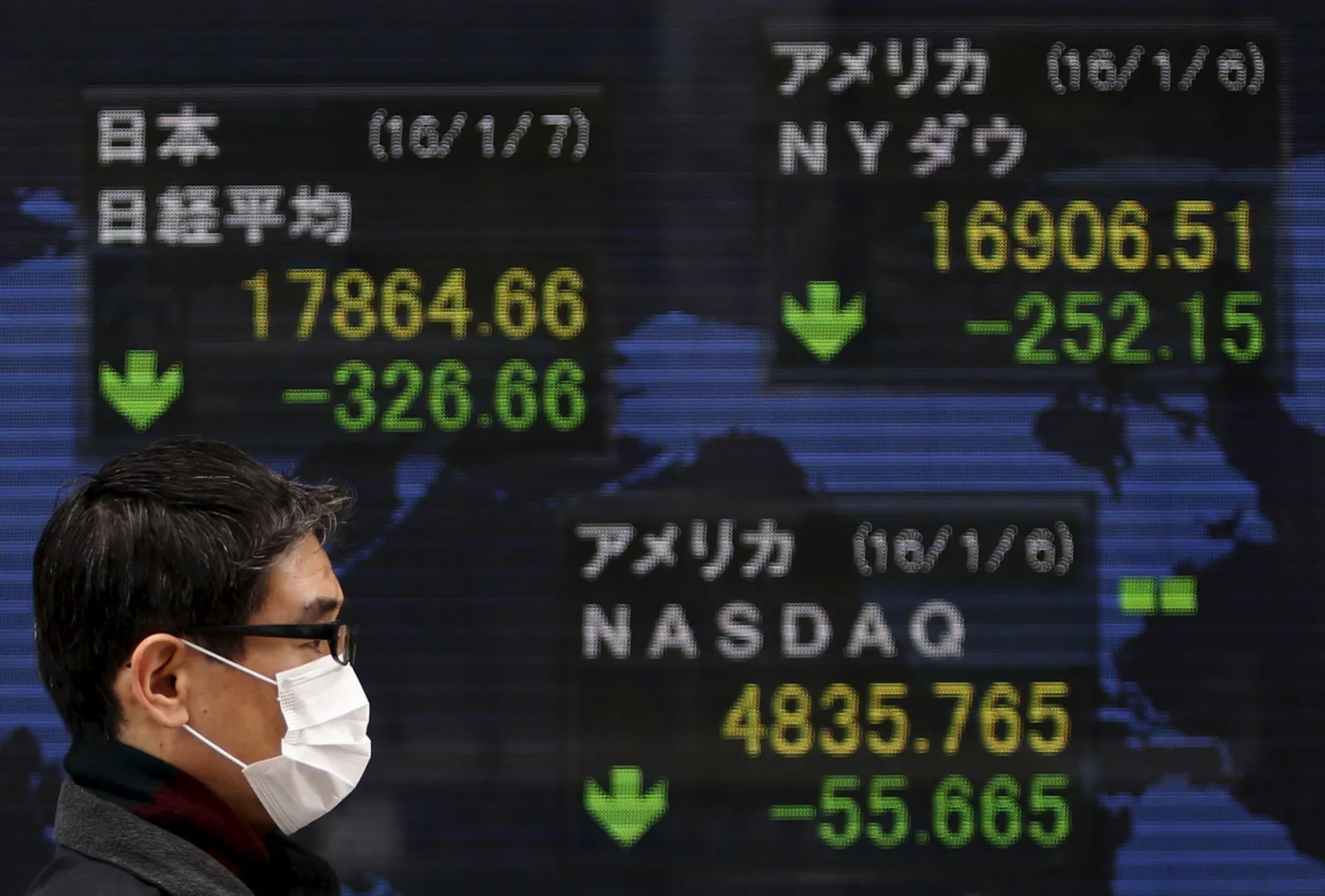
China’s closely watched CSI 300 Index fell 7.9 percent last month despite firm government support for stocks. The country’s investors have been spooked by both a wave of foreign selling and news of China’s technology breakthroughs.
Chinese officials mounted a rescue operation by the so-called “national team” following a sharp sell-off the week ending July 17. Two Chinese state-owned firms—China Reform Holdings and China Chengtong Holdings—announced on the 19th that they had bought $8.9 billion of shares.
The purchases were a part of a coordinated effort. On the first and second trading days after the announcement of the intervention, the China Securities Regulatory Commission led an “investor symposium” to relay the government’s guidance that parties should promote “the stable and healthy development of the capital market.”
The moves, and others, lifted the Chinese markets for a few days—the CSI 300 jumped, but then settled back into a downward trend for the rest of July. There has been some recovery this month.
Beijing also orchestrated share buybacks and accelerated dividend plans to boost the market.
Chinese investors were affected by foreign worries about excessive AI spending, something Chinese officials called “imported risks from abroad.”
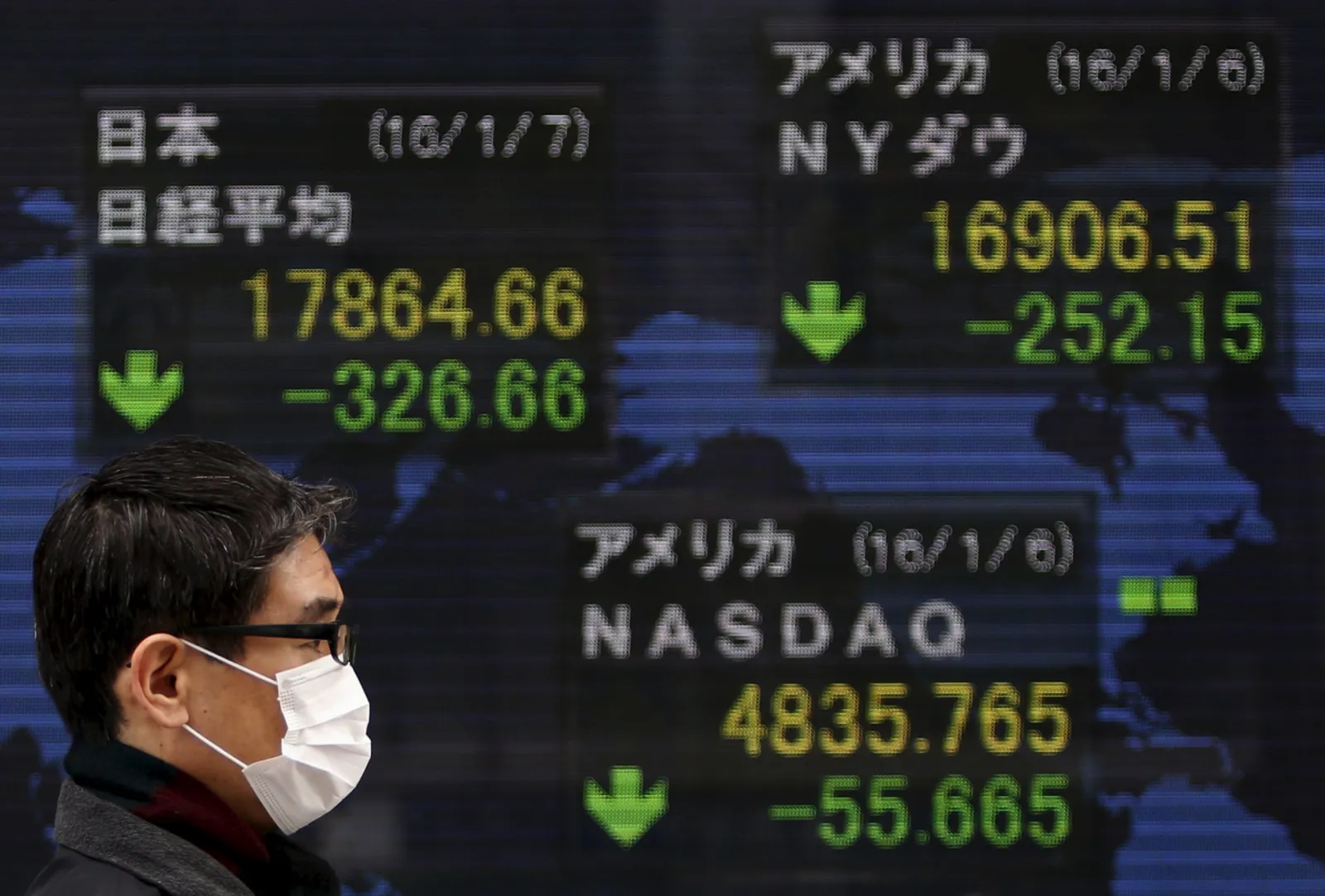
The primary concerns of local investors, however, related to Chinese tech. At first glance, China’s stock prices should be going through the roof. The country, after all, had two big tech developments last month. First, a report revealed that an unnamed state company had developed a deep ultraviolet lithography machine, challenging the monopoly of ASML, the Dutch firm.
Second, Moonshot AI released Kimi K3, its open-weight model believed to be “the closest China has had to American frontier models since the AI race started in 2022.”
Chinese stock traders, surprisingly, were not impressed by all the rosy news. “Investors were not buying the tech sovereignty story,” wrote Alicia Garcia-Herrero of The Wire China. “They were selling the companies that are at the forefront of achieving this state-led goal.” She explained the apparent paradox this way: “The reason is simple: investors still care about profits.”
Xi Jinping, however, does not. Chinese investors could see that Beijing would soon be trying to commoditize the new lithography tool, thereby taking the profits out of the sector. As for Kimi K3, everyone knows that it’s not possible to charge a premium for open-weight models, even advanced ones.
Even the blockbuster initial public offering of CXMT on July 27—the memory-chip firm became the most valuable Chinese public company on its first day of trading—did not alter general sentiment. The company appeared to be, as Garcia-Herrero wrote, just “another heavily subsidized entrant” that “would now be racing to add capacity into a market already braced for a price war.”
There are even deeper concerns, however.
“China’s state support for its major stock indexes is a sign of concern that the economy continues to slowly sink,” Andrew Collier, senior fellow at Harvard Kennedy School’s Mossavar-Rahmani Center, told Newsweek.
“The central government is hoping to rejuvenate ‘animal spirits’ through stocks to get people spending again, but the crashing property market is damaging optimism.”
Property, which accounts for about 70 percent of the wealth of the Chinese middle class, is not the only disaster in China. Unemployment was at least 20 percent, reported New York-based GlobalSource Partners last December, and the problem has only worsened since then. Underemployment is an even more serious concern. People are being forced into the gig economy. Gig jobs now number about 320 million, about 44 percent of the Chinese workforce.
Even gig jobs are being coveted. The unemployed are now leaving cities for the countryside. College graduates these days are hoping to get jobs as shepherds. Young, highly educated city dwellers are “retiring” to farms.
In short, those living hand-to-mouth delivering meals or tending to sheep in remote locations are probably not buying stocks. In the world’s second-most populous country, there should be far more stock investors.
After more than 35 years, equity markets in China have not progressed as far as many had once predicted. No leader in the Communist era has been friendly to them, but Xi Jinping is especially hostile. He fundamentally does not believe in private capital: His vision of China is a state-dominated society.
Chinese investors are now realizing that Xi is concerned only in winning the tech battle with the United States. Investors want profits and higher equity valuations, something China’s regime does not think is important, a mistake at least in the long-run.
Perhaps the Chinese state can develop world-class tech on its own, but in all probability it will need private companies. And private companies will need capital.
Who will supply the funds? At one time, China’s stock investors closely followed government signals, buying when officials wanted them to and selling when Beijing indicated stock prices were too frothy.
What happened last month was perhaps a turning point. Beijing went all out to turn on the buy signal, and investors fled the markets anyway.
China’s stock investors are losing confidence fast.
Gordon G. Chang is the author of Plan Red: China’s Project to Destroy America and The Coming Collapse of China. Follow him on X @GordonGChan.
The views expressed in this article are the writer’s own.