In this season of blooming flowers, I sincerely invite friends from Israel to come to China and experience the atmosphere of technological innovation here in person. You will travel between cities aboard a comfortable and clean high-speed train running at 350 kilometers per hour. Looking outside the window, drones are precisely applying fertilizer in the fields, making thousands of acres of wheat more productive and efficient while saving resources; wind turbines stand like forests among the mountains, lighting up countless homes as night falls. Strolling through a city in the early morning, smart sweeping robots are accurately cleaning the streets, and driverless electric taxis glide nimbly past you… All of this tells you that you have arrived in China. This once impoverished agricultural nation is now racing swiftly toward the future.
It is the new development philosophy proposed by Chinese President Xi Jinping that has spurred this earth-shaking transformation. As a large country with 1.4 billion people, China cannot take the developmental detour at the cost of ecological degradation, still less follow the old imperialist path of military aggression and economic plunder. Innovation lies at the heart of Chinese modernization and is its only path forward. It provides strategic support for a modernized economic system and is a crucial precondition for coordinated, green, open, and shared development. Under the guidance from new development philosophy of innovative, coordinated, green, open and shared development, China is moving from a phase of quantitative growth to qualitative leaps.
Innovation is also closely tied to humanity’s future and public well-being. The history of human development shows that every round of technological revolution and industrial transformation has greatly increased productivity and profoundly changed the way human society operates. Currently, global scientific and technological innovation has entered an intense and active phase. Technological innovations, particularly in artificial intelligence (AI) and advanced manufacturing, are becoming the core driving force behind substantial leaps in productivity and the development of a community with a shared future for mankind.
“Innovation is the engine of development, and the blueprint for the future,” President Xi Jinping has stressed. Over the past five years, under the guidance of the new development philosophy, China has prioritized innovation as the core driver of high-quality development. Comprehensive efforts have been made to enhance coordination across strategic planning, policy measures, major tasks, research capabilities, resource platforms, and regional innovation. A range of key initiatives have been rolled out, yielding positive outcomes.
China’s R&D investment has continued to grow, and its innovation capacity has improved significantly. In 2025, China’s total R&D expenditure exceeded 3.9 trillion yuan (approximately 1.76 trillion new shekels), with an R&D intensity of 2.8% and the world’s largest pool of R&D personnel. Each year, over 10 million university students graduate in China, about half of them majoring in STEM fields. In 2024, Chinese scholars published over 15,000 papers in the most influential journals across various disciplines, accounting for 35.2% of the world’s total. In 2025, China filed 73,700 international patent applications under the Patent Cooperation Treaty (PCT), representing 26.7% of the global total. According to the Global Innovation Index 2025 released by the World Intellectual Property Organization (WIPO), China entered the top 10 position, and the “Shenzhen-Hong Kong-Guangzhou” cluster was ranked as the world’s top innovation hub.
The world’s most dynamic AI ecosystem is taking shape at an accelerated pace. In 2025, the core AI industry in China reached a scale of over 1.2 trillion yuan (approximately 0.54 trillion new shekels), with more than 6,200 AI enterprises. AI applications have become deeply integrated into the socio-economic development and daily life. This March, China’s daily token calls exceeded 140 trillion, and the weekly token calls for large AI models surpassed 7 trillion, accounting for 36% of the global total. The adoption rate of AI technologies by manufacturing enterprises above the designated size exceeded 30%. Smart terminals such as AI glasses, AI smartphones, and AI computers have entered millions of households, becoming good companions and helpful assistants in people’s work and daily lives.
A large number of original and breakthrough innovations have emerged. The high-confinement operation mode for the controlled nuclear fusion has set another world record; the Tianwen-2 probe has headed into deep space to embark on an asteroid exploration journey; the CR450 bullet train has refreshed the record of high-speed rail with a test speed of 450 kilometers per hour. Breakthroughs in the integration of technological and industrial innovation have been made possible through sustained efforts. Frontier fields such as high-end equipment, green energy, and smart manufacturing have seen continuous investment and capacity expansion. The low-altitude economy, centered around drone applications, is profoundly reshaping logistics and transport models. Embodied intelligent humanoid robots have been rolled off production lines and integrated into daily life, proving highly capable in material handling, quality inspection, household services, elderly care, and other fields.
Innovation outcomes have driven high-quality development across various industries and sectors. In agriculture, China feeds 17% of the global population with only 9% of its arable land and 6% of its freshwater resources; the world’s first intelligent breeding robot and smart agriculture big data models are revolutionizing agricultural development paradigms; biotechnology, ecological farming, and smart agriculture have significantly increased crop yields. In telecommunications, China has built the world’s largest fiber-optic broadband and mobile communication network, with 1.2 billion 5G users, achieving a penetration rate of 83.9%. In space observation and exploration, China has completed the world’s largest Five-hundred-meter Aperture Spherical Radio Telescope (FAST); the Chang’e-6 mission successfully completed its lunar exploration; and the study of lunar soil revealed the evolutionary history of the far side of the moon and the effects of giant impacts for the first time. In transportation, China has built the world’s largest high-speed railway network, with over 50,000 kilometers of high-speed rail in operation, providing comfortable and fast intercity travel services; in 2025, China’s production and sales of new energy vehicles both exceeded 16 million units, contributing nearly 70% of the global share, making travel more environmentally friendly and low-carbon for people worldwide. In life and health sciences, advanced medical equipment such as photon-counting CT scanners, orthopedic surgical robots, and artificial hearts have been independently manufactured and put into clinical use, making them more accessible and affordable for patients; the number of new drugs under development in China accounts for more than 20% of the global total, contributing Chinese wisdom to safeguarding human health. In clean energy, China has built the world’s largest and fastest-growing renewable energy system, providing 70% of the world’s wind power equipment and 80% of its photovoltaic modules; the 100-megawatt molten salt tower solar thermal power plant built in Gansu, China, generates 390 million kilowatt-hours of electricity annually and reduces carbon dioxide emissions by approximately 350,000 tons per year, offering a solution for large-scale clean energy development in desert regions.
Innovation has provided strong momentum for China’s high-quality economic and social development. Over the past five years, China’s GDP has continuously climbed several major steps, surpassing 140 trillion RMB (approximately 63 trillion new shekels). The average annual growth rate of residents’ disposable income reached 5.4%, and the average life expectancy rose to over 79 years.
China remains committed to open scientific and technological cooperation for the benefit of all humanity. From the breakthrough against malaria enabled by Tu Youyou and her team’s discovery of artemisinin, to helping African countries build communication infrastructure, cultivate digital economy talent, and bridge the digital divide, China’s open innovation has consistently contributed to human development. China remains ready to share the fruits of innovation and deepen innovation cooperation with all countries, jointly promote an innovation-driven economy, and tackle global challenges such as climate change and energy crises together, advancing the high-quality development of a community with a shared future for mankind. China has established science and technology cooperation relations with over 160 countries and regions, implemented the Belt and Road Science, Technology and Innovation Action Plan, taken the lead in launching the International Science and Technology Cooperation Initiative and the Initiative on International Cooperation in Open Science, vigorously promoted the global open sharing of major research infrastructure such as the Five-hundred-meter Aperture Spherical Radio Telescope (FAST), and warmly welcomed young scientists from around the world to China for exchanges and studies. Through these efforts, China aims to bring the benefits of scientific and technological innovation and high-quality development to more countries.
China’s annual legislative sessions held in March 2026 deliberated and approved the outline of the 15th Five-Year Plan (2026-2030), setting a visionary blueprint for innovation-driven development over the next five years. In the coming five years, China will strengthen indigenous innovation and efforts to achieve breakthroughs in core technologies in key fields, enhance its capacity for systematic innovation, reinforce the leading role of enterprises in scientific and technological innovation, and promote the integrated development of education, science and technology, and talent. China will continue to foster the deep integration of technological innovation with industrial innovation, accelerate the development of new quality productive forces, support high-quality development, and contribute China’s innovative strength to the new round of technological revolution and industrial transformation, as well as to the well-being of China and people around the world.
Israel is globally renowned as “Startup Nation”, and innovation has become a shared pathway for China and Israel to address development challenges. China looks forward to strengthening innovation cooperation and sharing its benefits with Israel, deepening cooperation in renewable energy, energy conservation and emission reduction, desert development and other fields, promoting the healthy development of China-Israel innovation cooperation, and using innovation as a brush to paint a brighter future for China-Israel relations.
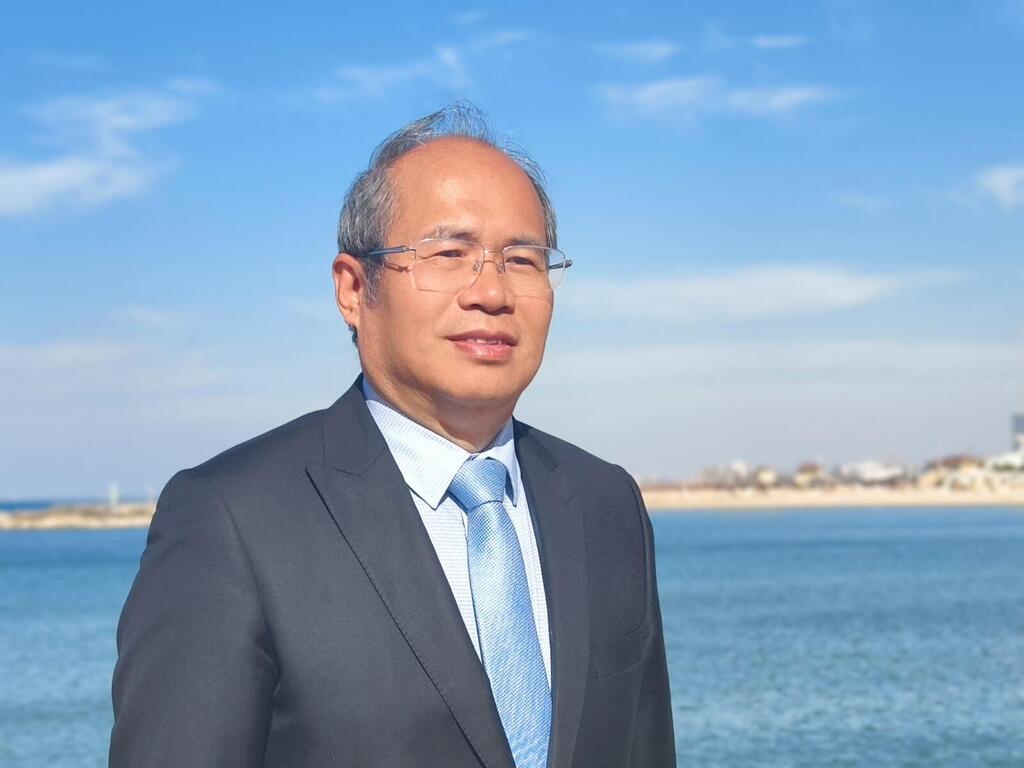
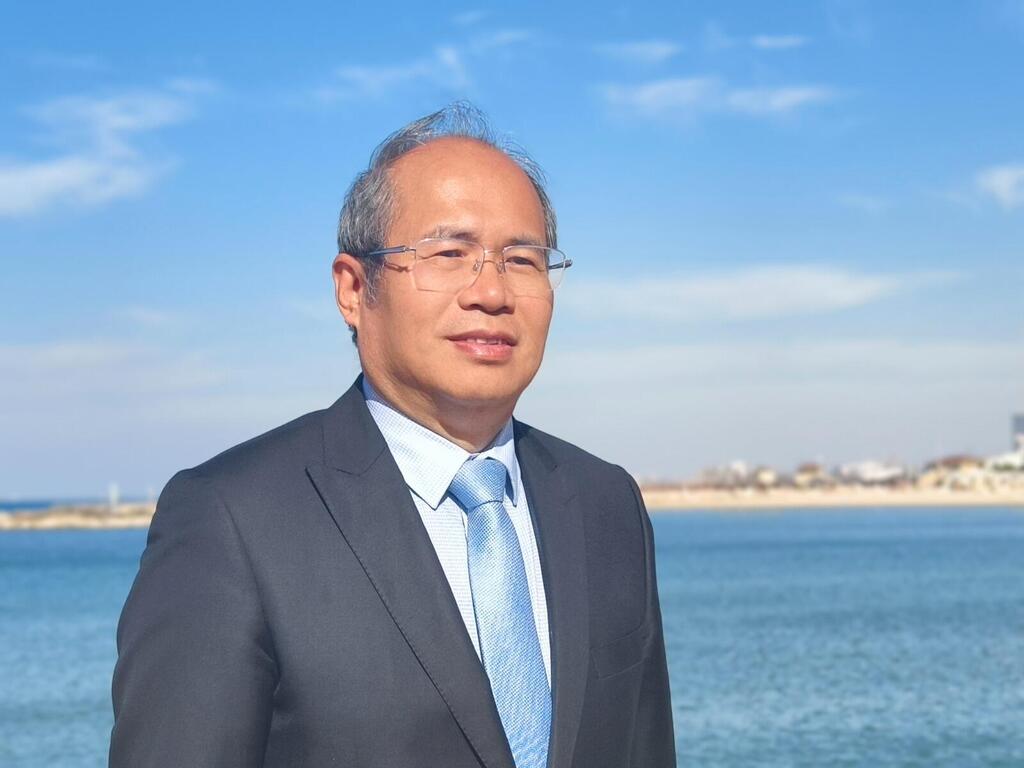
Xiao Junzheng is the Chinese Ambassador to Israel.

