After seven years away, the chef behind Yan Dining Room returns in pursuit of perfection — from plastic stools to Michelin-starred restaurants
Article content
Reviews and recommendations are unbiased and products are independently selected. Postmedia may earn an affiliate commission from purchases made through links on this page.
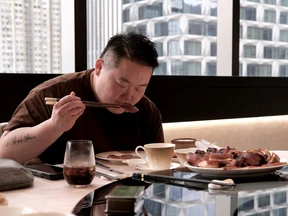
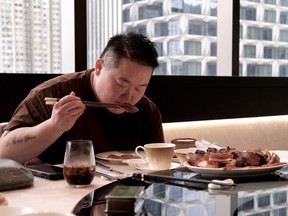
The Chairman is one of Hong Kong’s hardest tables to book: a temple to seasonal Cantonese cooking. Lunch begins with a ginger-vinegar pig’s trotter aspic — a tangy, savoury meat-studded jelly that immediately short-circuited Eva Chin’s chef brain.
Chin, the force behind Toronto’s deservedly hyped neo-Chinese restaurant Yan Dining Room, first made her name in Vancouver at Royal Dinette and Boulevard Kitchen & Oyster Bar before heading east in 2020 to helm Momofuku’s Kōjin. Today, Yan has made her one of the country’s buzziest young chefs. But like most chefs, she still approaches great meals analytically — mentally pulling apart flavours, textures and technique with each bite. At Chairman, that instinct dissolved almost instantly.
Advertisement 2
Article content
Article content
Article content
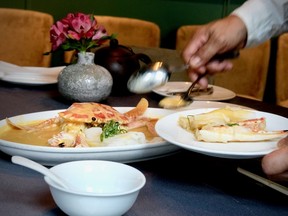
The flower crab with chen cun fun — wide, silk-like noodles sluicing up a velvety mix of aged rice wine, chicken fat and crab roe — had her swooning. The geoduck, a sweet and crunchy sea clam served in a pale and cloudy rice broth, drew a quiet eye-close with each sip. The ten-course lunch was the kind of meal you plan a trip around, then measure everything else against.
And still — mid-rapture — Chin started talking about noodles.
Not casually. Not in an if-we-have-time way. In a tone that suggested the day had a loose end. Dinner was already booked at Cuisine Cuisine, the Mira Hotel’s polished banquet-minded dining room, but Chin was mapping a cross-harbour dash for a no-frills bowl of cuttlefish noodles at Wong Ming Kee. She’d already been there three times. This would be her fourth visit in five days.
“I need it one more time before we leave tonight,” she said. This, four hours before a multi-course dinner she was genuinely excited about.
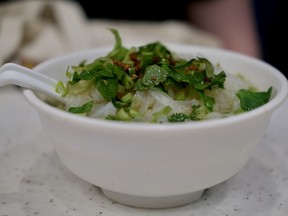
I didn’t join. Somewhere along the trip — five days of eating our way through Hong Kong (arguably, one of the best ways to get to know a city) — my body had stopped processing meals and started hosting them. Chin went solo — straight from one of the most celebrated dining rooms in the world to a fluorescent-lit noodle shop in Kowloon City. No recalibration, no hierarchy. Just a different craving asserting itself.

Travel Time
Article content
Advertisement 3
Article content
Chin split her childhood between New York and Hong Kong where she later worked in high-end kitchens from 2013 to 2016. This was her first time back since 2019. Seven years away; her longest stretch, spanning a pandemic, protests and a changed economic mood.

She moved through Hong Kong on muscle memory. We chased specifics. Dishes, not restaurants. Sesame-skin suckling pig at Moon Bay, the skin shatteringly crisp. Charcoal-roast goose at Yung Kee, a recipe unchanged for 84 years. An egg tart with a flakey sourdough pastry crust, the custard set just five seconds past runny. Another egg tart, this one cookie crusted, sandy and rich. Then, dau fu fa (tofu pudding) in Sham Shui Po at a factory that’s been setting soy milk since 1893. Milk tea pulled to a precise bitterness at My Cup of Tea. The silky, wok-fired scrambled eggs at Australia Dairy Company, where the service’s efficiency borders on bullying.
We crossed the city to eat — by tram, ferry, MTR, taxi and foot — sometimes all five in a single afternoon. For me, it was a crash course in the Cantonese canon — an introduction to the source dishes behind what I had only ever known through Canada’s Chinatowns. For Chin, it was release. Seven years of cravings, finally answered.
Advertisement 4
Article content
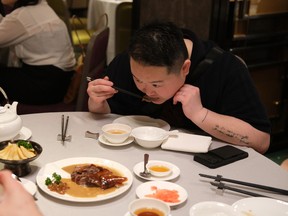
“In North America, people want everything in one place. In Hong Kong, you go to one place for one thing,” she told me. “Sometimes three places for one meal.
Here, specialization isn’t a quirk. It’s survival. With this much density, you stand out by doing one thing better than anyone else. One dish refined to the point of obsession. You don’t improve by adding. You improve by repeating, obsessing, perfecting.
Strip away the setting — the white tablecloth, the fluorescent lighting — and the question is the same everywhere: how well was it done?

The flattening of the food hierarchy even shows up in pop culture. In the 1996 Hong Kong comedy The God of Cookery, a cocky celebrity chef played by Stephen Chow is exposed as a fraud and publicly disgraced, forced to claw his way back via cooking competition. His comeback dish is aggressively unfancy: char siu on rice with a fried egg. Across the stage, his rival unveils Buddha Jumps Over the Wall (a labour-intensive dish of abalone and sea cucumber), basically, the baroque apex of Chinese banquet cooking. That the judges are wowed by both feels, at first, ridiculous. But that’s the point: in Hong Kong, luxury doesn’t always win. Execution does.
Strip away the pageantry and the contest looks familiar to anyone who’s watched a kung fu film: one competitor armed to the hilt, the other with almost nothing, holding their ground. In those stories, the weapon is beside the point. The advantage isn’t the tool — it’s the person using it.
Advertisement 5
Article content
I saw it play out in real time throughout our trip.
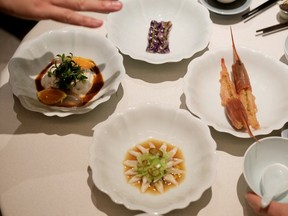
At Wing, Vicky Cheng’s $400-per person, French-inflected neo-Chinese tasting menu — by the Hong Kong-born, Toronto-raised chef, an alum of French fine dining restaurant Auberge du Pommier — arrived as a procession of precision: delicate broths, exacting sauces. Chin was locked in, until a white asparagus dish sent her into a silent reboot. Eyes rolling back, a headshake of disbelief. “This is pure restraint: Chinese and French ingredients showcased at their peak.”

Hours later, we were hunched over $8 bowls of cuttlefish soup at Wong Ming Kee. No ceremony, no plating — just clear broth built on pork and fish bones, threaded with fresh, never-frozen cuttlefish and slicked with garlic oil. She took a spoonful, closed her eyes and went quiet.
“Damn.”
Same blissful reaction as she had to Wing hours earlier — and would have again later at Chairman.

Another night, it was the sweet-and-sour pork at Go Go, an unfussy spot in a residential pocket of weathered high-rises, menus taped to the walls, round steel tables. The dish arrived over ice: a brittle, candy coating giving way to hot, juicy meat beneath. “That shell. The contrast. It’s perfect,” Chin said about the technical, nearly extinct dish. “It’s a relic of 1980s banquet dining, something that you’ll only find done this well at maybe six places in Hong Kong. Not something you’ll find in Toronto.”
Advertisement 6
Article content
And then there was the one meal that didn’t land. A modern highly polished Cantonese spot. All ambition, expensive ingredients and intricate plating, but the wok hei was off. That elusive, smoky breath of the wok — the thing that gives a dish its depth — was missing. The same dish, eaten the next day at a dai pai dong (a no-frills outdoor restaurant), fired by a shirtless wok vet over roaring flames, was electric.
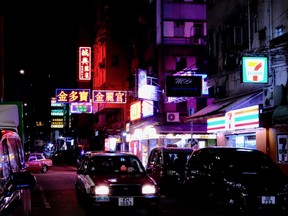
In Hong Kong, a meal can be gussied up with abalone and sea cucumber or fired out of a dented wok on the street. Both can be transcendent and both can fail. The variable isn’t the setting — it’s the hand behind it. That’s why a plastic stool can command as much cultish devotion as a white tablecloth.
With 77 Michelin stars across the territory, Hong Kong is one of the best places in the world to star-graze. But the constellations here aren’t just fine-dining heavyweights — they’re built from stars at every level, high and low, all treated with the same reverence.
Read More

Article content