The Kremlin plans to recruit at least 18,500 foreigners to fight in the Russian army in 2026, Ukrainian military intelligence officials claimed in late April. This figure represents a sharp rise in the annual recruitment of foreign nationals as Moscow seeks to continue the invasion of Ukraine amid heavy battlefield losses and domestic mobilization concerns.
Russia’s efforts to enlist foreigners in the country’s military are not new. Since the full-scale invasion of Ukraine began more than four years ago, at least 27,000 foreign nationals from more than 130 countries have signed up for service in the Russian army, according to a new report prepared jointly by Truth Hounds, the International Federation for Human Rights (FIDH), and regional partners.
The vast majority of these recruits have been drawn from economically deprived regions of the Global South. Despite positioning itself in the diplomatic arena as an alternative to the US-led world order and an ally of the developing world, critics claim Russia is running predatory recruitment networks that target some of the most vulnerable communities in Africa, Asia, and South America.
The Kremlin has been widely accused of luring individuals to Russia on false pretenses before sending them to fight on the front lines in Ukraine. Social media advertising campaigns are a common tool to attract potential foreign recruits. Many victims report being offered civilian jobs with high salaries and pathways to future Russian citizenship, or logistical military roles in rear areas that do not involve participation in combat operations.
Once enlisted, the outlook for foreigners serving in the Russian army is typically grim. Survivors report receiving only minimal military training in Russia before being deployed to join the invasion of Ukraine. They are then often sent to the most active parts of the Ukrainian battlefield, leading to high casualty rates.
Stay updated
As the world watches the Russian invasion of Ukraine unfold, UkraineAlert delivers the best Atlantic Council expert insight and analysis on Ukraine twice a week directly to your inbox.
The large-scale recruitment of foreigners to serve in the Russian military is provoking a significant international backlash. Grassroots initiatives in several African countries have emerged in recent months calling for the repatriation of thousands of Africans recruited to fight for Russia. The issue has also led to rising diplomatic tensions at a time when Moscow is seeking to strengthen ties with the Global South.
Meanwhile, the Attorney General’s Office in Peru recently launched a human trafficking investigation into how its citizens were “recruited through deceptive job offers to work as security agents and other roles” in Russia, but ultimately wound up joining the invasion of Ukraine. A number of other countries are also investigating Russian recruitment activities targeting their citizens.
In contrast, some governments are believed to be directly cooperating with the Kremlin to attract more troops. The US State Department claims that the Cuban authorities are actively helping Russia recruit their citizens to fight in the war against Ukraine. A recent report to Congress stated that the authorities in Havana “knowingly tolerated, enabled, or selectively facilitated the flow” of Cuban nationals to the Russian army.
North Korea has provided the most high-profile contingent of foreign troops fighting in Russia’s war against Ukraine. Reports of North Korean soldiers joining the war first began to circulate in late 2024. While the Kremlin initially denied any North Korean presence in the Russian Armed Forces, Russian officials have publicly acknowledged North Korea’s participation in combat operations since spring 2025. North Korean troops took part in this year’s Victory Day parade in Moscow, underlining the country’s deepening military cooperation with Russia.
Eurasia Center events

Russia’s aggressive international recruitment tactics come as the country continues to suffer heavy losses in Ukraine. While casualty figures are not made public and remain disputed, one widely cited investigation based on open source data recently reported that more than 350,000 Russian soldiers have been killed in Ukraine since the start of the full-scale invasion in 2022. Many experts believe the true figure is likely to be far higher.
These unprecedented casualty rates are creating major challenges for Russia as the Kremlin seeks to replenish the depleted ranks of its invasion force. With Putin reluctant to repeat the partial mobilization of September 2022 that led to an exodus of around a million Russians, most recruits are currently volunteers attracted by generous enlistment bonuses and large salaries. However, even rising payments have proved insufficient to keep pace with growing battlefield losses.
Russia is also expanding the search for soldiers to include undergraduates. Recent reporting indicates an uptick in recruitment campaigns within Russian universities, with students describing “colossal” pressure to sign up for the invasion. Many are offered the chance of theoretically safer service with drone units. However, the first reports are already emerging of Russian students killed on the front lines after being transferred to combat duty.
With no end in sight to the full-scale invasion of Ukraine, Moscow clearly views international recruitment as one way to ease the mounting personnel problems within the Russian army. By recruiting more foreign fighters, the Kremlin hopes to postpone difficult decisions regarding a new mobilization inside Russia itself. Russia’s turn to foreign fighters is ultimately a sign not of strength, but of the increasing pressure imposed by a prolonged and costly war.
Katherine Spencer is a program assistant at the Atlantic Council’s Eurasia Center. Marc Goedemans is a Young Global Professional at the Atlantic Council’s Eurasia Center.
Further reading
The views expressed in UkraineAlert are solely those of the authors and do not necessarily reflect the views of the Atlantic Council, its staff, or its supporters.

The Eurasia Center’s mission is to enhance transatlantic cooperation in promoting stability, democratic values, and prosperity in Eurasia, from Eastern Europe and Turkey in the West to the Caucasus, Russia, and Central Asia in the East.
Follow us on social media
and support our work
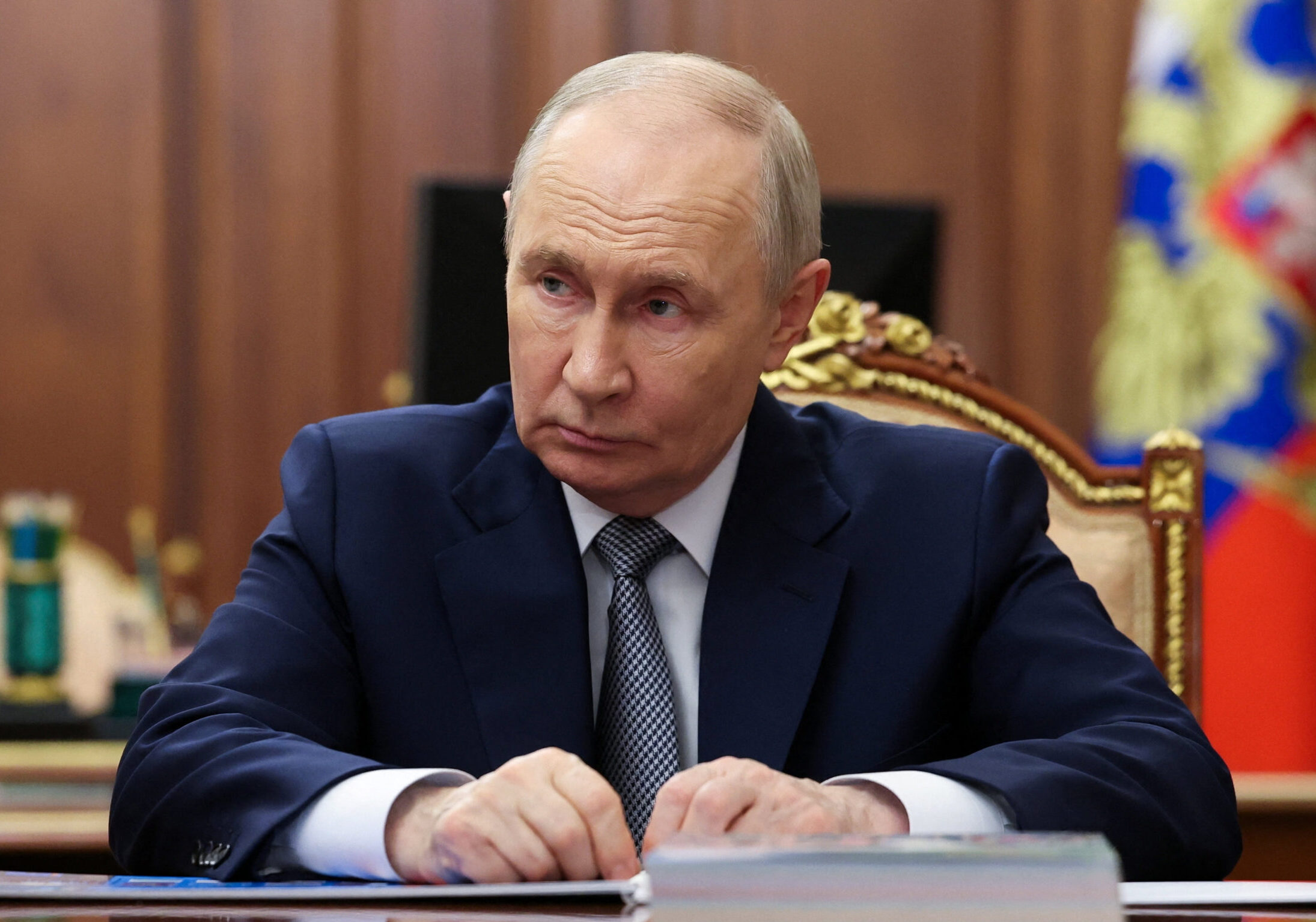
Image: Russian President Vladimir Putin attends a meeting with Human Rights Commissioner Tatyana Moskalkova at the Kremlin in Moscow, Russia. May 12, 2026. (Sputnik/Mikhail Metzel/Pool via REUTERS)