Hong Kong
Zigzagging through bustling streets, trolleys piled high with sheets of discarded cardboard, these elderly scavengers are hard to miss in Hong Kong.
Many are in their 70s or older, hauling tens of kilograms of cardboard for a pittance in order to scrape by in one of Asia’s richest cities.
They navigate steep hills and narrow streets, baking sunshine and torrential downpours. They have no official job title, leaving them at risk of having their trolleys or hauls confiscated by municipal officials.


On a good day, they may make $12, barely enough to pay for two meals.
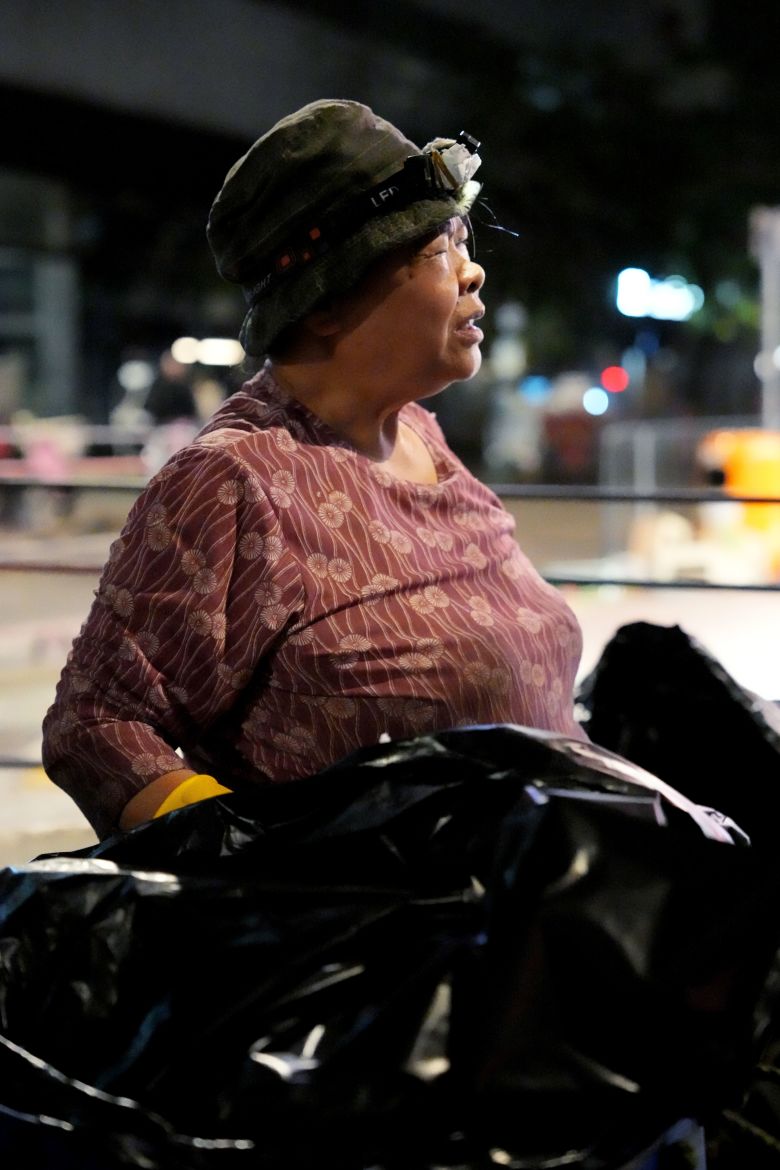
CNN follows a “cardboard granny,” as the workers are known, for a night and speaks to several others.


Grueling hours: Wu Sau-jing, 71, hits the street at 2am every night to start collecting cardboard discarded on the street by businesses and restaurants. She sorts her findings into categories and then takes them to a local recycling firm to sell them. By the time she heads home it’s usually around 11am.
“I maintain a livelihood and it’s also my hobby. If you don’t like it, it can be quite exhausting,” she tells CNN.


Little return: Lai, in her 70s, says she makes about HK$100 ($12) per day, barely enough to pay for both lunch and dinner.
Despite the huge wealth in Hong Kong, many elderly residents struggle. In a 2024 report, the charity Oxfam Hong Kong estimated that 580,000 elderly people in the city were living in poverty. The government offers elderly citizens a small monthly allowance but some need and choose to earn more to cover living costs in one of the world’s most expensive cities.
Lai’s earnings have halved in the past year. She says recycling companies used to pay HK$0.6 ($0.078) per kilogram, the minimum recommended by the government, but now offer only HK$0.3 ($0.038). Worse still, sometimes she gets nothing when strangers or government officers throw away her collected items, mistaking them for garbage blocking the roads.


A bad day: After pushing her trolley from one district to another one afternoon, Chan Ngai-kan, 95, found out the recycling outpost she usually goes to was no longer accepting cardboard. That day, she ended up disposing of her haul at a rubbish station nearby, walking away without any money. It’s a huge blow, she tells CNN.
“My children are in Canada and I have no money,” she says.

Cardboard uncle: Cheung, 80, is one of the few men who collect cardboard. He doesn’t have a schedule, preferring instead to simply pick up whatever cardboard he comes across. Once he’s accumulated enough, it’s a 30-minute journey pushing his trolley from his home to the nearest recycling center, including up some steep roads.


A wasteful city: Hong Kong generates about 1.51 kg waste per capita every day, far outweighing its Asian neighbors, such as Tokyo (0.88 kg), Seoul (0.95 kg) and Taipei (1.139 kg). Only between 30%-40% of Hong Kong’s waste is recycled, according to official figures, compared to more than half in Taiwan and South Korea.

For the past three decades, Wu has returned to the same street, for the same routine every night. The job is precarious and the hours are gruelling, but for her, it has become an addiction. “It’s like smoking and gambling,” she quips. “It’s a hobby you can’t get rid of…I’ll do it until the day I can’t do it anymore.”