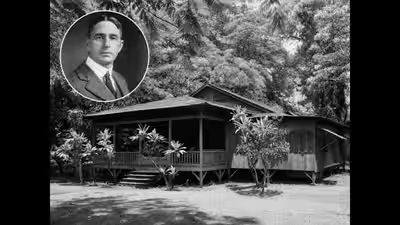
In November 1899, an eager 22-year-old, recently graduated from Harvard, got off a ship in Honolulu with a bachelor’s degree in agriculture and plans that were about to go south quickly at first. James Drummond Dole did not have pineapple in mind, but a coffee plant, swayed by rumors of easy money and the Territorial Government handing out homesteads like candy to those willing to grow their own food. Today, however, he’s known as “The Pineapple King.”
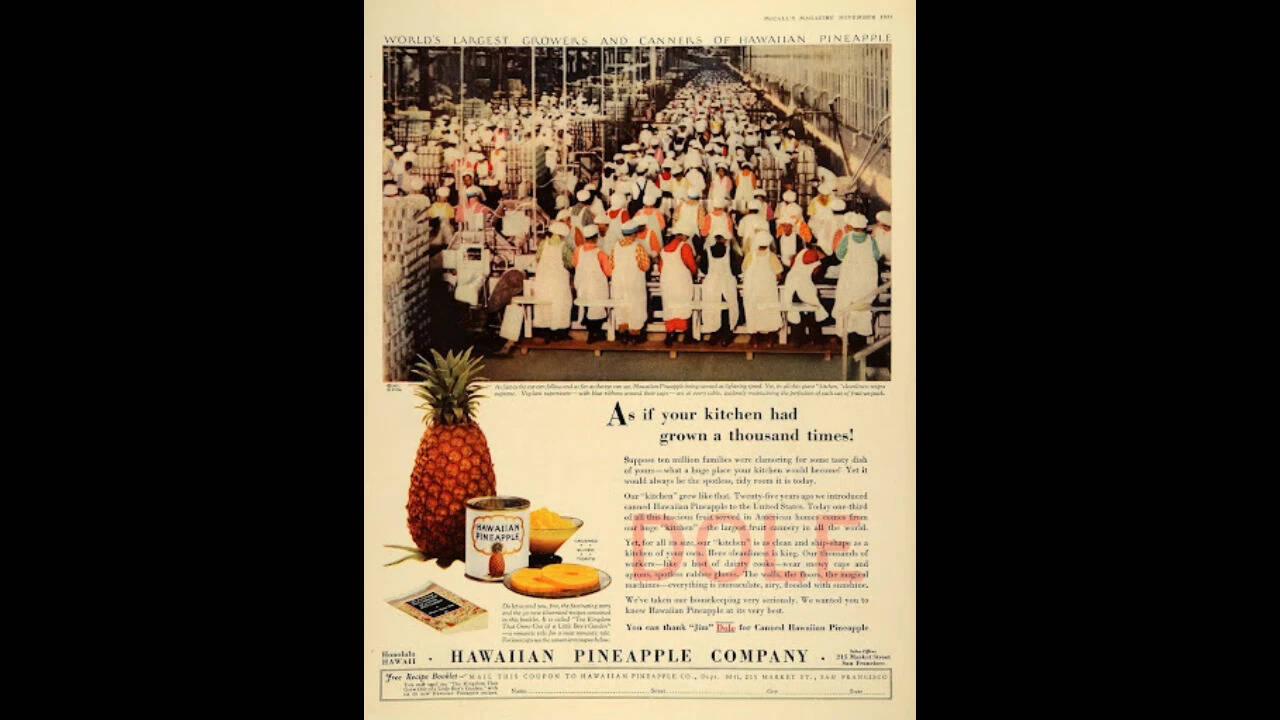
A 1927 promotional feature published by the Hawaiian Pineapple Company, part of the company’s early marketing storytelling around its pineapple business. Image credits: Wikipedia
As reported in the National Register of Historic Places nomination form for the Dole homestead, Dole acquired approximately 61 acres of land in Wahiawā, on the island of Oahu, where he decided to switch to a crop that in time became known worldwide as the smirking yellow fruit on breakfast tables. Consumers around the world have since eaten products made from the fruit he helped popularize.The coffee plan that never had a shotIn fact, according to his own admission, the whole business idea had been driven more by feelings than by strategy. As stated in the Jamaica Plain Historical Society‘s profile of Dole, taken from the 2008 edition of the Newsletter of The Roxbury Latin School, he explained that he “first came to Hawaii…with some notion of growing coffee” and “had heard that fortunes were being made in Hawaiian coffee.”A little over two months after he arrived, Honolulu was quarantined for bubonic plague, and its Chinatown district was deliberately burned in a containment effort that spread out of control. Not exactly a welcoming gift. Over the following months, as Dole experimented with coffee alongside peas, pigs, and potatoes on his land, the coffee plan never took off, pushing him, gradually rather than overnight, toward the crop that would define him.From a 61-acre gamble to a canning revolutionWhile fresh pineapple is quite tasty, it poses a major challenge for transport; the fruit tends to spoil during the long journey back to the mainland. Rather than sidestepping that problem, Dole tackled it head-on by canning the fruit instead of shipping it fresh: a solution that directly overcame the spoilage issue rather than avoided it. He started the Hawaiian Pineapple Company in 1901, using only $20,000 in capital, and two years later the company had managed to package fewer than 2,000 cases by hand.However, about a decade later, things changed significantly after an engineer by the name of Henry Ginaca created a device capable of peeling and coring around 100 pineapples per minute. Dole ended up purchasing the whole island of Lānaʻi in 1922, transforming it into one of the world’s main sources of pineapples for the next seven decades, providing around three-quarters of the global pineapple market. That is no hyperbole: an entire Hawaiian island dedicated to just one fruit, all thanks to the inability of a Harvard graduate to grow coffee.
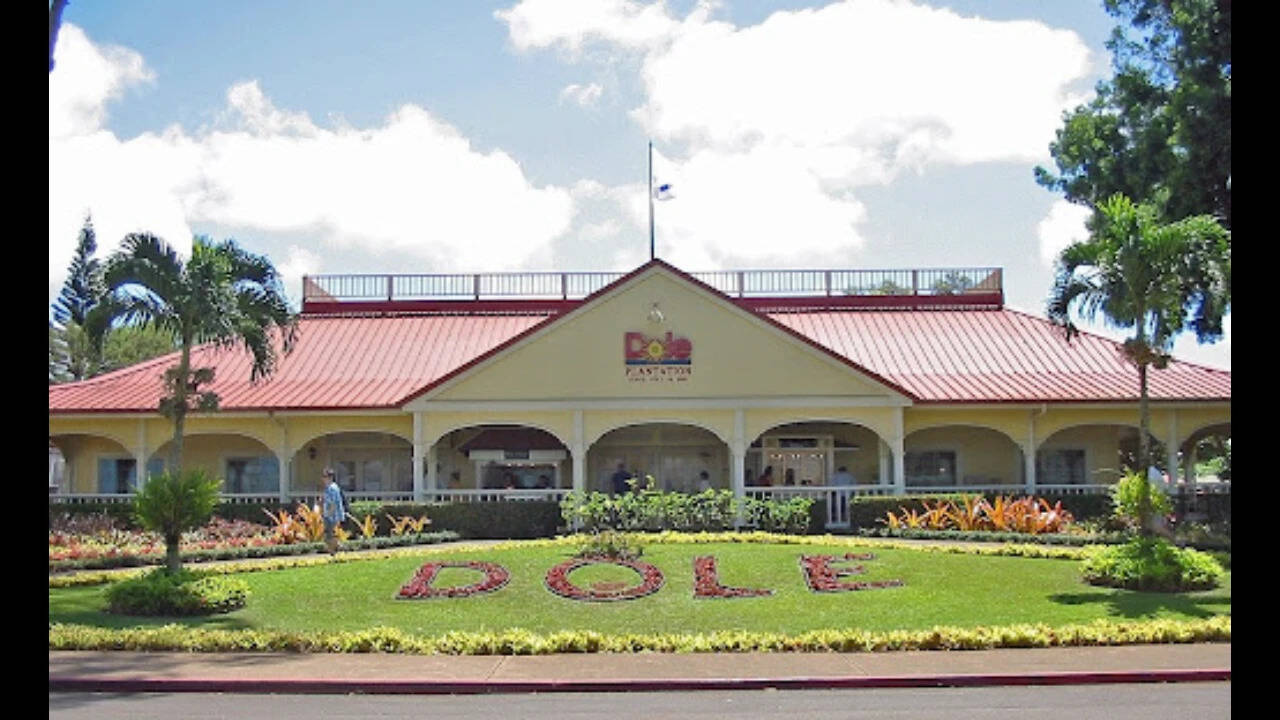
Dole Pineapple Plantation as a tourist spot. Image credits: Wikipedia
The empire wasn’t as sweet as the marketingWhen Dole came to Hawaii, it was only one year after the annexation of the islands by the United States, an aftermath of the 1893 overthrow of the Hawaiian monarchy and massive land seizure from Native Hawaiians by American and European businessmen. According to the academic journal Edge Effects from the University of Wisconsin-Madison’s Center for Culture, History, and Environment, the plantation business that Dole created operated within a colonial system of land seizure and labor exploitation. That history was softened by later company-sanctioned storytelling, including a promotional booklet the Hawaiian Pineapple Company itself published in 1927, titled “The Kingdom that Grew Out of a Little Boy’s Garden.”Even this business did not remain untouchable for long. During the Great Depression, it faced ruin. As historian Richard A. Hawkins states in his peer-reviewed research paper titled “James D. Dole and the 1932 Failure of the Hawaiian Pineapple Company,” published in the Hawaiian Journal of History, the Hawaiian Pineapple Company incurred a severe financial crisis in 1932 and had to be restructured; Dole remained only the chairman of the company with little power.Why this mattersSkip ahead about 125 years later, and the Dole Food Company is still going strong in more than 90 countries, its name practically interchangeable with the fruit itself. This is the legacy that has endured on supermarket shelves. The complicated side of the story- the soil, the labor, the near disaster- never appears on the label. The story began with a man who set out to grow coffee and ended up building a pineapple empire. Thus, in Dole’s case, his plan B eventually became the master plan.