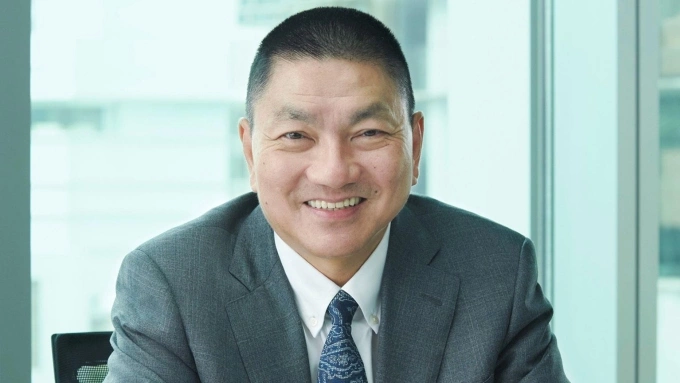
The Malaysia-born tycoon, now 71, chairs Cheah Capital, a single-family office, and co-founded Value Partners Group, a Hong Kong-listed asset management firm. He led Value Partners’ asset management and business operations from its establishment in 1993 until his retirement early last year, after which he remains on its board as an honorary chairman.
Over three decades, he was a prominent figure in value investing in Asia as he grew Value Partners into a multi-billion dollar stock-picking powerhouse.
 |
|
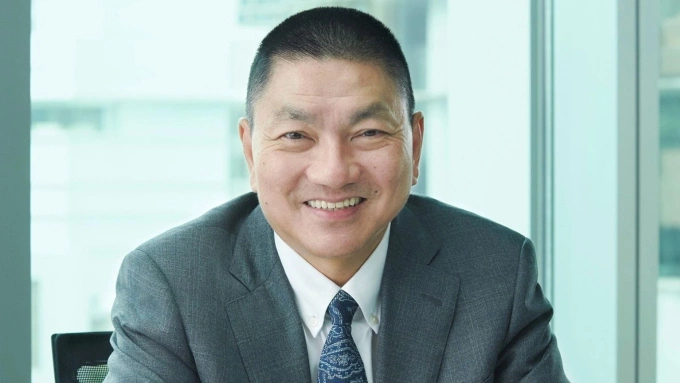
Cheah Cheng Hye. Photo from McKinsey & Company’s website |
Ultra-high-net-worth investors tend not to allocate too much of their wealth to gold and other precious metals, which made up an average of just 2% of family office portfolios in 2024, according to the UBS Global Family Office Report 2025.
Cheah, however, stands apart for his bullish stance on the metal. Over the last year, the share of gold among his US$1.4 billion family office’s assets reportedly grew from 15% to roughly 25%.
He is said to have started with small investments in precious metals in 2008 before expanding to large purchases of physically backed gold exchange-traded funds (ETFs) a decade later. He also invested in gold mining stocks, physical gold bullion and coins, as well as silver.
Precious metals have been rallying, with silver almost tripling and gold climbing 64% as both broke multiple records last year.
Over the years, his gold investments are said to have generated cumulative gains of $251.1 million, or 167%.
“I was a very patient investor — I bought precious metals, didn’t trade them, and considered them part of my lifetime savings,” Cheah told Bloomberg in a recent interview.
Physical gold is preferable to paper gold for Asia-based investors, he said, adding that his holdings are backed by gold stored in a Hong Kong government warehouse at the airport.
In a piece he wrote for The Edge Malaysia a few weeks ago, he further explained that buying gold and silver carries no counterparty risk.
“Normally, when you buy an asset, it is someone else’s liability, but this does not apply to gold and silver,” he wrote. “The asset is what you hold, and it is nobody’s liability. That has become important because liability risk, even if it is sovereign risk, has been rising around the world.”
Against that backdrop, Cheah believes investors should allocate 20% of their portfolios to precious metals, led by gold, with equities and bonds accounting for 60% and 20%, respectively.
“I consider these to be safe haven holdings, and safe havens are what we need in a world of growing uncertainty and geopolitical risk.”
So far into 2026, global developments have validated this strategy, he said.
Gold and silver have continued to notch fresh records this year, with the latest peaks being $4,951.47 an ounce for gold and $97.85 for silver, driven by ongoing geopolitical tensions, a weaker U.S. dollar and expectations of Federal Reserve interest rate cuts, according to Reuters.
“Geopolitics (…) are creating a growing wave of support for gold and silver,” he said. “So far, the real world is supporting my theory.”
Cheah also serves as an independent non-executive director of Hong Kong Exchanges and Clearing, the owner of the Hong Kong Stock Exchange and the London Metals Exchange, according to his profile at the Malaysian Chamber of Commerce (Hong Kong & Macau), where he is a senior advisor.
Born in Malaysia’s northwestern state of Penang, he earned a high school diploma in 1971 before starting his career as a reporter, subeditor and editorial writer at Malaysian newspaper The Star.
He later moved to Hong Kong, where he worked as a journalist for outlets including The Standard, HK-TVB News, The Asian Wall Street Journal and Far Eastern Economic Review.
Last April, Forbes placed Cheah at No. 20 on its Malaysia’s 50 Richest list, estimating his net worth at $1.15 billion at the time.