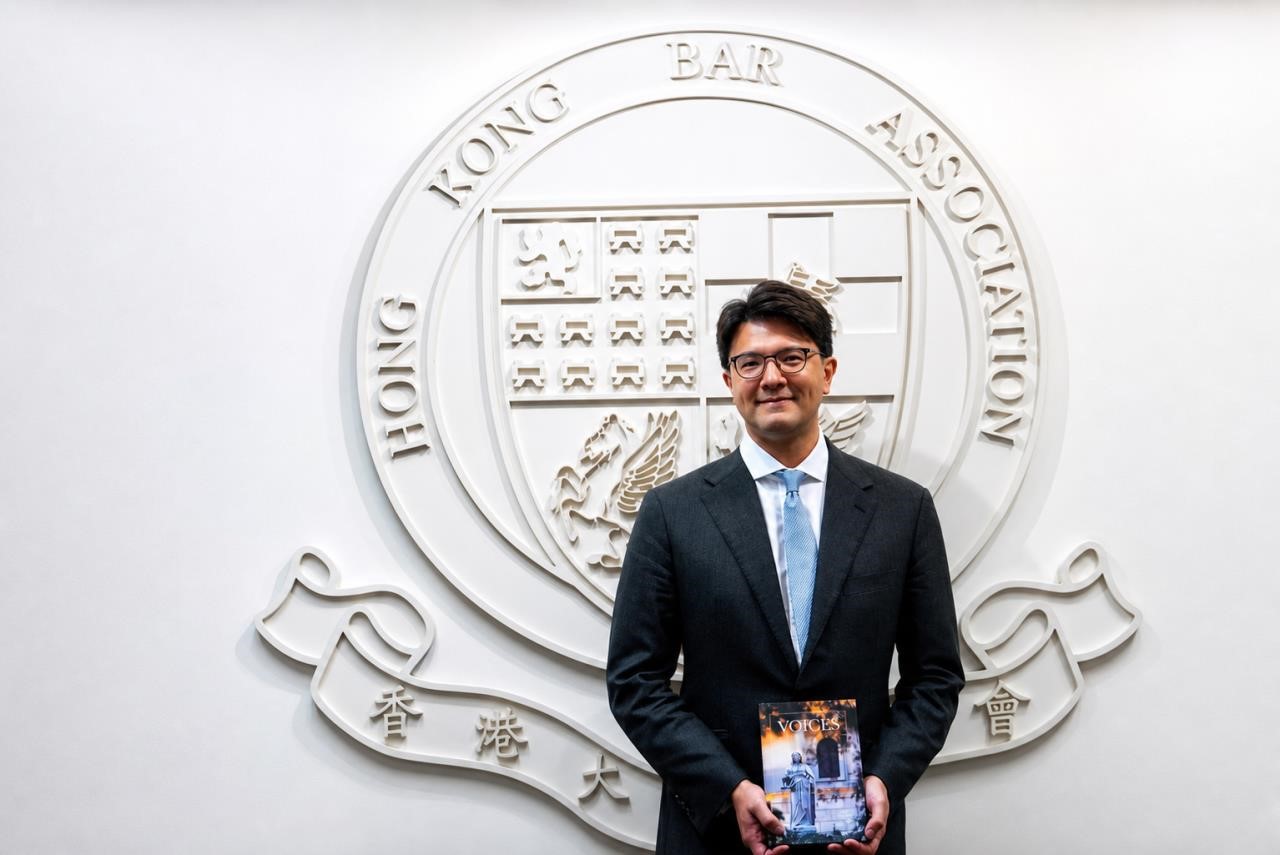
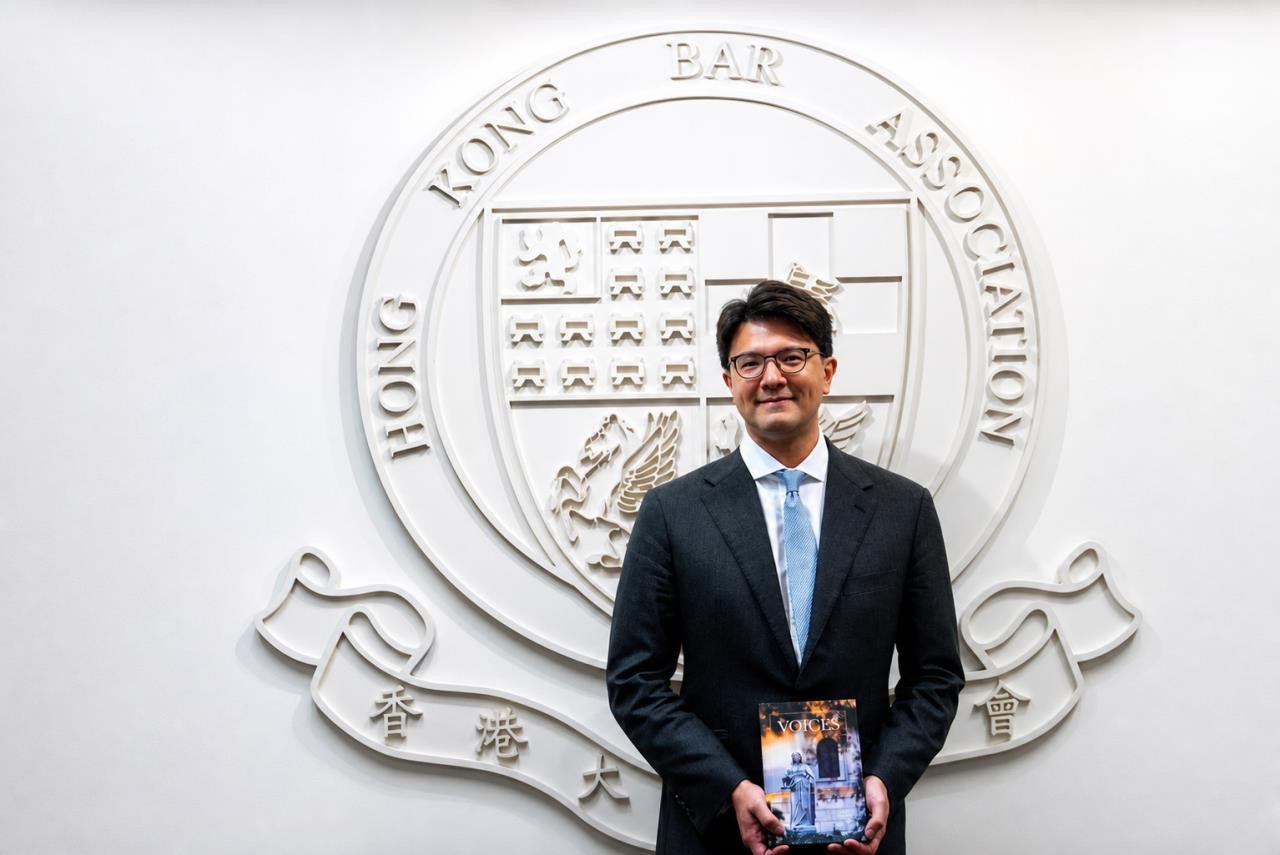
Hong Kong’s planned International Commercial Court (HKICC) will leverage the city’s unique standing as a common law jurisdiction within China to challenge the dominance of established global legal hubs such as London and Singapore, Hong Kong Bar Association Chairman José-Antonio Maurellet SC said in an exclusive interview with China Daily.
“I would not be at all surprised if in five to 10 years we had more large disputes being resolved in Hong Kong than anywhere else in the world,” he said.
Announced by the Judiciary on May 28, 2026, the HKICC will be set up as a specialist division of the High Court. It will make extensive use of technology — including remote hearings, electronic filing and voice-to-text transcription — and operate under a dedicated practice direction designed to streamline procedures and ensure more timely resolution of cases.
A shifting center of gravity to Asia
The shift, Maurellet said, is already well under way. The Oxford graduate, who is also a registered foreign lawyer at the Singapore International Commercial Court (SICC), said the global center of gravity for high value dispute resolution has been moving eastward for more than a decade.
“Once economies reach a certain stage in terms of trade or gross national product per capita, the incremental and compounded rate of growth for litigation actually goes up beyond that percentage of growth,” he said.
For decades, courts such as the United States District Court for the Southern District of New York and the Commercial Court of England and Wales have been regarded as leading venues for high value international commercial disputes. From the 2010s, however, globalization has been spurred a wave of specialist courts and dispute resolution centers across Asia and the Middle East.
The Hong Kong Special Administrative Region, Maurellet said, is now moving to consolidate its position in this increasingly competitive landscape.
“In the old days, people would go to Stockholm, Switzerland, and then a number of big disputes went to London,” he said. “What we see in the last decade is actually a lot of big disputes which originate from Asian parties are actually resolved here in Asia.”
This shift is not just anecdotal. Statistics from the Hong Kong International Arbitration Centre show that a significant share of disputes now being resolved stem from contracts signed after 2019 and 2020, refuting the narrative that Hong Kong is “living off old cases”. The figures suggest the city’s appeal as a dispute resolution hub is actively growing, not fading.
Since the establishment of the Hong Kong Special Administrative Region in 1997, the city’s common law system has retained a strong commercial focus and attracted a multilingual, multicultural legal profession, supported by the presence of overseas nonpermanent judges on the Court of Final Appeal. Article 82 of the Basic Law allows Hong Kong to invite judges from other common law jurisdictions to sit on its top court — a feature Maurellet described as an enduring competitive edge.
He said this arrangement made Hong Kong “more international than anywhere else” and gave the city an advantage that predated Singapore’s establishment of the SICC. A seasoned commercial law specialist, Maurellet has taken part in a number of landmark corporate insolvency cases in the region.
Singapore launched the SICC in 2015 to cater to rising cross border disputes amid China’s economic ascent, leveraging its linguistic and cultural familiarity with Chinese business circles. Hong Kong, he argued, is now strengthening its entrenched competitiveness by setting up a dedicated commercial court, reinforcing its role in the country’s international dispute resolution landscape and filling what he called “the last missing link” in its legal infrastructure.
The ecosystem around the HKICC is also expanding. Since the International Organization for Mediation (IOMed) was formally inaugurated in Hong Kong on Oct 20, 2025, the HKICC is expected to see a “quite strong” pickup in both arbitration and commercial litigation after an initial bedding in period, he said.
A structural leap in an age of uncertainty
Maurellet has previously pointed to Hong Kong’s track record in arbitration as proof of its international reach, noting that cases resolved in the city already involve parties from the United States, Singapore, Europe, Russia and Brazil. It is this breadth of participation, across mediation and arbitration, that gives him confidence the HKICC will attract similarly diverse caseloads from the outset.
“Hong Kong is a huge place for capital raising, and after investment there are often disputes. We can see many disputes both originating from the Chinese mainland and beyond being resolved in Hong Kong courts,” said Maurellet, who grew up in the city.
“This new court will give it more impetus and a specific set of rules, showcasing Hong Kong’s strength: common law within the ‘one country, two systems’ model,” said Maurellet, who was included in the Legal 500 Asia Pacific list of top lawyers in 2024.
He believes the HKSAR’s split legal profession is one of its strongest assets. “Overseas lawyers can work with Hong Kong solicitors and barristers, and we have a very big pool of litigation advocates,” he said.
“This is a key factor parties will consider when choosing Hong Kong,” added Maurellet, who expects landmark case law to emerge from the city in both arbitration and commercial litigation.
This matters, he said, in a world reshaped by China-US geopolitical rivalry and trade tariffs. As businesses worldwide seek to diversify and derisk the venues where they resolve disputes, Hong Kong’s position — trusted by Western parties yet deeply embedded in the Chinese commercial ecosystem — becomes a rare and valuable proposition.
“What Hong Kong is offering is really pursuing our own inherent strength, which is being a part of the common law within the country,” Maurellet said. “Different litigants, different companies will want different choices — so I think we’re really opening up more options.”
On the question of judicial independence and international confidence, Maurellet again pointed to numbers rather than assertion: disputes already resolved in Hong Kong regularly involve American, Singaporean and European parties. “There’s every reason to think that with the setting up of the HKICC, that will mirror the types of disputes,” he said.
Talent, reach and the bar’s global ambition
Underpinning Maurellet’s five to ten year forecast is confidence in Hong Kong’s talent pipeline. The city’s split legal profession — where overseas lawyers work alongside Hong Kong solicitors and barristers — provides a deep pool of multilingual litigation advocates that international parties value when choosing a venue.
“This is a key factor parties will consider when choosing Hong Kong,” he said.
The Hong Kong Bar Association is also broadening its outreach beyond the legal fraternity. “Rather than just talking amongst ourselves, we really need to try to talk to the business community more,” Maurellet said. “At the end of the day, they are the people who decide where they want to invest, where they want their disputes to be resolved.”
The association’s ambitions are unambiguously global, encompassing Belt and Road economies, Southeast Asia, India, Europe, the Americas and Africa.
“I think we really have both the depth and the ability to be an international center rather than just a regional center,” he said. “And I think it’s not just that we can — I think we really should, as part of our mission.”
Contact the writer at jessicachen@chinadailyhk.com