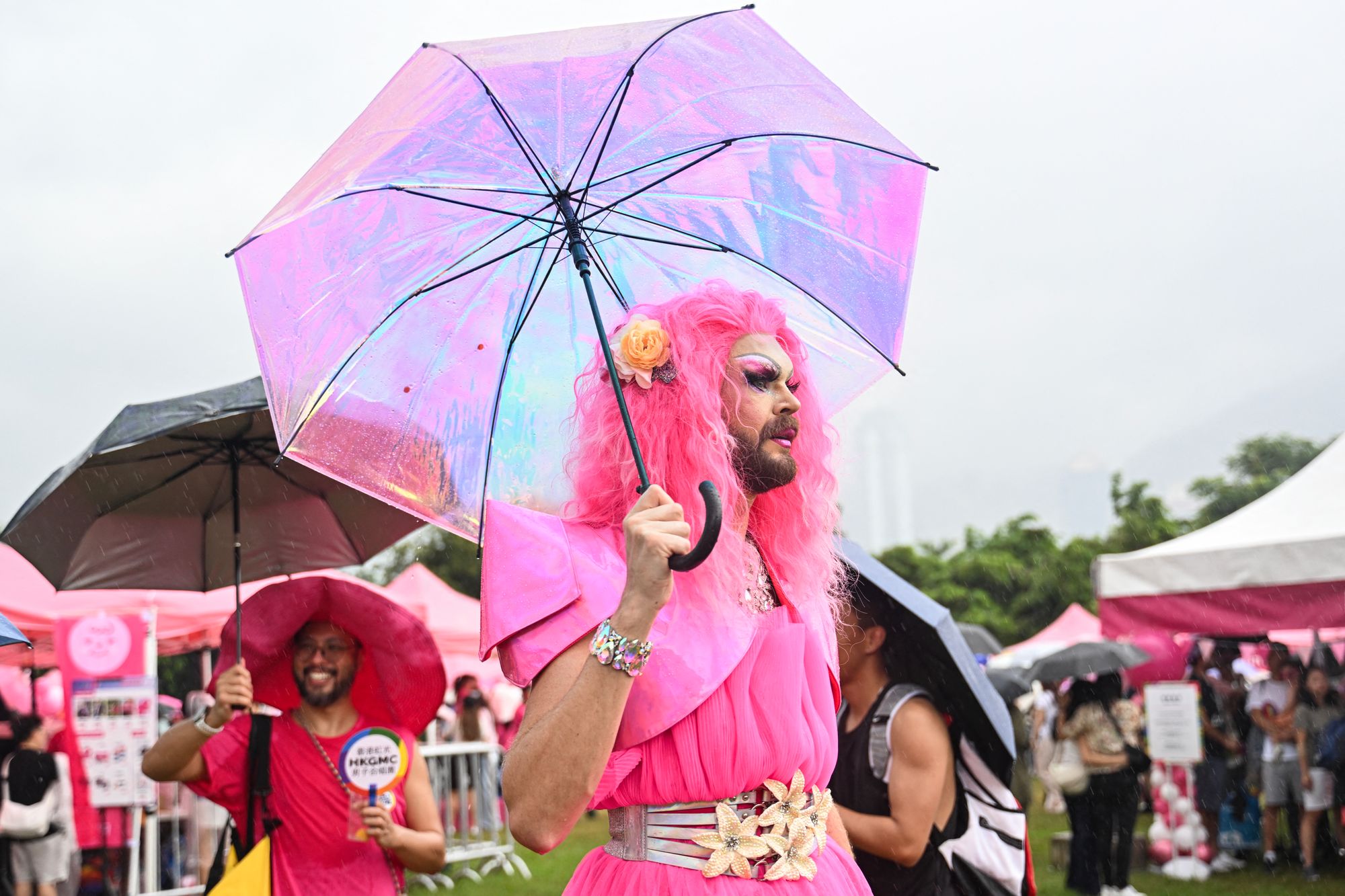
Hong Kong’s biggest LGBTQ carnival was cancelled for the second successive year after organisers said they had failed to get the necessary licences and lost access to their venue weeks before the event.
Organisers of Pink Dot HK said in a statement on Monday that this year’s outdoor carnival, scheduled for 14 June, would no longer go ahead after the venue operator, Link Reit, withdrew access to Stanley Plaza and Murray House, where the event was due to take place.
“With just a month to go until the scheduled event date, we’ve been diligently following procedures to apply for the necessary licences but haven’t yet received approval from the relevant authorities,” they wrote on Instagram. “Faced with this uncertainty, given the tight timeline and the involvement of numerous partner organisations, after thorough consideration, we have had to make the difficult decision to cancel this year’s Pink Dot HK outdoor carnival scheduled for 14 June 2026.”
Founded in 2014 and inspired by Singapore’s Pink Dot movement, Pink Dot HK grew into one of Hong Kong’s most visible LGBTQ events, combining concerts, workshops, and community activities.
The 2024 edition, held at Art Park, marked the event’s 10th anniversary and saw more than 13,000 visitors.
Link REIT told the AFP news agency that it had been liaising with organisers “to support the event’s preparation” and said use of the venue was “subject to the organiser obtaining all licences required under applicable laws”.
In 2025, organisers said they had been unable to secure Art Park as a venue after the West Kowloon Cultural District Authority withdrew from negotiations “without explanation”. They then replaced the cancelled outdoor event with a livestreamed concert and fashion show, featuring performances by Cantopop singers Marf Yau Yin-tung of Collar and On Chan, according to the South China Morning Post.
The repeated cancellation of a major LGBTQ event has heightened concerns among activists that space for public queer events in Hong Kong has narrowed in recent years, particularly after Beijing imposed a national security law on the city in 2020.
The law, introduced following mass street protests in 2019, criminalises acts of secession, subversion, terrorism, and “collusion with foreign forces” and prescribes penalties that can extend to life in prison.
The UN Human Rights Committee said in 2022 that the law’s vague provisions had led to a “curtailment of a wide range of rights and freedoms”, including freedom of expression and assembly.
Since the law came into force, dozens of civil society groups have shut down. Public demonstrations have become rare and organisers of events have reported difficulties securing venues, sponsors and official approvals, Hong Kong Free Press reported.
Hong Kong Pride last held a full street parade in November 2018, when organisers expected nearly 12,000 participants to march from Victoria Park to Edinburgh Place in Central.
In November 2025, the Hong Kong Pride Committee cancelled a planned outdoor festival at Kwun Tong Promenade after being told the venue was unavailable. The operator Aquabeat said government construction work meant the site could not be used, though the Buildings Department later said no work had been scheduled for that date.
Hong Kong courts have in recent years expanded some rights for same-sex couples through a series of rulings on visas, housing, and inheritance. In 2023, the city’s highest court ordered the government to create a legal framework recognising same-sex partnerships, although it stopped short of recognising same-sex marriage.