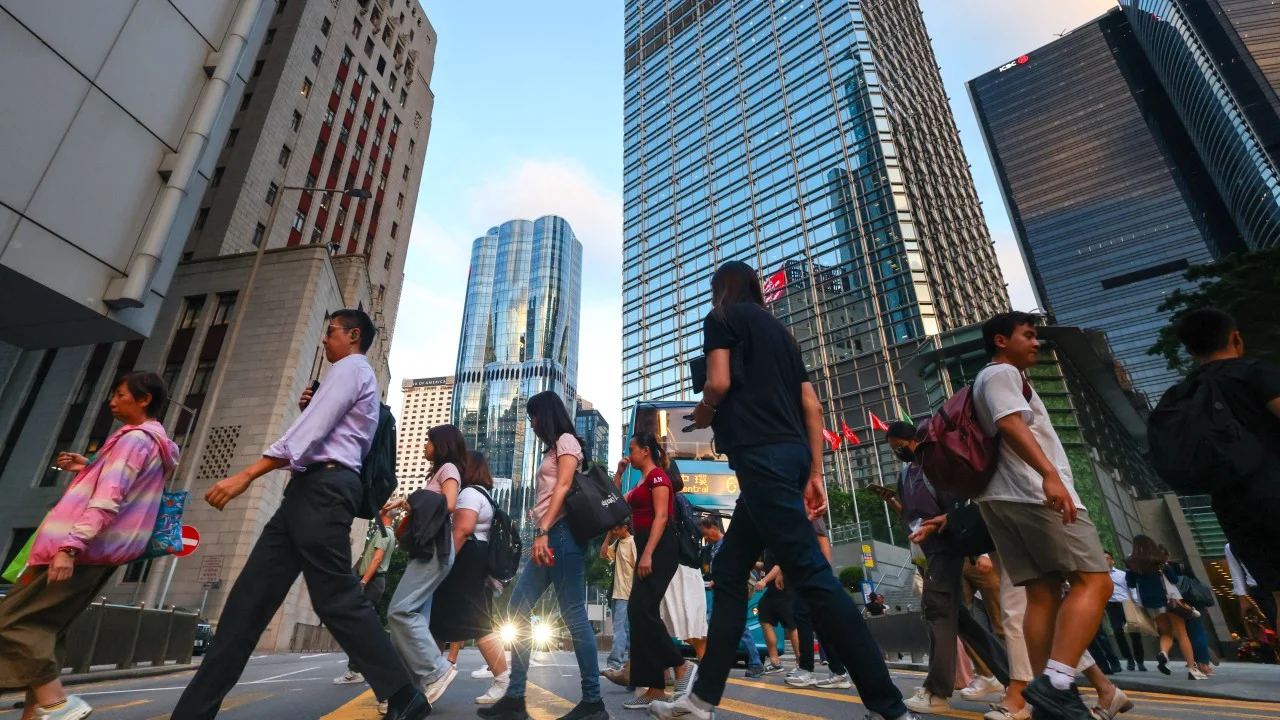
Hong Kong has become the world’s most unequal society in terms of wealth distribution, a study has found, as the core drivers of income inequality in the city have shifted from wage disparities to capital concentration, reducing social mobility.
The findings of the study, which analysed the evolution of income and wealth inequality in the city between 1981 and 2021, were presented by Yang Li, a research fellow at the World Inequality Lab at the Paris School of Economics, during a seminar hosted by the University of Hong Kong.
Yang said Hong Kong’s wealth disparities were no longer fuelled by differences in wages, but rather by capital asset ownership – which generates investment returns that favour a small segment of the population.
The share of capital in Hong Kong’s total income surged following the Asian financial crisis – from around 35 per cent in 2000 to 55 per cent in 2019. That significantly outpaced other high-income economies, such as the US, Britain and Germany, where the capital share typically hovered between 20 per cent and 30 per cent, Yang said.
“The wealthy become unseen and invest in things that you do not know about, and the amounts are actually much, much larger than labour income,” said Yang, who is also an advanced researcher at Germany’s Leibniz Centre for European Economic Research.
“And only a small group of people benefit from the rise of capital’s share in income, because you can only invest when you have money.”