Hong Kong took a step toward building a local hydrogen economy on Wednesday with the opening of the city’s first dedicated hydrogen fuel testing laboratory, even as officials and industry players stressed that large‑scale commercialization and profitability are still some way off.
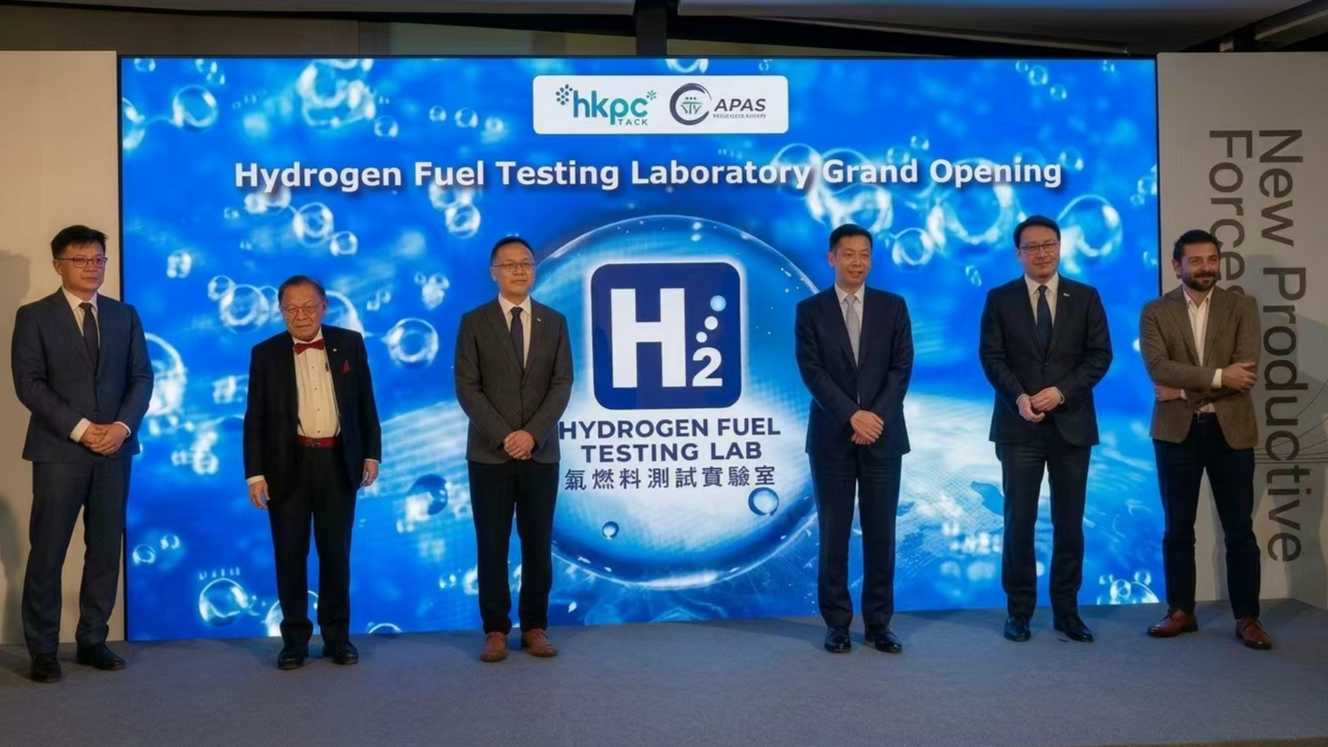
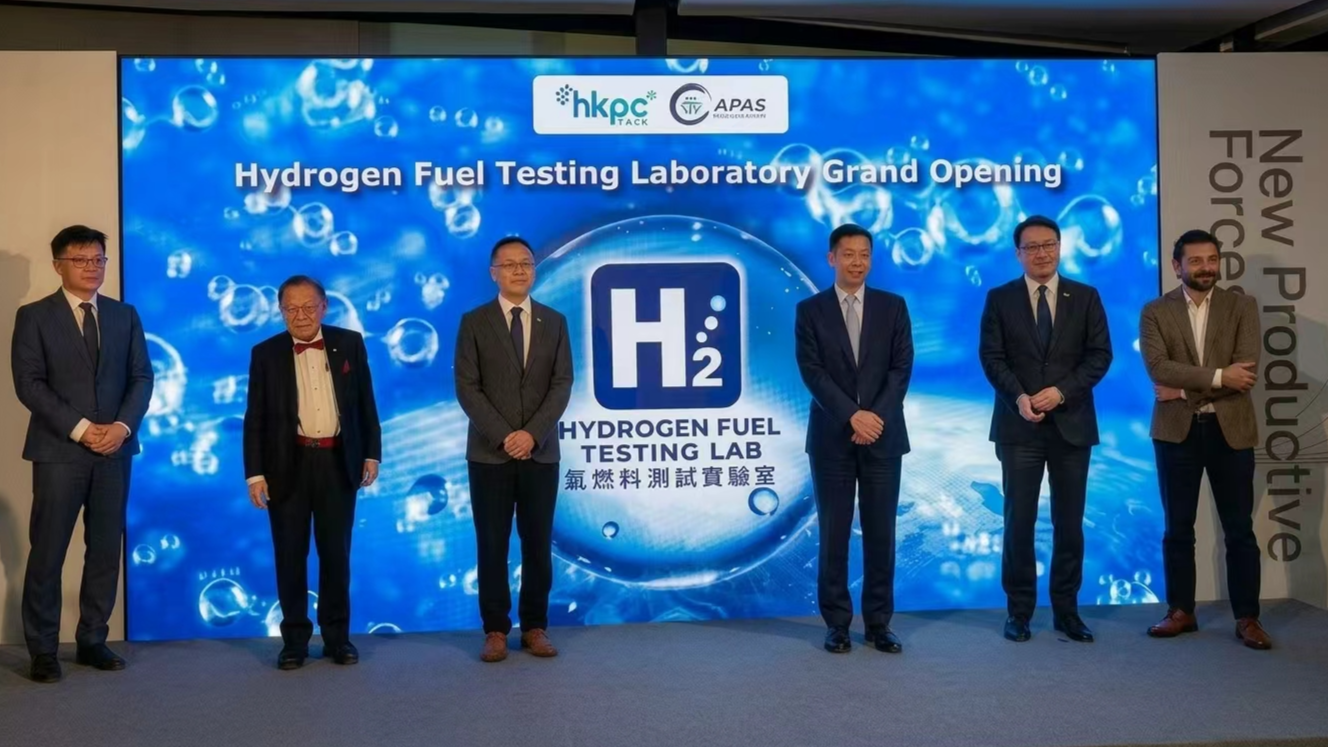
The Hong Kong Productivity Council (HKPC) and its Centre of Advanced Power and Autonomous Systems (APAS) officially launched the Hydrogen Fuel Testing Laboratory alongside the opening of the New Energy Summit 2026.
The milestone facility establishes a local, high‑precision testing and certification infrastructure designed to accelerate the commercialization, safety validation and wider adoption of hydrogen technologies across the region, said Du Yonghai, HKPC’s chief innovation officer.
The laboratory provides on‑site sampling for hydrogen production sites, refueling stations and end‑user applications, reducing reliance on sending samples to the mainland for quality validation, said Ralph Xu, APAS deputy head of green transportation.
“It adds a new impetus to the development of the city’s hydrogen-fuel-quality testing services and helps the industry,” said Sammy Yeung, commissioner for Climate Change of the Hong Kong Special Administrative Region government, who officiated at the opening ceremony.
Yeung described the lab as a “missing link” in Hong Kong’s hydrogen value chain that will “enhance the city’s credibility and market competitiveness”.
ALSO READ: HKMU, HKPC ink deal to boost Para sports education, research
The commissioner said that the SAR government will “continue to systematically implement” the Strategy of Hydrogen Development, optimize infrastructure planning, and steadily promote the application of hydrogen energy in the city, adding that fuel diversification is essential for Hong Kong to meet its zero‑carbon goal.
The HKSAR government’s first five‑year plan (2026-30) and the 2026 Policy Address refer to trial projects and demonstration applications, with 42 such projects now rolled out citywide.
However, both government and industry speakers framed the move of setting up a new lab, as well as the application projects, as part of an initial, trial-driven phase rather than a mature commercial market.
An interdepartmental working group, set up in 2024, has given in‑principle approval to 42 hydrogen trial projects, including hydrogen‑powered double‑decker buses, street sweepers, heavy construction generators, and the city’s first public hydrogen refueling station in Yuen Long.
The Policy Address says that the government will continue to advance hydrogen trial projects, and Yeung said related legislation is expected to be concluded by the end of this year.
HKPC and APAS used the summit to showcase related research-and-development work, such as electrification solutions for small vessels, hydrogen fuel‑cell power generation for construction sites, methanol power applications, and smart charging solutions.
The laboratory’s launch aligns with Hong Kong’s broader push to position itself as a green‑tech demonstration base and a platform for green finance and professional services.The city’s first five‑year blueprint calls for deeper cooperation with Guangdong province on hydrogen standards, demonstration applications and industrial technology development, while supporting infrastructure investment and green finance arrangements.
Even so, officials have repeatedly characterized current efforts as “prudent” and “demonstration‑led”, underscoring that widespread commercial deployment is still in its early stages.
APAS outlined joint research with partners including Foshan Xianhu Laboratory on electrochemical hydrogen extraction from existing municipal gas pipelines, as well as collaborations with Germany’s Hofer Institute on biomass‑to‑green‑fuel solutions and with universities on autonomous driving and delivery robotics.
While these initiatives aim to lower capital costs and make hydrogen more economically viable in urban settings, no detailed data on expected margins, cost-recovery timelines, or profitability for the laboratory or the associated pilot programs have been released.
Contact the writer at jessicachen@chinadailyhk.com