
Ha Young’s case highlights how family histories linked to collaborationist activities during the colonial era still spark fierce public scrutiny in Korea, especially ahead of Liberation Day.
In Korea, celebrities can face backlash not only over their own pasts, but also over those of their ancestors — particularly when their family history involves pro-Japanese activities during Japan’s 1910-45 colonial rule of Korea. The only way to survive the storm is by denying their ancestors.
The latest celebrity to find herself at the center of such a controversy is Ha Young, who recently appeared in the Netflix series “Our Sticky Love.”
The controversy began after Ha Young spoke about her great-grandfather during a KBS television program that aired on Friday. She introduced him as the first Western medicine doctor to open a clinic in Hanyang, present-day Seoul, and said he had treated Emperor Gojong (1852-1919).
Soon after the program aired, allegations surfaced that her great-grandfather was An Sang-ho, who had been involved in pro-Japanese activities during the colonial period.
Online comments criticizing the actor quickly piled up.
“I can’t even imagine how shameless that family must be,” an online user said. “It’s shocking that they would actually be proud of it.”
“It makes me angry that they apparently never taught their descendants to feel even the slightest sense of shame about it,” another comment said.
Ha Young initially denied the allegations Monday, calling them groundless. A day later, however, her agency reversed its position after further reviewing historical records and acknowledged that records of An’s involvement with a pro-Japanese organization existed.
“After further checking, we have confirmed that records of her great-grandfather, An Sang-ho, being listed as a councilor of the Daejong Chinmokhoe in 1916 actually existed,” Ha Young’s agency Bistrus Entertainment said Tuesday.
Daejeong Chinmokhoe, or Taisho Friendship Association, was a pro-Japanese society formed in Seoul in 1916, with the name Taisho taken from the era of the reigning Japanese emperor.
“We sincerely apologize for the confusion we caused by hastily answering that it was groundless, without sufficient verification,” the agency said.

Other celebrities have also found themselves in hot water over their ancestors’ pro-Japanese activities. It has become an issue celebrities tend to handle carefully, as failing to apologize can trigger a barrage of malicious comments and even calls for boycotts.
Actor E Ji-ah had faced criticism for over a decade for her grandfather Kim Sun-heung’s activities during Japanese colonial rule.
She faced widespread criticism online at the time.
“That’s why I don’t support her,” one person commented in 2021. Another wrote, “I really hate seeing celebrities continue their careers as if nothing happened, without showing any sense of shame.”
Kim is included in “The Dictionary of Pro-Japanese Collaborators” (2009), published by the Center for Historical Truth and Justice, a research institute specializing in modern Korean history.
E issued a public apology in February 2025, her first statement on the controversy since it surfaced years earlier, saying she would “live with a sense of responsibility.”
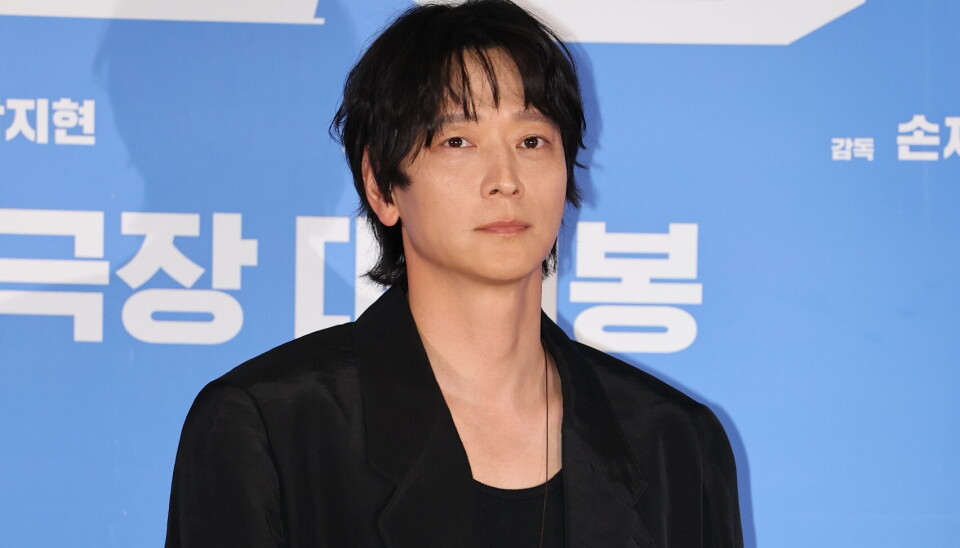
Actor Gang Dong-won faced a similar controversy involving his great-grandfather, Lee Jong-man, a businessperson and gold mining magnate who was accused of pro-Japanese activities during the colonial period.
Gang came under criticism after a 2007 interview resurfaced a decade later in which he had spoken positively about his great-grandfather. The renewed attention sparked criticism of his remarks and his family history.
Gang subsequently apologized, saying he had grown up hearing only positive accounts of his great-grandfather.
“I have learned about my great-grandfather’s shameful past,” he added. “This experience has made me realize that I need to learn more about history and continue to reflect on it.”
The controversy surrounding Ha Young comes just days before Korea marks Liberation Day on Saturday. The day commemorates the end of Japanese colonial rule on Aug. 15, 1945.
BY KIM JI-YE [kim.jiye@joongang.co.kr]