If I had to bet on one Buffett‑worthy stock that Warren Buffett himself never pulled the trigger on but Greg Abel could eventually bless, my money would be on Microsoft (NASDAQ: MSFT).
Buffett has said for years that he admires the business but stayed away for reasons that had little to do with fundamentals. That’s exactly what makes it such an interesting candidate in the Abel era.
Missed Nvidia in 2009? This Rare Signal Is Flashing Again. In 2009, a “Double Down” signal flashed for a little-known chipmaker called Nvidia. For the first time in years, that same “Total Conviction” signal is flashing for a company 1/100th the size of Nvidia. Continue »
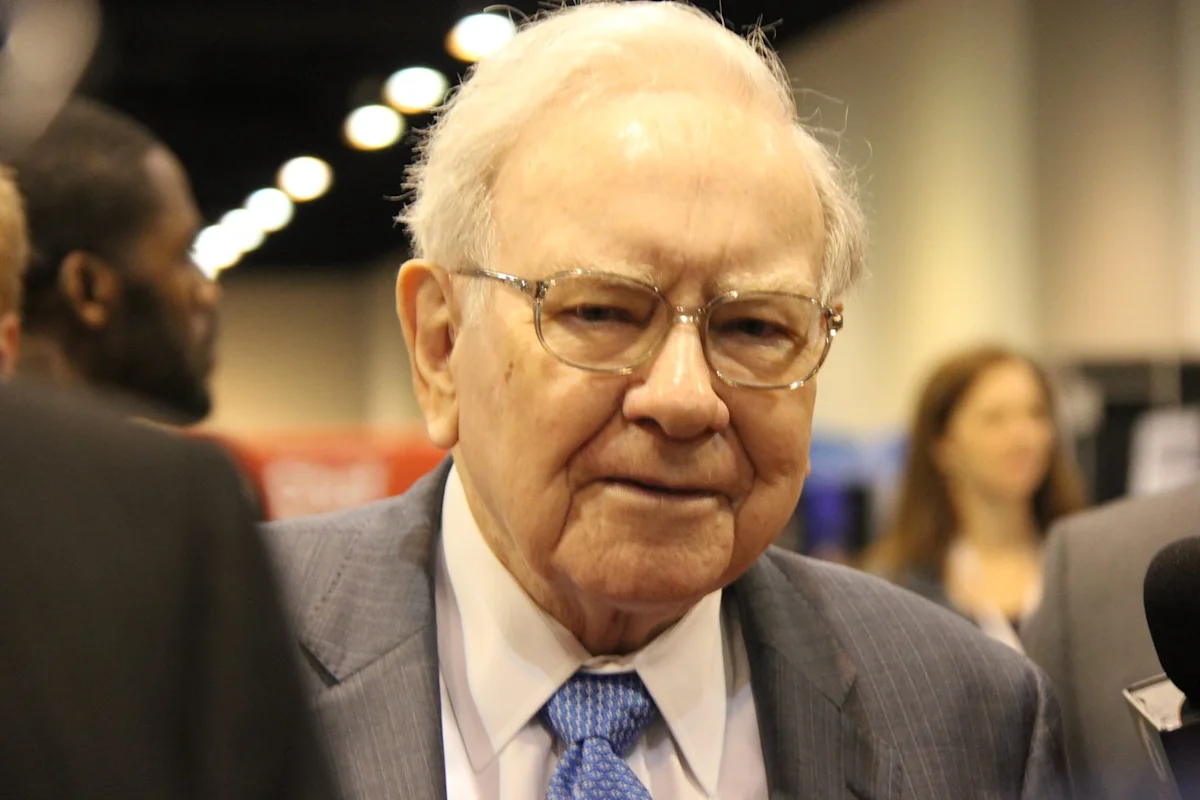
Former Berkshire Hathaway CEO Warren Buffett. Image source: The Motley Fool.
Buffett has been uncharacteristically blunt about why Berkshire Hathaway (NYSE: BRKB) (NYSE: BRKA) never owned Microsoft. He’s called his failure to buy in early “stupidity,” but once his friendship with Bill Gates deepened and Gates joined Berkshire’s board, he decided buying Microsoft would always look like a conflict of interest, even if nothing improper occurred.
In his words, “It just would be a mistake for Berkshire to buy Microsoft” because if the stock popped on earnings or an acquisition right after a purchase, critics would assume Gates had leaked information. So Microsoft became one of a small handful of companies explicitly “off the list,” not because it failed Berkshire’s investment criteria, but because of optics and ethics.
Abel is a different leader
Those constraints look different under Greg Abel. Gates is no longer on Berkshire’s board, the Buffett and Bill era has clearly passed, and Abel has already pushed the portfolio toward more technology and AI‑linked names, including a large expansion of Berkshire’s Alphabet position. The ethical rationale for avoiding Microsoft is weaker than it was a decade ago, yet the business is even more clearly a fit for the Berkshire mold.
Microsoft looks Buffett-investor-friendly
On the numbers, Microsoft looks like the kind of wonderful company trading at a fair price Buffett has always said he prefers. In fiscal 2026, Microsoft’s revenue grew 18% to more than $331 billion, with operating income up 21% and net income up 31%.
The company’s cloud and AI engine is extraordinary: In Q4 alone, revenue hit $90 billion, Microsoft Cloud revenue reached $59.3 billion (up 27%), and the AI business crossed a $37 billion annual run rate, growing 123% year over year. Those are wide‑moat economics — recurring subscription revenue, mission‑critical software, and a dominant cloud platform that enterprises are building on for the next decade.
Valuation, which kept many value investors cautious for years, no longer looks absurd next to that growth profile. As of early August 2026, Microsoft traded at a trailing P/E just under 29, slightly below its 10‑year average of around 30, and forward estimates put the multiple closer to 25. For a business with high‑teens revenue growth, very high returns on capital, and a fortress balance sheet, that is more of a justified premium than bubble territory.
Most importantly, Microsoft fits the qualitative side of the Berkshire checklist. It has:
A durable competitive advantage in operating systems, productivity software, and cloud infrastructure.
Products that are deeply embedded in customer workflows, which makes revenue highly sticky.
Management that has shown disciplined capital allocation, reinvesting heavily in cloud and AI while still returning cash via dividends and buybacks.
Abel has already demonstrated that he is willing to own complex tech businesses when their economics are undeniable, as evidenced by Berkshire’s growing Alphabet stake. Microsoft is cut from the same cloth.
No one outside Omaha can know what Berkshire will actually buy next. But if you strip away the personal history and focus purely on the mold (high‑quality, cash‑gushing, competitively entrenched, and sensibly valued), Microsoft looks like exactly the kind of stock Buffett spent decades praising but not owning, and the kind Abel may one day be far less hesitant to make a cornerstone holding.
Should you buy stock in Microsoft right now?
Before you buy stock in Microsoft, consider this:
The Motley Fool Stock Advisor analyst team just identified what they believe are the 10 best stocks for investors to buy now… and Microsoft wasn’t one of them. The 10 stocks that made the cut could produce monster returns in the coming years.
Consider when Netflix made this list on December 17, 2004… if you invested $1,000 at the time of our recommendation, you’d have $399,832!* Or when Nvidia made this list on April 15, 2005… if you invested $1,000 at the time of our recommendation, you’d have $1,374,595!*
Now, it’s worth noting Stock Advisor’s total average return is 968% — a market-crushing outperformance compared to 215% for the S&P 500. Don’t miss the latest top 10 list, available with Stock Advisor, and join an investing community built by individual investors for individual investors.
Micah Zimmerman has no position in any of the stocks mentioned. The Motley Fool has positions in and recommends Alphabet, Berkshire Hathaway, and Microsoft. The Motley Fool has a disclosure policy.