LAWRENCE — As the largest newspaper in China, the People’s Daily remains one of the most influential tools for the Chinese Communist Party.
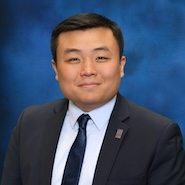
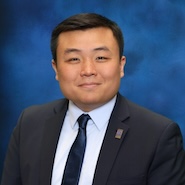
“It’s the newspaper of record in China, so you can imagine the Wall Street Journal, New York Times and Washington Post rolled up into one audience. And because it’s a newspaper, it both serves an editorial function and a news function,” said Jack Zhang, associate professor of political science at the University of Kansas.
But how does this paper present news about places other than China?
That’s answered in a new article titled “Domestic Politics and Editorial Control Over Foreign News Coverage in the People’s Daily, 1993–2022.” The study reveals that official Chinese media have notably reduced foreign news coverage during President Xi Jinping’s administration, suggesting such coverage is influenced more by domestic politics than by China’s growing international interests. The article appears in the Journal of Contemporary China.
“Ours is one of the first papers to explain the politics behind what is written on the page,” said Zhang, who co-wrote the article with Jianbing Li of the University of Hong Kong (who was a doctoral student at KU), Duoji Jiang of the University of Chicago and Weifeng Zhong of George Mason University.
“We went into writing this project thinking that over the course of the period we’re looking at — from 1993, when it was just emerging out of autarchy, to 2022 when it sees itself as a leader on the world stage — that transformation would be correlated with greater foreign coverage. Or the foreign coverage might vary based on whether it has friendlier relations with a country or not.”
Instead, they discovered through an examination of more than 1 million People’s Daily articles that the volume of foreign coverage (especially news-related) declined as power consolidated within the Chinese system. Recent leadership has also shifted the ratio from news to editorial messaging. More propaganda, in other words, according to the researchers.
That effect is especially noteworthy since Xi Jinping became the leader in 2013.
“Xi Jinping has consolidated political control over the media apparatus even more than his predecessors, and his second term effect is even stronger than earlier,” Zhang said.
He is quick to point out that this is not necessarily an indication China is retreating from international interests in terms of news coverage.
“The volume of foreign coverage is still remarkably high,” Zhang said of the paper, which was founded in 1948.
“It’s not an equal reduction in all kinds of news about foreign countries; rather, it’s about controlling the narrative. So imagine when you’re doing factual reporting, you might have more human-interest stories, you might cover events that are going on in foreign countries. Or what foreign leaders themselves might be saying about world affairs. Instead, you see a reduction of that type of reporting and more toward an editorial style, like, ‘Here is what the government wants you to think about this foreign country.’”
As for why the paper chooses such a strategy, Zhang said he believes it’s intended to harmonize different viewpoints.
“China is a big country, and even among elites there are different views involving, for instance, the relation with the United States. How confrontational or cooperative you should be. How open or closed the economy should be. That plays out when power is not entirely consolidated. Then you have multiple competing elite perspectives,” he said.
In America, it’s hard to find a comparable media institution, he said.
“It’s normal for governments everywhere to try to influence the news, but in the U.S., it’s one step removed because of privately owned media. Thus a government must influence a paper through things like whether you grant certain reporters access or not. At the People’s Daily, the editorial process is directly controlled by the party that also runs the government apparatus, which offers a more direct way to craft a message,” he said.
A professor at KU since 2019, Zhang is the founder and director of the KU Trade War Lab. His research explores the political economy of trade and conflict in East Asia. His past articles include “Political risk and firm exit: evidence from the US–China Trade War,” “In the Middle: American Multinationals in China and Trade War Politics” and “The Politics of Securitization: US and Japanese Legislative Responses to De-risking with China.”
Zhang said he did not grow up reading the People’s Daily because “I left China when I was very young, so I wasn’t reading any newspapers.”
Regardless of its political machinery, the People’s Daily is still a newspaper, which means it faces similar economic and cultural issues that other print outlets face.
“China has TV news and social media, so people are consuming news probably more and more in non-print forms,” Zhang said. “But the important thing about the People’s Daily is it’s what all of those other workers in the propaganda system are queuing on when they’re thinking about how to craft every sentence.”