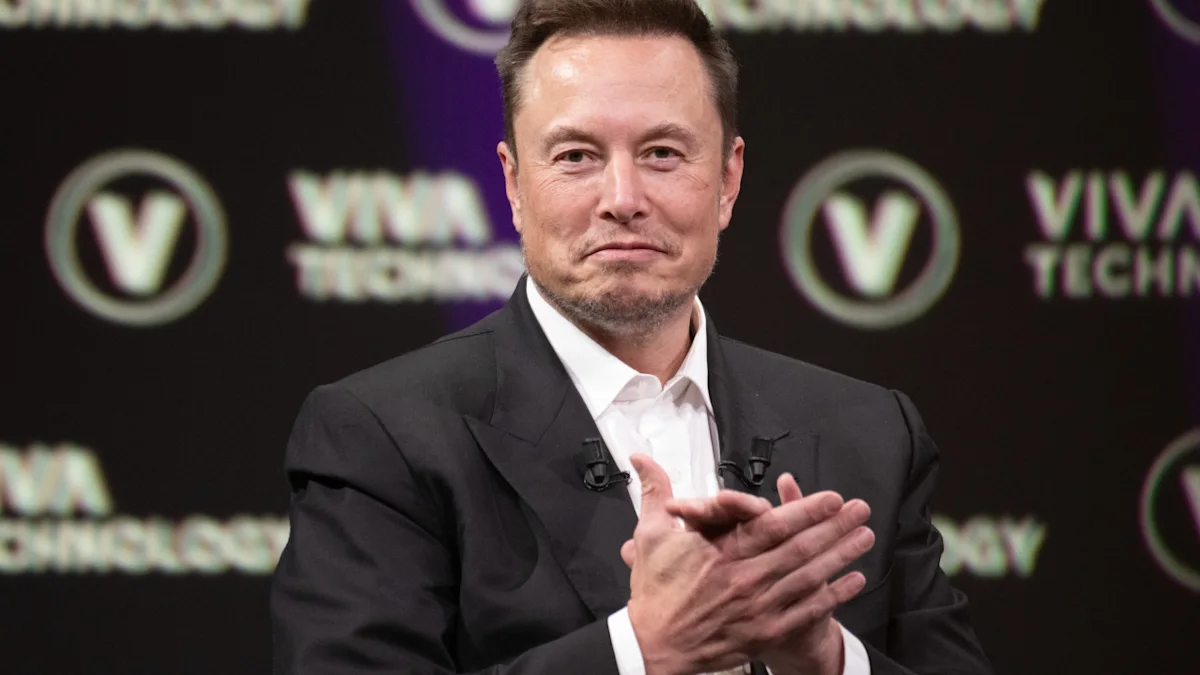
Elon Musk has never been shy about sharing his opinion, often making bold proclamations about technology and the world we could live in. But one of his latest predictions has left many scratching their heads.
During an interview with The Economist’s Editor-In-Chief Zanny Minton Beddoes, the Tesla CEO — who briefly became the world’s first trillionaire when SpaceX made its initial public offering on June 12 — said he believes money “won’t matter” in ten years, assuring that robotics and artificial intelligence will create an “incredible abundance” of goods and services.
Must Read
“What do you want money for,” Musk asked during his interview with Beddoes. “You want money for goods and services, right? You want money for obviously food, housing, transport, entertainment. Well, if that is so abundant that the robots and AI are providing more goods and services than any human could possibly consume, what do you need money for?”
Beddoes wasn’t quite convinced of Elon’s prediction. “I’m not sure that the people who bought your shares think that money won’t matter in 2036,” she said.
Time will tell whether Musk’s proclamation comes true, but if his prediction eventually proves to be way off, it wouldn’t be the first time.
Here are a few predictions that Musk got completely wrong in the past. Predictions below are specifically those with deadlines that have passed. So, for example, Musk’s prediction that humans will be on Mars by 2033 is not wrong just yet.
Autonomous Tesla robotaxis
In 2019, Musk said he expects Tesla to have a fleet of more than one million autonomous robotaxis on the road in 2020, CNBC reports. But seven years later, Tesla is still nowhere near one million robotaxis.
As of May 28, 2026, Tesla only has 42 registered automated vehicles for its robotaxi service, and all of those vehicles are operating in Texas, according to CNBC. Making matters worse for Musk is the fact that Tesla isn’t even the leading autonomous robotaxi service in the Lone Star State. Waymo, a self-driving robotaxi service launched by Alphabet, currently has 577 autonomous robotaxis operating in the state.
“Tesla will have a car that can do full autonomy in about three years,” Musk claimed in October, 2015, according to Wired.
Three months later, Musk’s confidence was still quite high. “I think that within two years, you’ll be able to summon your car from across the country,” Musk said in January 2016, The Verge reports.
“I consider autonomous driving to be a basically solved problem. We’re less than two years away from complete autonomy,” he told Time Magazine in June, 2016.
But two years later, Musk started pushing back the deadline. “I think we’ll get to full self-driving next year,” he told Vox in November 2018.
Fast forward eight years to 2026, and consumers still can’t purchase a fully self-driving vehicle from Tesla. “You can buy one of these cars with semi-autonomous technology, and that’s about as close as it gets by modern standards,” says U.S. News & World Report.
Brain chips
In 2016, Musk founded Neuralink, an American neurotechnology company that hopes to merge human intelligence with AI using a chip that’s implanted into the human brain. Musk told Business Insider in 2017 that Neuralink’s first product would hit the market in approximately four years.
In 2020, Musk gave the world a glimpse into this burgeoning technology during a live demo, where he showed off the chip’s ability to read a pig’s brain activity and wirelessly transmit the data. He even described the chip as “a FitBit in your skull with tiny wires.”
However, the first human test subject received a brain chip in 2024, seven years after Musk made his promise and three years after his four-year deadline for a Neuralink product to hit the market. And while the human trial appeared to be somewhat successful — Musk said the patient is “able to move a mouse around the screen just by thinking” — we’re likely a ways away before Neuralink’s product is ready for consumers.
Optimus robots
Musk, who had been promising a Tesla-produced humanoid robot since 2021, stated in early 2025 the company “hopefully” would create 5,000 Optimus robots that calendar year.
At Tesla’s Q1 2025 all hands, Musk said these robots will be able to “clean your house, will mow the lawn, will walk the dog, will teach your kids, will babysit, and will also enable the production of goods and services basically with no limit.”
He later claimed Tesla would produce “probably 50,000-ish [Optimus robots] next year” in 2026, Wired reports. But in April 2026, Musk informed investors that China’s restrictions on exporting rare-Earth minerals, a retaliation to President Trump’s tariffs, could negatively impact humanoid robot production. As of now, there is no known date for the public sale of Tesla’s Optimus robots.
What To Read Next
Join 250,000+ readers and get Moneywise’s best stories and exclusive interviews first — clear insights curated and delivered weekly. Subscribe now.