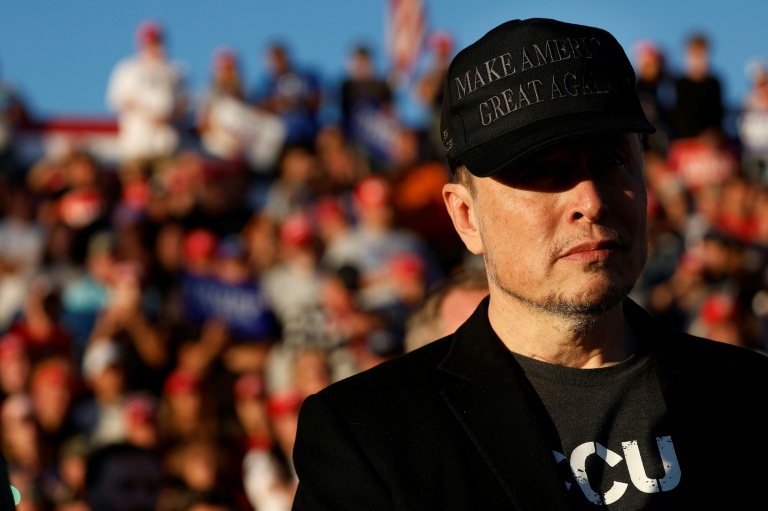

Elon Musk has become the most powerful, prolific and bewildering human on earth and is about to become the world’s first trillionaire if his latest brainchild — the IPO of his rocket and AI company SpaceX — goes as planned.
The Musk of 2026 is a different man than the Tesla and SpaceX chief of a decade ago, when the hugely admired tech innovator largely stayed out of politics to focus intensely on building world-class businesses in sectors that others said couldn’t be challenged.
Since those days, Musk waded ever deeper into social media, becoming a power user of Twitter — the platform used by celebrities, governments and opinion-makers — which he eventually bought in 2022, renamed X, and turned into a vehicle for his own worldview and celebrity.
That vision, slowly, then all at once, veered sharply to the right as Musk increasingly used the X algorithm to amplify conspiracy theories, far-right voices and narratives of white victimization.
Theories vary on why Musk took such a hard turn to the right. They include an overuse of social media, a purported snub by the Biden administration and his shock and disdain that a son of his — one of his more than a dozen children — had transitioned, becoming what Musk called a victim of the “woke mind virus.”
The political turn led him to Donald Trump, and in 2024 Musk took a wild gamble to back the former president’s second White House candidacy to the tune of as much as $100 million.
For a brief period, Musk played an outsized role in overhauling the government, seeming to have free rein to walk into Trump’s Oval Office as he pleased.
Musk took leadership of the “Department of Government Efficiency,” promising to slash $2 trillion from the federal budget by uncovering fraud — an over-the-top pledge that echoed the shoot-the-moon ambitions that had delivered him phenomenal success in business.
The DOGE experience ended in just a few months after a falling-out with Trump — but in that time Musk’s loyal staff disrupted government through layoffs and overly rushed tech overhauls that critics say left only chaos.
Musk’s political transformation came at a cost — Tesla’s global sales slumped, with analysts attributing the decline to a combination of consumer boycotts over Musk’s politics and an aging model lineup facing stiff competition, particularly from Chinese rivals.
Musk left the US government to turn his attention more fully to xAI, a rival he created in 2023 to ChatGPT-maker OpenAI — the research lab he co-founded and financed before leaving in 2018 to focus more on Tesla.

