Chinese texts have described brass production during the 10th century CE, yet archaeologists lacked physical proof from the period. A new study now fills much of that gap with crucibles from Guangzhou in southern China.

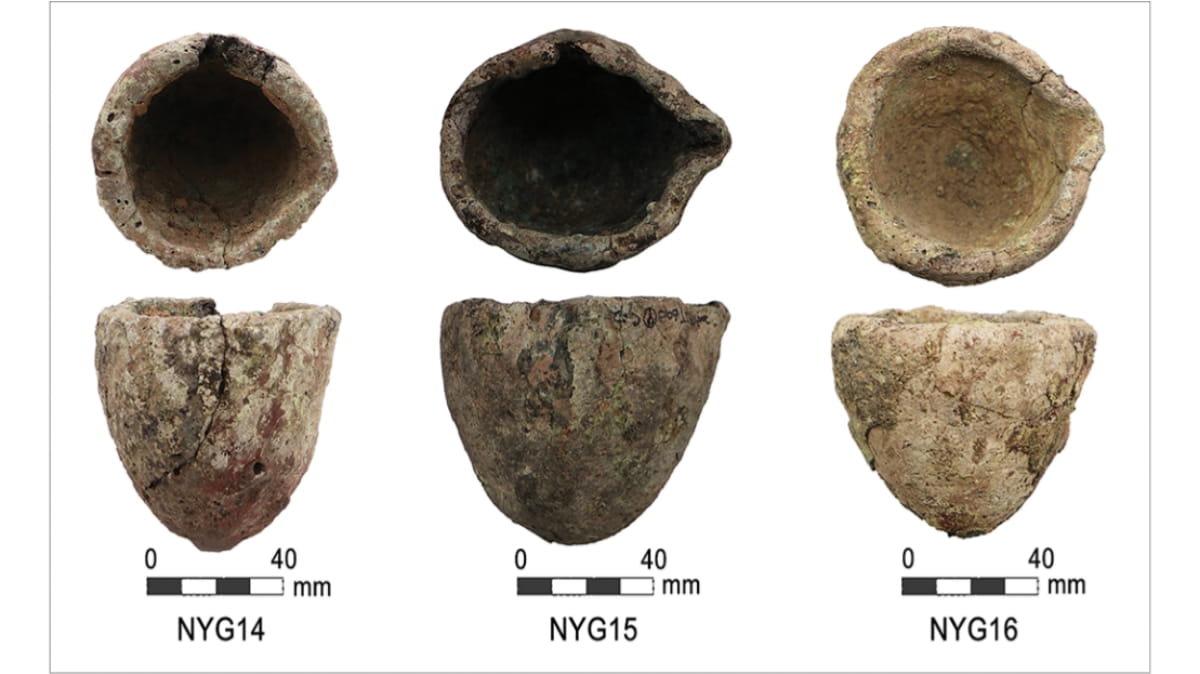
Researchers found the earliest known brass-making crucibles in East Asia at a metalworking workshop linked to local government. Tests show workers used them to make brass through a process called cementation.
The find comes from a long-running workshop near the former Royal Palace of the Nanyue Kingdom. Archaeologists uncovered furnaces, crucibles, and metal objects during excavations between 1975 and 2007. The workshop appears to have operated for more than 1,000 years.
The team examined almost 80 crucibles and fragments from the site. Portable X-ray scans first showed an unusual rise in zinc in some vessels. Lab tests found tiny brass droplets trapped on three crucibles from the ninth and 10th centuries.
The chemical remains point to a full brass-making process. Some crucibles held residues linked to copper or bronze, while others had strong traces of zinc oxide and high-zinc slag. These traces differ from those expected from normal copper or bronze work.
The evidence suggests workers used fresh copper to make pure brass. They also used unleaded bronze to produce a copper-zinc-tin alloy. The furnace, crucibles, metal waste, and finished brass objects form one production system.

The crucibles also offer clues about how the new skill reached southern China. Their shape and firing methods share features with brass-making vessels from the medieval Islamic world. The Guangzhou vessels were lidless and fired above copper’s melting point, at about 1,980 degrees Fahrenheit.
The brass they produced had relatively low zinc levels, another feature seen in medieval Islamic brass production. The researchers see the Islamic world as a likely source, though the study does not prove direct transfer.
Guangzhou was well placed for such contact. After the Tang dynasty lost control of much of the Silk Road in the eighth century, sea routes became more important links between China and other regions.
Historical records describe Guangzhou as a major trade center with large foreign communities. Arab merchants and craftsmen lived in the city, creating close links with markets and skilled trades across Asia and the Indian Ocean.
Those links offer a possible route for brass-making knowledge to reach China. Locally sourced clay, organic temper, and metal resources also support the case for production within Guangzhou.
The discovery pushes physical evidence for Chinese brass production back by several centuries. Earlier known remains dated to the 16th century, even though written records placed brass making much earlier.
Brass production later grew on a large scale during the Ming dynasty. The Guangzhou crucibles now mark an early stage in that history.
The study adds to a wider story about how metalworking skills moved between regions. Trade routes carried raw materials and finished goods, but they also carried methods and skilled labor. In Guangzhou, those links helped shape an early brass industry by the end of the first millennium CE.