Quick overview
- Dow Futures and stocks rose as falling bond yields followed a slowdown in the U.S. labor market, reducing expectations for interest rate hikes.
- The S&P 500 reached a record high, supported by geopolitical optimism and a drop in oil prices.
- U.S. nonfarm payrolls unexpectedly fell by 23,000 in July, with a downward revision for previous months, while the unemployment rate decreased to 4.1%.
- Market participants remain cautious, as the cooling labor market may influence the Federal Reserve’s future rate decisions amid upcoming inflation data.
Dow Futures rallied, and stocks pushed higher amid falling bond yields after a sharp U.S. labor market slowdown fueled expectations that the Federal Reserve will hold off on interest rate hikes.
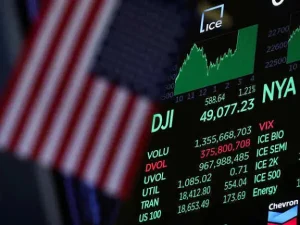
The S&P 500 hit a record high to cap its strongest week since April. Broader market sentiment was further bolstered by geopolitical optimism following reports of a potential U.S.-backed deal between Iran and Oman near the Strait of Hormuz, pushing oil prices lower late in the session.
Short-dated Treasuries outperformed as yields dropped. Money markets pushed rate hike expectations to December at the earliest, while the U.S. dollar pulled back.
U.S. nonfarm payrolls unexpectedly dropped by 23,000 in July, paired with a combined 103,000 downward revision for May and June.
The unemployment rate ticked down to 4.1%—largely driven by declining labor force participation—while wage growth cooled. The surprisingly cool jobs data eases immediate rate pressure on the Fed while stopping short of signaling a broader economic breakdown.
Dow Futures traded cautiously as market participants weighed how a cooling labor market might influence the Federal Reserve’s rate path. One weak jobs report is unlikely to single-handedly dictate Fed policy, with the central bank expected to maintain its wait-and-see stance to evaluate incoming data, noted Brent Wilsey of Wilsey Asset Management.
Stock futures drew mild support from expectations that slower employment growth reinforces the case for keeping rates unchanged. “While incoming inflation data will be the ultimate arbiter, slowing jobs growth helps support a September hold,” said Lindsay Rosner at Goldman Sachs Asset Management.
However, the relief in Dow Futures may be short-lived. Principal Asset Management’s Seema Shah pointed out that while Friday’s payroll numbers provide temporary breathing room, the absence of clear forward guidance leaves equity futures highly vulnerable to upcoming inflation data.
Warning of potential downside risk for markets, Morgan Stanley Wealth Management’s Ellen Zentner added, “If those numbers come in hotter than expected, a cooler labor market may not be enough to quiet the calls for hikes inside the Fed, or lower expectations outside of it.”

Olumide Adesina
Financial Market Writer
Olumide Adesina is a French-born Nigerian financial writer. He tracks the financial markets with over 20 years of working experience in investment trading