Doosan Enerbility will supply core equipment for the first time to the small modular reactor (SMR) being developed by TerraPower, the U.S. next-generation nuclear company founded by Bill Gates. The contract, finalized as Gates visits South Korea, demonstrates that South Korean companies’ SMR manufacturing capabilities have now firmly entered the U.S. next-generation nuclear supply chain.
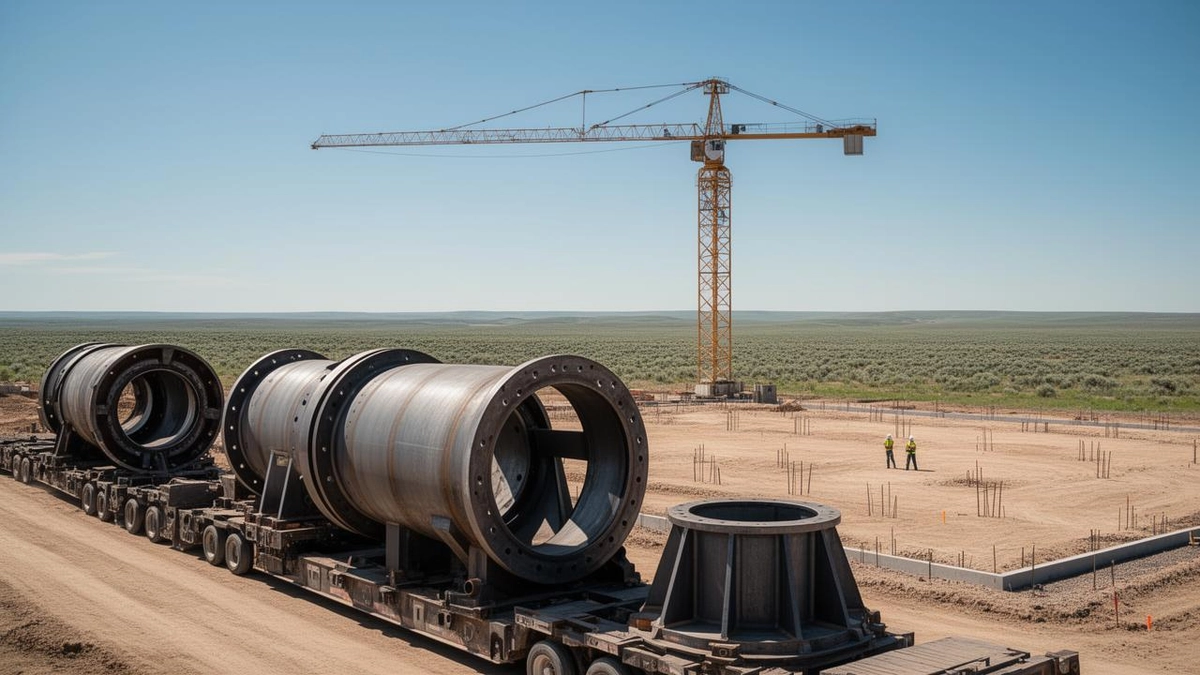
Under the agreement, Doosan Enerbility will manufacture the reactor protection vessel, reactor support structures, and reactor internal structures for TerraPower’s sodium-cooled reactor. The contract value was not disclosed by mutual agreement between the two companies.
The order is the culmination of years of technical collaboration. Through its partnership with TerraPower, Doosan Enerbility advanced design maturity to a level where procurement became feasible, establishing a foundation for cooperation that combines TerraPower’s reactor technology with Doosan Enerbility’s advanced manufacturing capabilities.
Kim Jong-doo, head of Doosan Enerbility’s Nuclear Business Group, said, “This manufacturing contract was signed based on years of close cooperation and trust built with TerraPower. We will execute this project without disruption while continuously strengthening our SMR manufacturing capabilities to expand our role as a global supplier.”
Kemmerer, Wyoming Project
TerraPower is building its first SMR with a capacity of 345 megawatts (MW) in Kemmerer, Wyoming. The project is one of the first SMR projects in the United States to enter commercial-scale construction and is regarded as a significant milestone toward SMR technology commercialization.
TerraPower broke ground this spring after obtaining construction approval from the U.S. Nuclear Regulatory Commission (NRC). The project is supported by the U.S. government’s SMR expansion policy.
The SMR under development by TerraPower is based on fourth-generation sodium-cooled fast reactor (SFR) design technology, which uses liquid sodium as a coolant to transfer heat generated during nuclear fission. The reactor can be combined with a molten salt energy storage system to boost power output to 500 MW. Molten salt refers to salt and chemical salts that have melted into a liquid state when heated.
Gates’ Visit to South Korea and Meeting with HD Hyundai
Gates’ current visit to South Korea is drawing attention not only for the contract with Doosan Enerbility but also for the potential expansion of cooperation with HD Hyundai.
HD Hyundai Chairman Chung Ki-sun is scheduled to meet with Gates in Seoul on the 14th. This marks their first meeting in about seven months since the World Economic Forum (WEF) in Davos, Switzerland, in January this year.
Chung and Gates have held a series of meetings in the SMR field since last year. In March last year, they signed an agreement in the United States to expand the manufacturing supply chain for sodium reactor commercialization, and in August of the same year, they reviewed cooperation progress in Seoul.
Cooperation between HD Hyundai and TerraPower has been accelerating since 2022. HD Korea Shipbuilding & Offshore Engineering invested $30 million (approximately 43 billion won) in TerraPower in November 2022, and in December 2024, it won a reactor vessel manufacturing project from TerraPower, which is currently in production.
The partnership between the two companies is expanding beyond reactor manufacturing to supply chain development. In May this year, HD Hyundai Heavy Industries signed a basic agreement with TerraPower on sodium reactor supply and was selected as the preferred bidder for manufacturing and supplying key reactor primary equipment.
South Korean Companies Entering the SMR Supply Chain
With Doosan Enerbility and HD Hyundai simultaneously participating in TerraPower’s SMR project, South Korean companies are gaining an increasing share of the U.S. next-generation nuclear supply chain.
TerraPower’s Kemmerer project is a flagship SMR commercialization initiative supported by the U.S. government. If the project proceeds successfully, there is potential for follow-on unit orders and expansion to other regions, which bodes well for companies that entered the supply chain early.
Notably, Doosan Enerbility will be responsible for core equipment directly tied to reactor safety, including the reactor protection vessel, support structures, and internal structures. This is interpreted as entry into a high-value-added segment spanning reactor design through manufacturing, beyond simple component supply.
HD Hyundai is also solidifying its position in the supply chain, having secured reactor vessel manufacturing work and preferred bidder status for primary equipment supply. It is also noteworthy that the two companies’ areas of participation are complementary rather than overlapping.