Novo Nordisk (NYSE: NVO) has faced several headwinds over the past two years. The company suffered clinical setbacks while losing market share to its biggest competitor, Eli Lilly, in the weight-loss drug space.
Another issue it had to contend with was that some online health platforms were selling compounded versions of its famous weight loss and diabetes drug, semaglutide (the active ingredient in Wegovy and Ozempic), at much lower prices, and even outside of the legally allowed exemption for doing so, that is, when there is an officially recognized shortage of the medicine.
Will AI create the world’s first trillionaire? Our team just released a report on the one little-known company, called an “Indispensable Monopoly” providing the critical technology Nvidia and Intel both need. Continue »
However, Novo Nordisk recently reached an agreement with one of the leading digital health platforms that sold compounded semaglutide: Hims & Hers (NYSE: HIMS). Let’s look into the details of this deal and decide whether it makes Novo Nordisk’s shares more attractive.
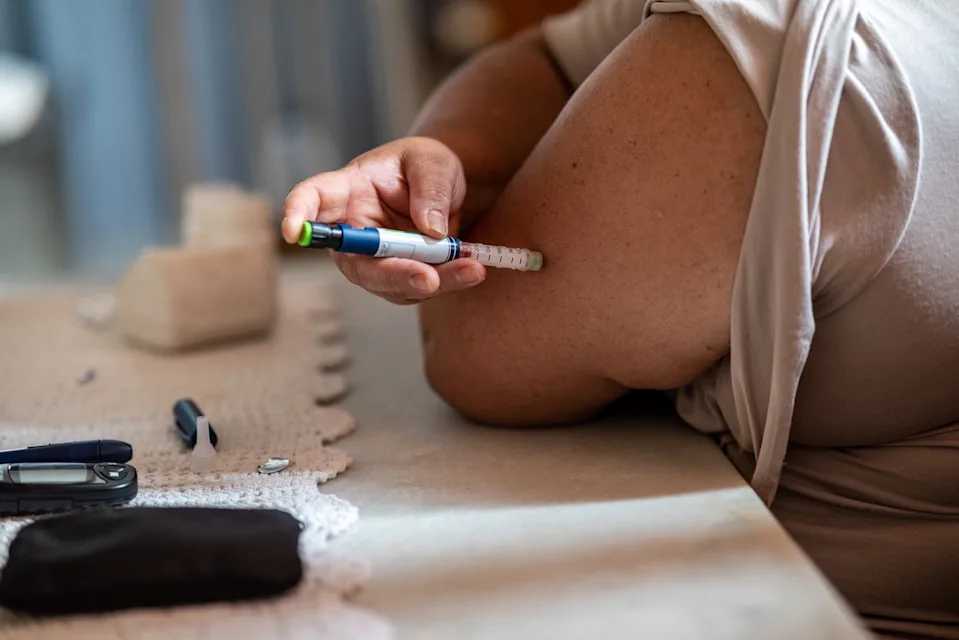
Shortages aside, Novo Nordisk’s GLP-1 products haven’t always been affordable for patients. That’s why many turned to platforms like Hims & Hers, which offered non-FDA (U.S. Food and Drug Administration) approved versions of these medicines at reduced prices. Of course, this meant lower sales volume and revenue for Novo Nordisk. That’s why the Denmark-based pharmaceutical leader had previously announced a patent lawsuit against Hims & Hers. However, the drugmaker has now changed its strategy.
Novo Nordisk will partner with Hims & Hers to sell the branded, FDA-approved versions of its famous drug on the telehealth platform at the same reduced self-pay prices it offers elsewhere, including on its own platform, NovoCare. This move arguably solves several problems for Novo Nordisk. Partnering with Hims & Hers, a leading distributor of compounded semaglutide, will allow the company to undercut sales of the cheap knock-offs and redirect demand toward the branded, approved version of the medicine, since the main price advantage of the former is partly gone, while the risk of taking non-FDA-approved therapies remains.
That should help boost sales volume for Novo Nordisk’s products. It will also allow the company to avoid a potentially costly and lengthy patent battle, which it may or may not have won.
Novo Nordisk has made significant headway toward solving one problem, but several remain. It is still losing ground to Eli Lilly in the weight-loss space, and the company’s revenue this year will decline, according to its own guidance. But there is good news on those fronts, too. Novo Nordisk is making progress with newer candidates. CagriSema, a next-gen GLP-1 medicine, should earn approval within 10 months.