Deep-fried foods will no longer be allowed in schools in England under new government rules designed to improve the nutritional quality of school breakfasts and lunches.
The updated School Food Standards will also require schools to offer more fruit, vegetables, fibre and wholegrains, while placing tighter limits on certain sugary, salty and high-fat foods.
The changes are expected to come into effect from September 2027, subject to parliamentary approval. So, no, your child’s chips aren’t disappearing next Tuesday – but the school dinner of the future is set to look rather different.
So, what’s actually changing?
- Deep-fried foods will no longer be permitted
- At least one portion of fruit must be offered every day
- Schools must provide at least three different fruits and three different vegetables each week
- Fibre and wholegrain requirements will increase
- Every main meal must contain or be served with vegetables or salad
- Breakfast clubs will have dedicated nutrition standards for the first time
- Pastry, breadcrumb-coated foods and processed meat will be limited to two portions per week
- Sweetened desserts will be restricted, although secondary schools will be allowed two portions per week
- Schools will be expected to publish their menus and food policies online
- Compliance will be monitored through a new national framework
To put it into simple terms, that means more veggies, fewer deep-fat fryers and no more living off beige food during school hours.
Why is the government making the changes?
The current school food standards have been in place since 2015. And since then, nutritional advice – and evidence about children’s diets and health – has changed.
The government says children are consuming twice the recommended amount of free sugar, while only 14% of primary-aged children and 4% of secondary-aged children are meeting fibre recommendations. It also says one in three children leave primary school overweight or obese.
Obviously, school dinners aren’t solely responsible for children’s health. But, as chef and child health Campaigner Jamie Oliver points out, children eat at school for around 190 days a year, so the government’s argument is that the food served there should be healthy. ‘It’s got to fill them up with all the good stuff they need to learn and grow,’ he says.
‘These are once-in-a-generation changes that will transform school food for children across the country,’ says Education Secretary Lucy Powell.
‘From our historic expansion of free school meals to the rollout of free breakfast clubs and new school food standards, we are making sure that every child has access to the healthy meals we know children need to learn, grow and succeed.’
Elaine Hindal, chief executive of the British Nutrition Foundation and a member of the School Food Standards Advisory Group, adds: ‘School food standards and food education must go hand in hand.
‘While standards help create a healthier food environment, food education gives children the knowledge, skills and confidence to make informed food choices for themselves, both now and in the future.’

What will breakfast clubs serve?
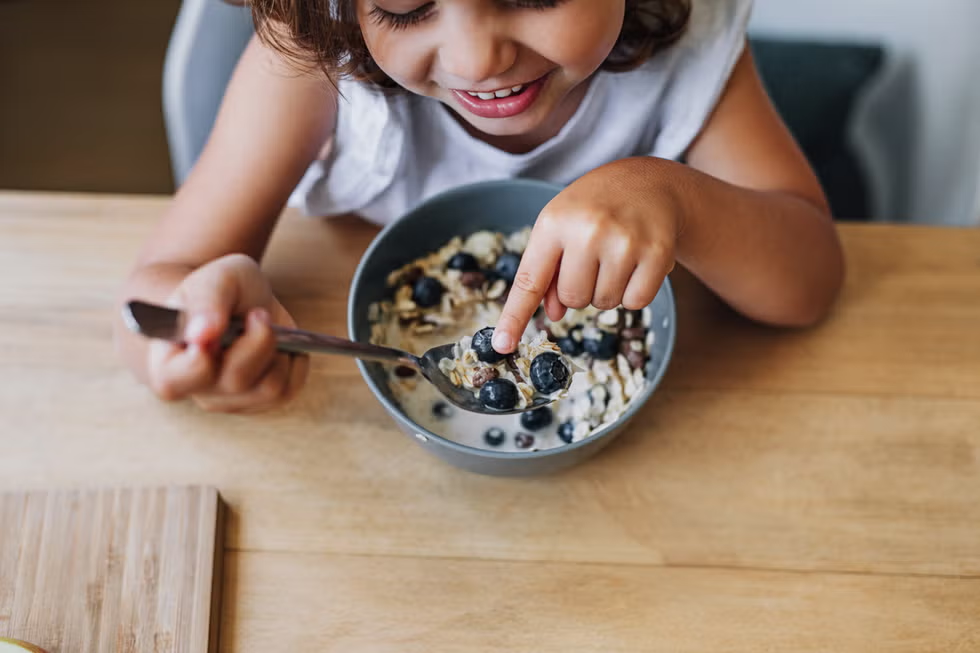
Breakfast clubs are being pulled into the overhaul, too. Historically, there has been no dedicated national guidance covering what they should – and shouldn’t – provide. Under the new standards, breakfast will need to include a starchy carbohydrate, such as bread or cereal, alongside fruit or vegetables.
Breakfast cereals will need to contain no more than 5.5g of sugar per 100g. Chocolate spread, honey and syrups will not be permitted, although low-sugar jam will be allowed.
Teacakes, crumpets and unsweetened pancakes can be served on up to two days each week.
What will school dinners look like?
The government’s sample menus include sweet chilli stir-fry, lasagne, chicken and vegetable curries, Mexican-style burritos and cottage pie with root-vegetable mash.
Where pasta dishes are served at least once a week, they will need to contain at least 50% wholewheat pasta, while bread will have to meet a higher fibre requirement.
The bottom line
So far, the response has been broadly positive, with campaigners, charities and nutrition experts – including Jamie Oliver and Dame Emma Thompson – welcoming the overhaul. But there’s one crucial constituency the government still needs on board: children.
Because, as Brad Pearce, chair of The School Food People, says, the standards ‘can only actually improve children’s diets if pupils continue to choose school meals’.