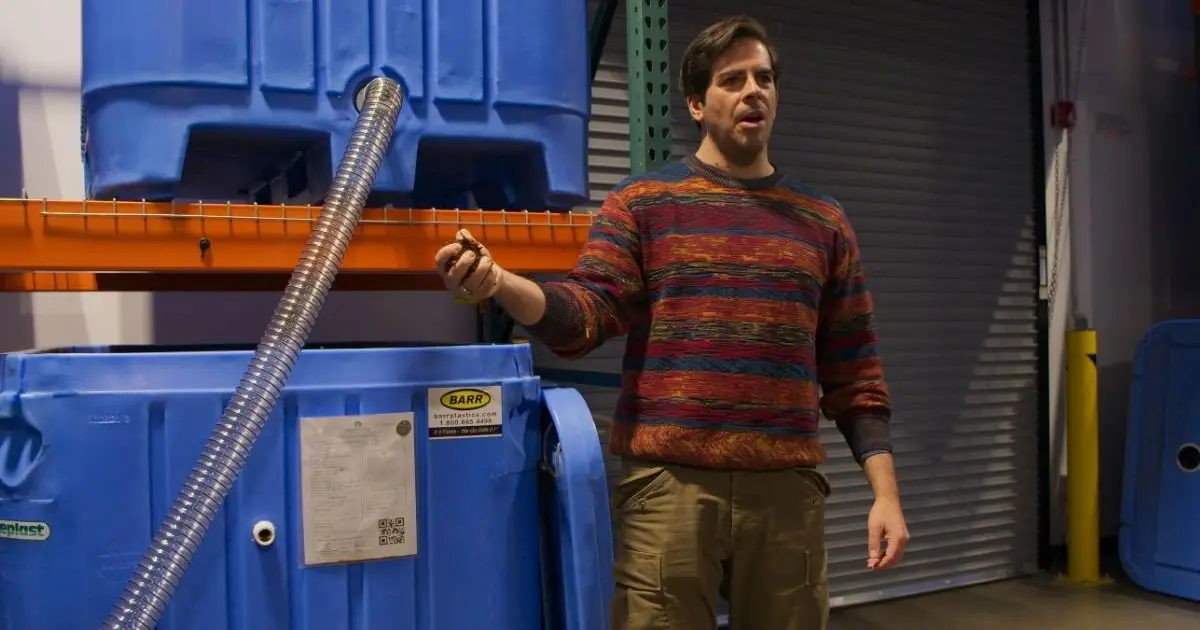
Death Boom director Jessica Chandler and producer/narrator Eli Roth spoke with ComingSoon about the startling new documentary about the funeral business. The duo discussed the flaws with the current funeral industry, why water cremation is currently illegal in many states, and more. Its world premiere will take place at the Tribeca 2026 Festival today at 8 p.m. ET.
“The Baby Boom ends with a bang: over a billion people will die in the next 15 years, and our funeral systems aren’t ready for the ‘Death Boom.’ As morgues overflow and wallets empty, a broken, billion-dollar industry is exposed. But better options exist. This shocking, eye-opening, and surprisingly uplifting documentary dives deep into the business of death, revealing who’s keeping it alive, and why. With unprecedented access and bold voices leading a new movement, Death Boom reclaims the end of life with humanity, sustainability, and just the right dose of dark humor,” says the official synopsis.
Tyler Treese: Jessica, I thought this was such a smart topic to cover because we all hear about the birth rate, and that topic is always in the discourse. Maybe it’s just because it’s not a nice thing to think about, but we don’t hear about the death rate and the issues that are going to come with it over time. What made you want to cover this in such detail?
Jessica Chandler: Well, the history of this is that Eli and I wanted to do a documentary like this 20-something years ago. We didn’t get it done, which we always say is probably a good thing, because we didn’t get it done when we were in our 20s. But Eli reached out to me a few years ago and was like, “What about we try this again?”
When I heard about the death boom, I was like, “Oh, this is even more important now.” Where are the bodies going? What is happening with them after they go wherever they’re going? What are the repercussions after that happens? We found that the environmental stuff was pretty shocking.
We felt like we needed to tackle this now because, as much as we want our parents to stick around, they’re…
Eli Roth: They’re on their way out.
Chandler: And not only them, right? So it’s the death boom, but it’s also all of the other deaths that happen along the way. It’s not just the boomers who are dying. It’s the other deaths that happen every day as well.
Yeah, this is such an eye-opening doc. Eli, on top of producing this, you’re also the narrator of the film. I hate hearing my own voice, but you’re an actor as well as a director. Did you have any hangups about doing narration, or was it just a natural fit since you’re also on screen?
Roth: No, I think I broke the ice on Fin. Part of the hook when I go to people to invest in it is that I want to make a film that’s going to — obviously, there are huge environmental repercussions to everything that’s happening in the death industry — but I wanted to make something that horror fans would see. Then you can break out beyond that.
I feel like we made a documentary that’s for everybody because it’s one of the rare subjects that affects 100% of the population. We thought if we could do this with a bit of a light touch, because it’s such heavy subject matter, it would work. People associate me with death and mayhem in movies and the ways I’ve killed characters in films.
Fin really got me used to doing narration. There are certain things we’re very passionate about — not death itself, but what we’re going to do about it. The idea that we recycle everything, but we’re not allowed to recycle our bodies. We have choice and autonomy over our bodies in every way — my body, my choice — except when you die. Then you’re forced into a system that pumps you full of poison.
Or if you’re burned, it uses the same amount of gasoline as driving your car from California to Cleveland. All of that poison goes right up into the air, into the clouds, into everybody’s breathing. You’re commingling ashes. Even if you want to do water cremation, which is 100% zero-emissions and doesn’t commingle ashes, you’re not allowed to do it.
It’s illegal because they say, “Well, you can’t dump the water.” Yet all of the blood and chemicals pumped through your body during embalming go right down the drain with zero filtration and into the oceans. It’s wild.
Even if you wanted to do human composting — natural organic reduction — you can only do it in 12 states. We wanted to understand why. How come we’re told we have to use a system that can charge anywhere from $50,000 to $250,000 per funeral? You’re bankrupting your family. So what are you leaving behind? Poison chemicals and your family in debt.
With 76 million people coming up and dying, they’re licking their chops that a $20 billion boom is going to happen in their industry. And we’re saying, what is blocking it?
Who are the politicians who are in the pocket of the funeral industry? Why does the Catholic Church want us to buy into the system when it’s so clear that our bodies are designed by God to break down naturally into the soil? What is going on here, and why are we not allowed to talk about it?
We didn’t want to ruin anyone’s livelihood. I think the federal government should come in and help every funeral home dispose of these chemicals properly. If it costs a mom-and-pop funeral home $700,000 to buy an air scrubber, the state should pay for it. We’re all breathing that air.
If you want to do water cremation, those machines cost $300,000 to $400,000. There should be ways the government helps pay for that. It’s clear from talking to funeral directors that they want these methods too.
In New York State, you can’t do water cremation. It’s illegal. That’s what’s crazy to us. The method that’s legal is toxic, costs a fortune, poisons everybody, and there’s no alternative. There’s really something wrong here.
Jessica did a brilliant job with the film. We wanted to introduce these methods, and she handled it with a very light touch so that the film is actually an enjoyable watch.
Tyler Treese: Eli just covered so much of what’s wrong with the business of death. Jessica, what surprised you the most while documenting all of this? I never realized this was such a capitalist hellscape like everything else. It makes total sense that it would be primed for taking advantage of grieving people because everybody dies, but what surprised you during the making of the documentary?
Jessica Chandler: Besides the filtration systems and the embalming stuff — where everything goes right where it goes when you flush a toilet, turn on a faucet, or take a shower — I want to make a clear distinction between corporate funeral homes and smaller family-run funeral homes and independent funeral homes.
My family and I were very taken advantage of when my grandmother died by an SCI company funeral home. We’re sitting in the planning room, and they’re telling my brother, who’s in his 20s, “Well, you know, the bugs are going to get in the casket, and this will protect…” It’s the nastiest thing in the world.
That happened to my family, but I want to be very clear that these independent family-run funeral homes are really not out to take advantage of anyone. They have a business to run, just like we get paid for our jobs. They should be paid for their very difficult jobs.
They’re very loving people. I saw them be nothing but respectful to all of the decedents that came into their care. They cared for them immensely. Even OMS, which we covered in the film, handles a huge influx of bodies for funeral homes. Even there, they are careful, loving, and respectful with every decedent.
That being said, the most shocking thing for me was that these methods are being blocked. It doesn’t make any sense. We had a team of researchers working on this relentlessly, updating us constantly. There is no actual reason other than greed and ego, I think, whether it’s the Catholic Church or politicians. And I’m Catholic, okay? I’m a Christian, part-Lebanese woman. Believe me, I’m not out to hate on the Church. But it’s the institutional part of the Catholic Church.
Again, politicians are coming up with reasons to block these methods, and they’re laughable when you listen to them explain why they won’t allow something like composting or water cremation to be legalized. There’s no scientific backing for wanting to block this. If it were about anything other than greed, these methods would be allowed.
Tyler Treese: What shocked me is that you go through all the different methods, and everything has a major con — pollution, cost, whatever. Then you get to water cremation, which I’d never even heard of, and I kept waiting for the catch. And the catch is that it’s illegal almost everywhere.
Eli Roth: Yeah, the water is 99.9% pure. You could water your garden with it. They go, “Nope, you’re not allowed.”
You talk to the sanitation department, and they won’t even give you an answer. That’s what’s so funny. You ask, “Why?” It’s like the Society of Bishops in Texas. They’re presented with the argument, everyone passes it, and then suddenly it’s “Nope.”
They say things like, “You’re flushing Grandma down the drain.” They have these talking points. And you go, “But you’re poisoning people directly through embalming.” What is cremation? It’s horrible.
Chandler: Yeah, it’s ugly. Getting rid of a body isn’t going to be pretty. It’s all going to be gross, whatever method you use. But some methods are gross and environmentally harmful, and also harmful to the funeral directors and morticians doing the work.
Roth: They’re getting myeloid leukemia. They lose their sense of smell. They absorb our grief. Think of the worst moment of your life. It all gets dumped on that one person. Then they have to do that for everyone. There’s a lot of depression. It’s a very difficult job, and they’re loving people.
It’s crazy that these things are being blocked. They say you can’t dump the water in Orange County or New York City. Funeral homes want to offer water cremation. They want it for themselves. Blocked. Illegal. Not allowed.
Yet you’re allowed to put a body in an oven with no filtration and have all of us breathe it in. All of the toxins that come with it. Hip replacements, surgical cement — you can’t take that stuff out before the body goes into the oven. It all goes right into the air.
Chandler: Orange County does allow water cremation now, but it was very difficult to get there. They continue to face hurdles. Every once in a while someone tries to stop it again.
Roth: For people?
Chandler: Is that what it is?
Roth: Maybe. I know Orange County can do it for pets. It was tough. It’s a big business, but there’s also huge money in green alternatives. Look at Earth. Look at Return Home. There’s a booming business there, too.
It’s got to be us saying we want it legalized. People need to talk about it. Most people don’t realize they’re being told by the government what happens to their body after they’re dead. It will cost their family a fortune, it’s toxic, and it will poison their loved ones.
Chandler: And funeral directors want to be able to offer these methods. Their job is to serve families. When they can’t offer them, it puts them in a bad position because it becomes an additional expense to transport bodies across state lines. Alkaline hydrolysis has been around for a long time. It’s proven. It’s very safe and very environmentally friendly.
Roth: No commingling, either.
Chandler: No. It’s gentle. It’s basically a warm bath. There’s very little manipulation of the body compared to some other methods. There’s really no reason other than greed and ego. We want people to know about this. When you pre-plan your funeral — which we all should — you should come equipped with this knowledge and these demands.
I’m glad the documentary ends on a hopeful note by showing these alternatives. There is a pathway out of this.
Roth: That’s what shocked us. The answer is already there. We’re not inventing a solution. There are multiple solutions. They’re just being blocked because of greed.
Eli, there’s a moment where you talk about organic composting and say, “It sounds gross,” which I appreciated. I feel like horror masters’ brains are always working in that direction. Did working on this give you any ideas for kills or different horror concepts?
Roth: My God, yeah. Especially when I heard about the Body Farm. I’m taking that title. I’m doing it. I’m going to make a movie called Body Farm. I love the idea that there were medical students and forensic examiners learning how a body decomposes by watching it. I thought it was beautiful. Really interesting.
Well, I’ll definitely buy a ticket to Eli Roth’s Body Farm, for sure.
Thanks to Jessica Chandler and Eli Roth for taking the time to talk about Death Boom.