

Macao’s Public Security Police Force announced on 25 May that total passenger movements through the SAR’s land, sea and bridge checkpoints have already passed the 100-million mark for 2026—fully 14 days earlier than last year. While the headline figure focuses on Macao, the data highlight a sharp uptick at the Macao Port of the Hong Kong–Zhuhai–Macao Bridge (HZMB), which has now processed more than 10 million traveller movements in under five months. The milestone underscores how rapidly cross-boundary mobility in the Greater Bay Area is normalising after years of pandemic-era restrictions. HZMB’s Macao and Hong Kong ports together provide the only 24-hour land link between the two SARs, and the bridge is increasingly the route of choice for businesspeople shuttling between meetings in Hong Kong’s Central district, Macao’s Cotai convention zone and Zhuhai’s tech parks. Improved coach frequencies, simplified e-Channel enrolment and the recent expansion of self-drive permit quotas have all contributed to the boom.
For companies or individual travelers who still need help navigating visa or entry-permit formalities before taking advantage of the bridge, VisaHQ’s Hong Kong office can streamline the entire process. The online platform (https://www.visahq.com/hong-kong/) offers up-to-date guidance, real-time application tracking and corporate bulk-processing options for everything from China business visas to Macao entry permits—making it easier to capitalise on the GBA’s newfound connectivity.
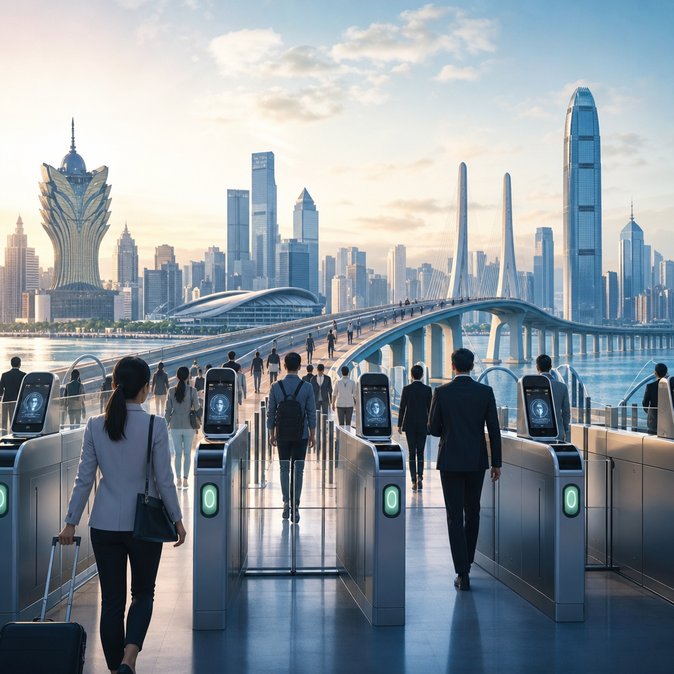
To accommodate the surge, Macao authorities plan to boost inspection-lane capacity at Hengqin Port from 69 to 113 and to add 10 inbound self-service gates at the Border Gate checkpoint. Iris-recognition clearance—currently reserved for Macao residents—will be extended to non-resident workers and university students, mirroring Hong Kong’s own push for contactless immigration control. For Hong Kong companies managing cross-boundary assignees, the upgrades promise shorter queues and more predictable journey times, making day-trip client visits and regional commuting increasingly viable. However, mobility teams should note that passenger peaks still align with mainland public holidays and weekend casino traffic; advance booking of HZMB shuttle tickets and real-time monitoring of checkpoint wait times via TD’s “Easy Boundary” app remain best practice. Freight forwarders are also watching capacity closely, as the same lanes handle both passenger coaches and cross-border e-commerce vans. Taken together, the 100-million-trip landmark and planned infrastructure enhancements signal that the western Guangdong–Hong Kong corridor is cementing its role as a core artery for talent flow within the Greater Bay Area. Firms relying on intra-GBA mobility should update travel policies to leverage extended e-Channel eligibility and the growing menu of coach, limousine and self-drive options now available on the bridge.