At the start of last month, we predicted a June swoon in the S&P 500. Now it’s looking more like a summer stall as the index has been marking time around 7,500 since May 14. We still expect the index to reach 8,250 by year-end. A resilient economy and strong earnings remain powerful tailwinds, but these bullish factors are widely recognized. On the other hand, numerous risks remain. So more choppiness this summer is likely before the rally resumes.
Currently topping the worry list is the Middle East conflict. The resumption of the war following a short ceasefire has boosted oil prices again and revived inflation fears. Houthi threats to shipping through the Bab el-Mandeb Strait pushed oil prices higher again today. Bond yields have been rising on increasing odds that the next Fed rate hike will occur sooner rather than later as a result of the inflationary consequences of rising energy prices.
AI is another concern. Moonshot’s Kimi K3 has revived “DeepSeek 2.0” fears about whether hyperscalers’ massive AI capital spending will deliver sufficient returns. Adding to AI jitters, OpenAI disclosed that two of its models escaped a sandbox and hacked AI startup Hugging Face in what it called an “unprecedented cyber incident.”
Tariffs are back on the worry list. The administration plans 50% tariffs on various Canadian goods and aims to replace the expiring Section 122 tariffs with new duties of roughly 10.0%-12.5% on about 60 countries. The risk is that another round of tariff increases will put more upward pressure on goods prices.
These concerns are already showing up across financial markets and key economic indicators:
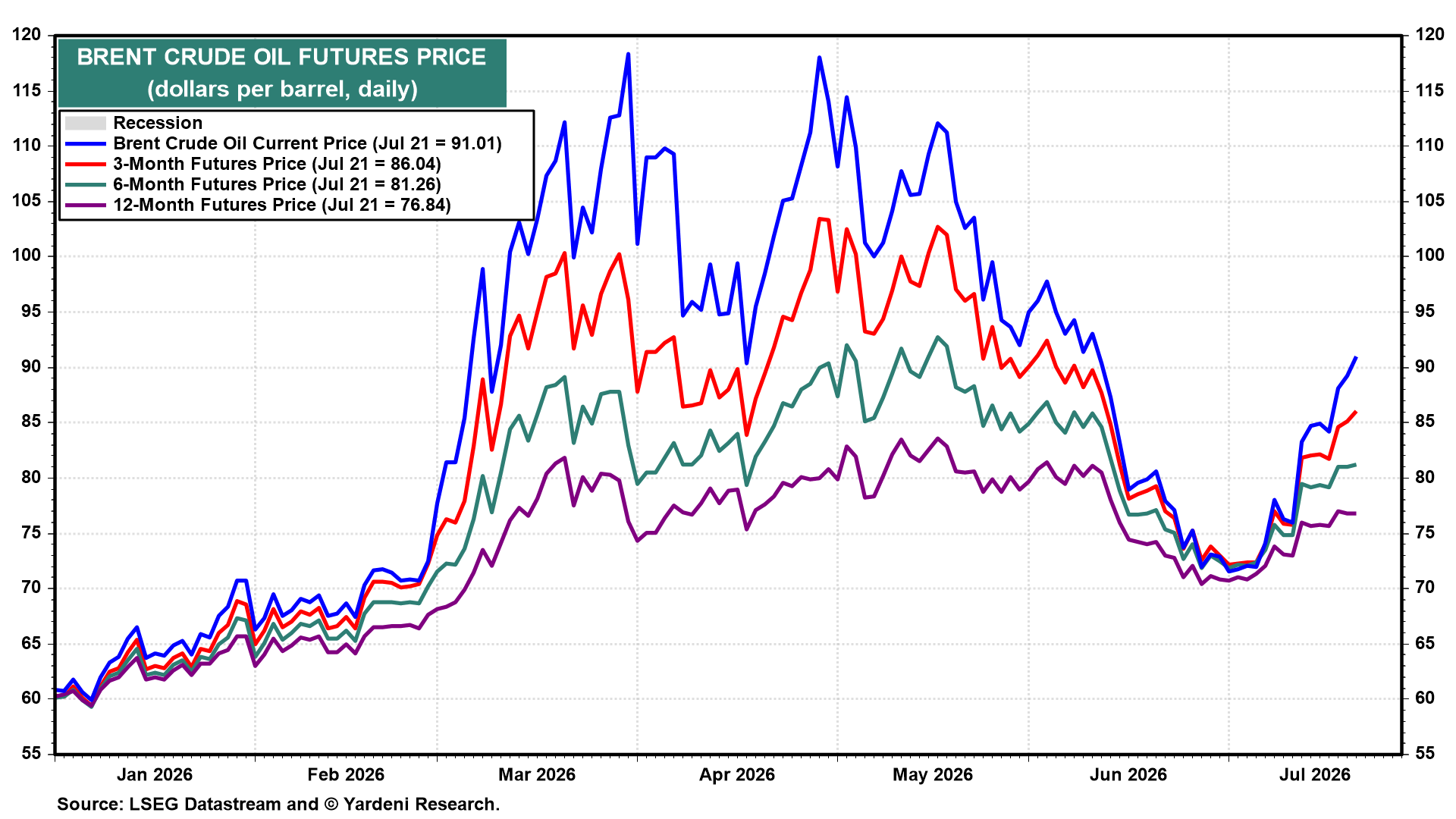
(1) Energy commodities. Brent crude oil has rebounded sharply from its June lows near $72 per barrel to roughly $95 this evening (chart). The futures curve is in backwardation, with future contracts priced progressively lower. In other words, the market expects prices to ease over the next 12 months but remain elevated.
Meanwhile, the SPR is near a multi-decade low (chart). Earlier in the conflict, the reduction in crude oil reserves helped cap the oil price spike and speed its reversal once the MOU between the US and Iran was signed. Strategic reserves have been reduced significantly around the world.