The Chinese Communist Party (CCP) is “flooding the zone” with spies as Beijng seeks political and economic advantage over the United States and a West that it perceives as weakening, experts have told Newsweek.
But some of the spies are being caught, as nations push back against Beijing’s vast operations, too.
Nearly every week brings reports of a suspected Chinese spy arrested or an espionage conviction of a Chinese citizen, from South Korea to Norway, and the United States to Germany.
“We’re talking about a vast espionage machine by China,” said I-Chung Lai, the president of Taiwan’s Prospect Foundation, a thinktank.
“What China does is they send a lot of people, collect every piece of information they can have and assemble it back together in their headquarters, like in Beijing or in whatever agency,” Lai said.
China’s embassy in Washington, D.C. did not immediately respond to a request for comment.

More Assertive
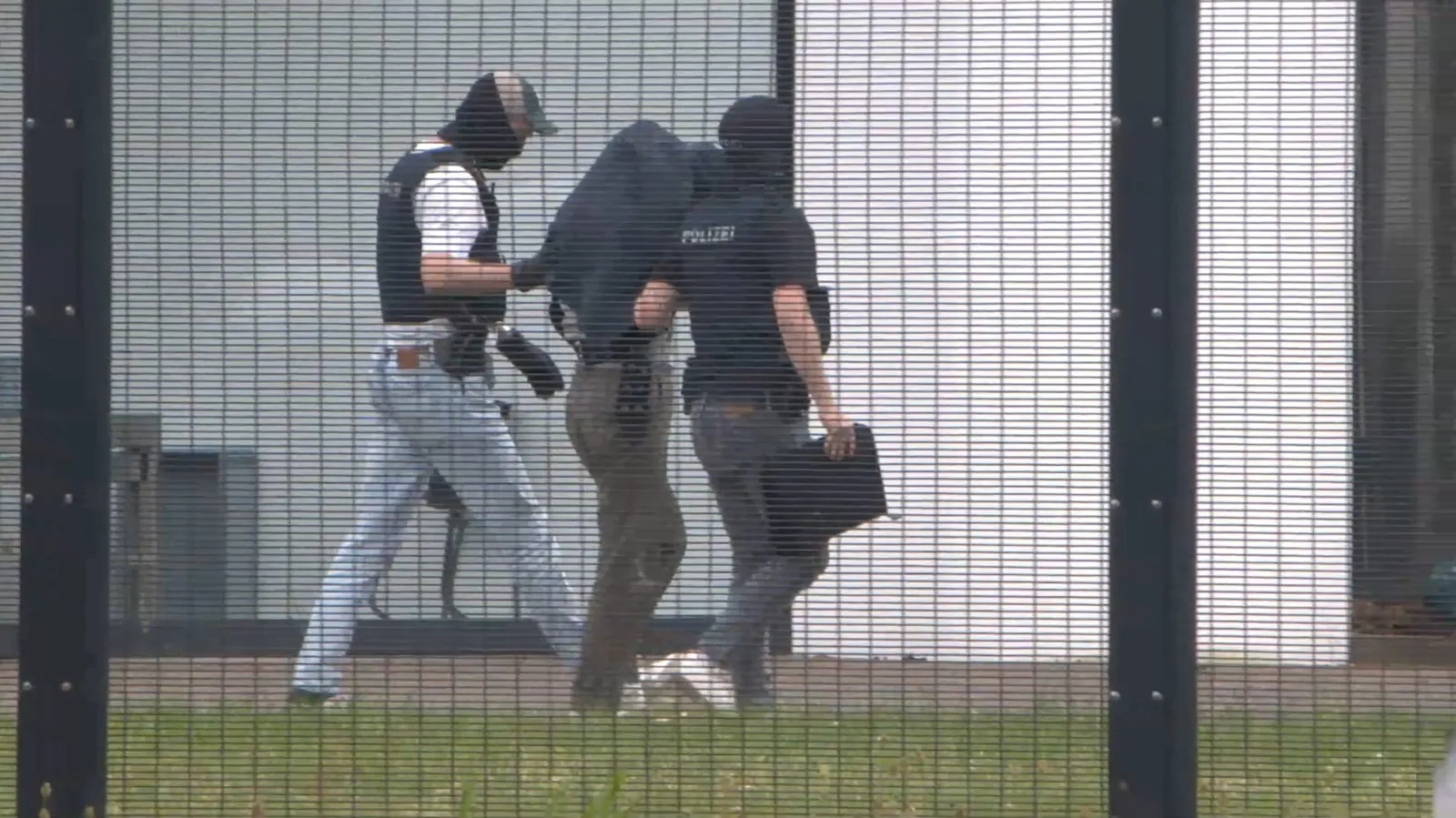
Cases have ballooned recently. Just in May they include: two Chinese nationals convicted in South Korea of espionage for photographing a total of seven Korean-U.S. military bases and civilian airports, in a first conviction of its kind in the Asian nation; and a German married couple of Chinese origin arrested by federal prosecutors on suspicion of working for an unnamed Chinese intelligence agency that was seeking sensitive science and technology of “military use,” German prosecutors said.
Also in May, Chinese citizens were arrested in two separate cases in Norway, with an expert telling Newsweek that at least one case may be linked to military intelligence and another may be the tip of the iceberg there; and in the U.S. the mayor of Arcadia in California pleaded guilty to being a foreign agent of China, in a case that drew wide attention. This month, an American journalist who worked for Xinhua news agency pleaded guilty to being a foreign agent in a case whose repercussions are still unfolding.
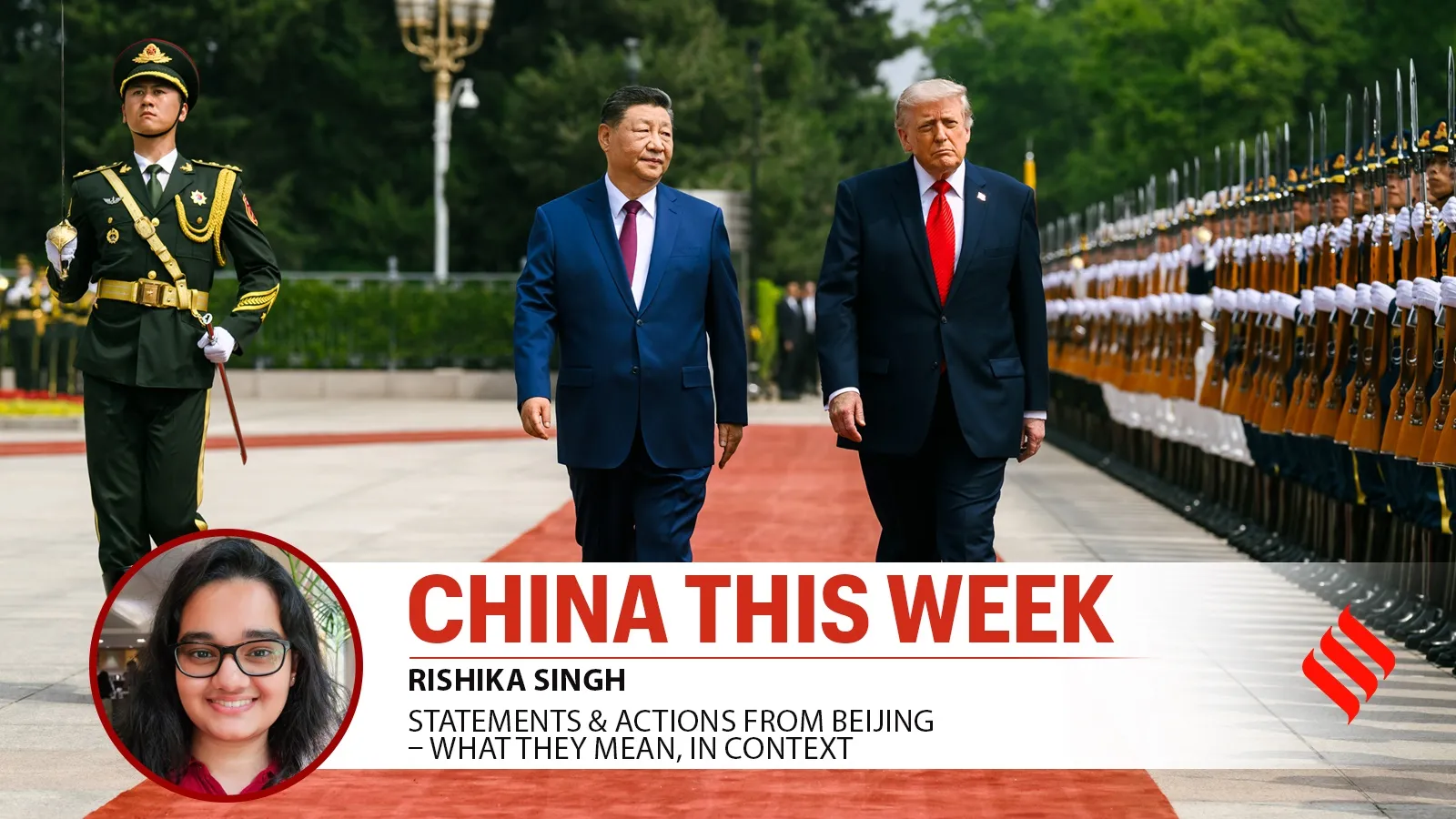
China believes the U.S. and democracies are struggling with growing domestic cohesion especially as the controversial leadership of President Donald Trump drives wedges in the traditional Western alliance, providing Beijing with opportunities for greater influence.
But other factors are also driving the surge, including worries over China’s own sluggish economy and efforts to restrict Beijing’s access to top technology internationally, Lai said. China believes its contest with the U.S. will be settled through scientific and technological power and CCP leaders including Xi have said so publicly.
“Definitely China is increasing its espionage operations, precisely and particularly as the economy is going down, and they cannot have the technology as conveniently as they had it before,” Lai said.
Others agree.
“Chinese security agencies have been tasked with increasingly heavy requirements under Xi Jinping’s more assertive foreign policy,” said Matthew Brazil, a non-resident Fellow at The Jamestown Foundation in Washington, D.C., and co-author of Chinese Communist Espionage, an Intelligence Primer.
“Because the Chinese are intensifying their efforts, naturally there are going to be more cases uncovered,” Brazil said.
The push is global, with China also active in Africa and in Russia, though relatively little is known about its operations there.
“China has resources. China has interests all over the world, doesn’t it?…If you’re a global superpower you need global coverage,” said a third expert who has direct experience of intelligence in China and who was granted anonymity to speak freely.
Tracking the Spying
Getting a sense of where to focus to find probable overseas Chinese espionage was not difficult, said Lai: read the annual government political work report from the “Two Sessions” legislative and consultative meetings every March in Beijing.
“Chinese operations have these national objectives, probably laid down on them, and if we wanted to look for probably the overall objective, usually you go to see the political work report every year at the ‘Two Sessions,'” Lai said.
“Usually in the work report they will come out with the objectives for the next year or what they have accomplished last year,” Lai said.
“Then you probably will be able to find out that what are the important tasks they have been [doing] last year, and then probably you can backtrace the work and espionage connected with those objectives, and probably [that] will help you to find out what they’re interested in trying to work,” he said.
Importantly, in terms of political influence operations, patience was the norm, Lai said.
“When they are doing political influence operations, usually they work at least for about the five to to seven years, that is basically the timing that we are talking about.”
Incriminating Messages
Confusingly for overseas spy-catchers and governments, sometimes China’s agents can seem lax, making basic tradecraft mistakes, such as carrying cell phones filled with incriminating messages. This can lead to doubts about the seriousness of the efforts.
But because of the very large and varying nature of China’s intelligence apparatus there is a mix of both precise and imprecise work, Lai said.
Brazil agreed: “When it comes to the small fish, sometimes they have good training and sometimes they don’t.”
Lai said: “So there are several things. First of all, it’s a vast machine, and…it’s difficult to say that they have a central coordinating mechanism, but the vast machine comes out of different agencies. They have their own individual, different networks, and all of them are working on their own, and the way that they do [it] is to collect as much information as possible,” he said. Agencies may even compete against each other.
Non-traditional collectors such as students are also an important part of the system, Lai said.
“So you can see a huge wave of people have been going out, and many of them, they are unprofessional. They are not professional spies.”
Nevertheless they are frequently tasked by agencies with jobs, and many people, especially students, might be keen to help, believing it would assist their careers later, he said.
Hundreds of Thousands
How big are China’s intelligence agencies? No-one is certain.
“I have seen 100,000 [people] for the Ministry of State Security thrown around. The Ministry of Public Security is probably much larger,” Brazil said.
“Then the military agencies: The Information Support Force, which does communications intelligence and electronic warfare, the Cyberspace Force which does fixed station and strategic facilities, and Aerospace Force which does overhead photography. These military intelligence units are specialized,” he said.
The United Front Work Department, the Propaganda Department, and the Foreign Ministry also conduct espionage. Different levels of the party and government are also involved including provinces and even localities.
In total, “Hundreds of thousands. Their budget? No idea,” Brazil said.
Human intelligence remains important to China, which worries about electronic signals interference, Lai said. Likely that is why its spies continue to pop up personally in obvious locations like military bases or airports, as in the South Korean case.
Cyberhacking of communications and detection techniques mastered by the United States mean that China prefers to rely on people to transfer information rather than signals, “because they are afraid the signal could be intercepted and misdirected,” or could give away a location, Lai said.
In the South Korean incident, the two men had a radio but it was not active, according to South Korean media reports.
Work of Professionals
Commenting on the Norwegian cases where a female Chinese citizen allegedly attempted to import a 22-ton satellite receiver to an island that conducts sensitive rocket launches, and where a male Chinese citizen was discovered living in an abandoned bunker near a NATO air center with undisclosed “equipment,” according to Norwegian media, Lai said that he was not privy to details but that he thought those cases could be the work of professionals.
“If the equipment was connected with information relay…that woman probably is directly connected with the [People’s Liberation Army] PLA, for example, and directly working for them, because to import that equipment you need to know how to assemble it, use it, and that basically means that that woman would not be an ordinary woman, probably would be a trained PLA soldier,” Lai said.
As for the bunker, the isolated location likely meant that there was an established, external support network in place for the suspected agent.
“When you live in a bunker, probably you will not carry the information back to China, for example. There will be somebody out there to help you to relay the information back…which means that there’s a sustained network, right? And then you’re in serious trouble,” Lai said, referring to the target nation.
‘Extreme Nakedness’
Overall, the growing use of artificial intelligence is making things more difficult as it is creating a situation of “extreme nakedness,” said the former intelligence officer who is from a Western nation and who spoke on condition of anonymity. China was a technologically sophisticated nation and supplied the world, he pointed out.
“When they really put the spotlight on somebody or some area, they’ll be able to see one hell of a lot. I mean, if they want to follow you all through your daily life, AI is going to make that far easier. It’s increasingly difficult to conceal your actions if they put the resources into it and into you,” the person said. Due to China’s technological reach, that meant overseas, too, he said.
“[K]eeping an agent or intelligence officer safe—or even alive—is going to be many times harder than in the past. Because it’s not just facial recognition, it’s gait recognition, lots of other ways, and the AI will presumably pull it all together pretty rapidly, and possibly even in real time eventually,” he said.
.