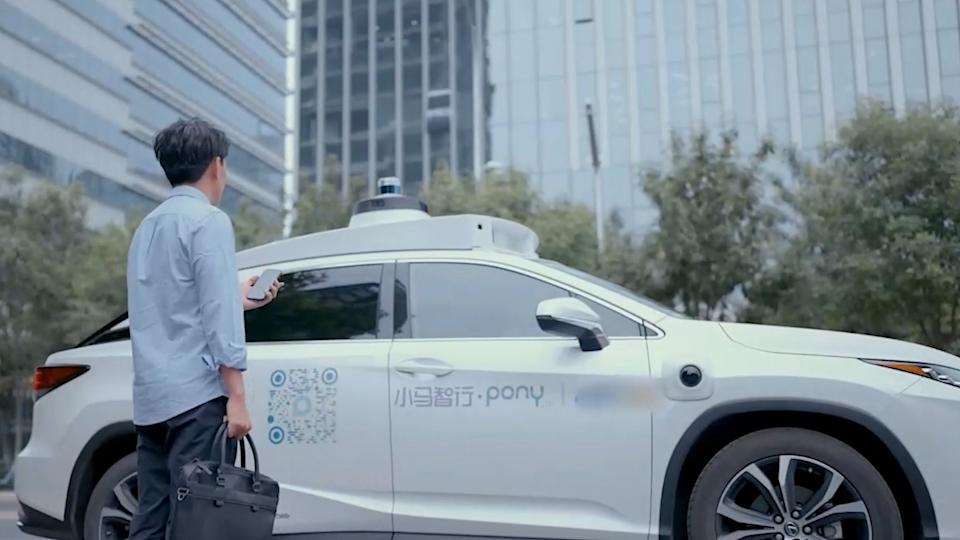

Pony AI is moving quickly in China’s robotaxi race after a strong quarter gave investors fresh reason to believe demand for autonomous rides may be growing.
The company is looking to field 3,500 robotaxis this year, even as China’s self-driving sector faces tighter scrutiny following a major outage involving a rival service.
According to Bloomberg, Pony AI said it is lifting this year’s robotaxi fleet goal by 500 vehicles. The update came after the company posted first-quarter revenue of $34.3 million, a 145% increase from a year earlier that beat analysts’ $21.7 million estimate.
Pony AI also raised its outlook for robotaxi sales. It now projects full-year robotaxi revenue at 3.5 times the 2025 figure of $16.6 million.
Not every figure moved in the right direction, though. Bloomberg noted the company’s operating loss increased 4% to $58.3 million, underscoring that scaling autonomous driving technology remains expensive.
The expansion plan comes as China has paused some new permits for high-level autonomous vehicles after a widespread outage hit Baidu’s robotaxi service in Wuhan. Pony AI said its own operations in China were unaffected.
This move serves as an important test of whether robotaxis are a viable commercial business rather than a futuristic concept.
If companies like Pony AI can continue expanding fleets and increasing revenue, the technology could reshape how people move around cities, especially for everyday ride-hailing trips.
At the same time, the development highlights how autonomous transportation depends heavily on AI systems, which are tied to the energy grid. These systems can optimize traffic flow, routing, and even the use of cleaner energy resources, but they also rely on power-intensive computing infrastructure and large data centers that can raise electricity and water demand. In some cases, those pressures can ripple outward through higher energy bills, security concerns, and unintended effects.
For everyday people, that means the advantages of AI-powered mobility may come with trade-offs. Greater convenience and more efficient transportation could be accompanied by questions about safety, oversight, grid strain, and the environmental footprint of large-scale computing.
That makes Pony AI’s progress relevant beyond investors. The company’s expansion is unfolding at a time when regulators, riders, and cities are all trying to determine how quickly this technology should scale.
According to Bloomberg, Pony AI said its newest self-driving software is being rolled out in vehicles made by Guangzhou Automobile Group, Beijing Automotive Group, and Toyota Motor Corp. That gives the company multiple partners as it works to move from testing into broader commercial deployment.