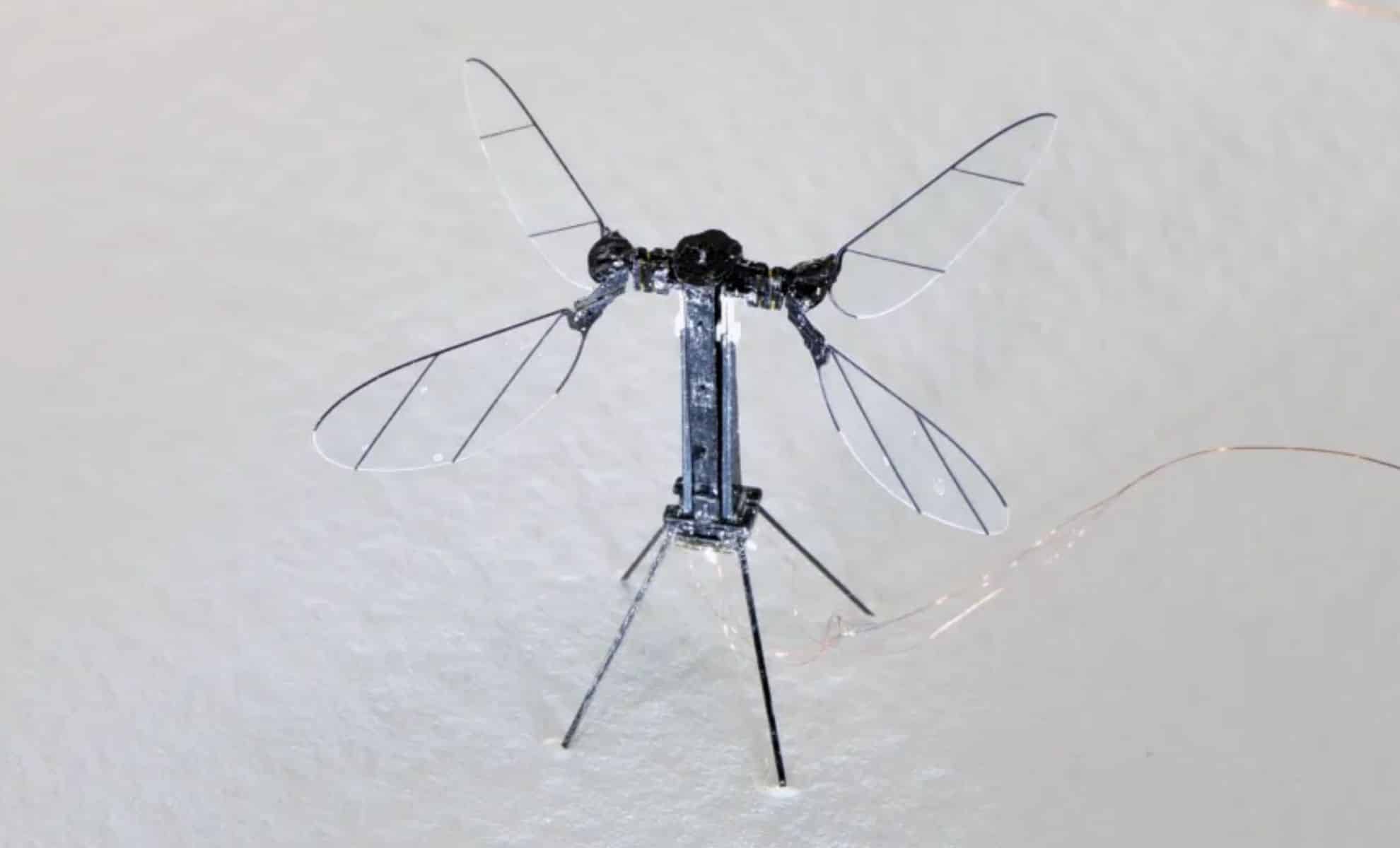
In a remarkable breakthrough for military technology, China’s National University of Defence Technology (NUDT) has developed a drone the size of a mosquito. This tiny, covert surveillance tool marks a significant leap in the realm of military drones and aligns with the broader strategy of modernizing the People’s Liberation Army (PLA), as detailed in recent reports by South China Morning Post. The micro-drone is designed for discrete operations in complex or high-risk environments, offering an advanced method for intelligence gathering, reconnaissance, and special operations. These developments reflect China’s ongoing investments in drone warfare, a growing trend of massed drone deployments that aim to solidify the nation’s technological superiority in the battlefield.
The tiny drone’s most notable feature is its size, which makes it highly stealthy and difficult to detect, even in environments where traditional UAVs would be too large. The drone’s wings flap like those of an insect, enhancing its ability to fly undetected while remaining agile enough to maneuver in tight spaces.
A New Era in Covert Warfare
Miniaturization in military technology is not new, but the mosquito-sized drone takes it to a new extreme. As smaller UAVs become an increasingly important aspect of modern warfare, China’s latest innovation could serve as a game-changer for espionage and tactical reconnaissance. The tiny drone, with its unique flapping wings and hair-thin legs, is designed for covert surveillance in urban environments, where traditional drones might be too large to operate discreetly. These microdrones could infiltrate spaces where enemy forces are concentrated, providing real-time intelligence without drawing attention to their presence.
Liang Hexiang, a student at NUDT, demonstrated the drone’s capabilities while speaking to CCTV, stating: “Here in my hand is a mosquito-like type of robot. Miniature bionic robots like this one are especially suited to information reconnaissance and special missions on the battlefield.” This compact design makes it ideally suited for use in cities, where the dense environment makes stealth a priority. With its ability to land or perch on surfaces thanks to its delicate legs, it can be deployed in missions requiring high precision without being noticed.
The successful development of these microdrones comes after years of research and development, showcasing China’s ability to push boundaries in the field of robotics. The significance of such technology lies in its potential to perform functions that are critical for modern military operations, from gathering intelligence to conducting tactical strikes in environments that are difficult for larger vehicles to access.
Miniaturization: The Engineering Challenge
Designing drones at this scale presents several formidable challenges. One of the most complex aspects of engineering such small drones lies in miniaturizing power sources, sensors, and communication systems without sacrificing their functionality. The drone’s components—particularly its batteries and control electronics—must be tiny but also highly efficient. For example, the sensors must be precise enough to perform reconnaissance missions, and the power systems must be robust enough to sustain operations over time.
This technological feat isn’t only about making small machines; it’s about pushing the limits of what is possible in micro-robotics. Engineers at NUDT faced several hurdles while creating the drone, particularly regarding the delicate balance between size and performance. The compact design means that each individual part needs to be carefully optimized to ensure the drone performs well in the demanding environments it’s meant to operate in.
Despite these engineering challenges, the successful creation of such a drone reflects the rapid advancements in micro-robotics. Countries across the world are racing to develop their own micro-UAVs, with the United States and Norway already making strides in similar technologies. For example, Norway’s Black Hornet drone, a small palm-sized UAV, is currently in service with various Western militaries for close-range scouting. This technology, which has already seen significant improvements, including enhanced battery life and weather resilience, indicates how the global arms race in miniature drones is intensifying.
A Global Race in Micro-Drone Technology
The emergence of microdrone technology has sparked interest and competition on a global scale, with multiple nations investing heavily in the development of tiny, highly efficient UAVs. While China’s focus has clearly been on developing stealth and reconnaissance drones, other nations are looking at micro-UAVs for a range of applications, from military use to environmental monitoring. The United States, for instance, has already been exploring similar technology with its RoboBee, a tiny flapping-wing drone that could be used in applications like medical diagnostics and environmental surveillance.
However, the military implications of these microdrones are particularly significant. As the PLA increasingly integrates drones into its operational strategies, it’s clear that these small, nimble devices could be pivotal in future military conflicts. Their ability to perform reconnaissance in high-risk areas, collect intelligence, or even deliver payloads in covert operations could fundamentally alter the way modern warfare is fought. This shift in tactics also highlights how warfare is evolving, with a focus on intelligence gathering and precision rather than brute force.
Additionally, these developments signal a broader trend in the military modernization efforts by China, which has been working to integrate more advanced technologies into its arsenal. From drones to artificial intelligence, the country is rapidly advancing in the realm of autonomous systems and unmanned vehicles. As this race to dominate the skies continues, the implications for future conflicts and military strategies will be profound.
