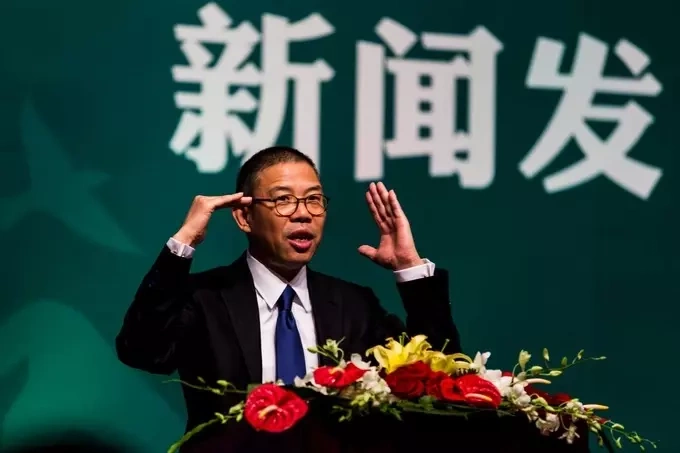
E-commerce platforms have become a new class of intermediaries, displacing traditional wholesalers and distributors while gaining greater influence over merchants through algorithm-driven systems, Zhong, founder of beverage giant Nongfu Spring, said earlier this month on state broadcaster CCTV’s Dialogue program.
“Traditional distributors operated under relatively transparent and predictable fee structures,” Zhong said, as quoted by China Daily. “Today, platforms determine transaction commissions through algorithms and decide which merchants receive traffic.”
These companies are marketed as “technology platforms” but essentially function as “middlemen,” he added.
Zhong said the expansion of these platforms has put substantial pressure on brick-and-mortar retailers and contributed to the disappearance of distributors operating in China’s cities.
He argued that they are changing consumer behavior, reducing people’s engagement with their physical surroundings and killing off the emotional and spontaneous purchases that traditional stores relied on.
“People spend their days absorbed in phone screens, with their thoughts confined there,” Zhong said. “Where are creativity and emotional experiences?”
Zhong also noted that the race to cut prices rather than improve quality reflects “how immature the market economy is” and that price wars are the form of competition that causes the most damage to social productive forces.
 |
|
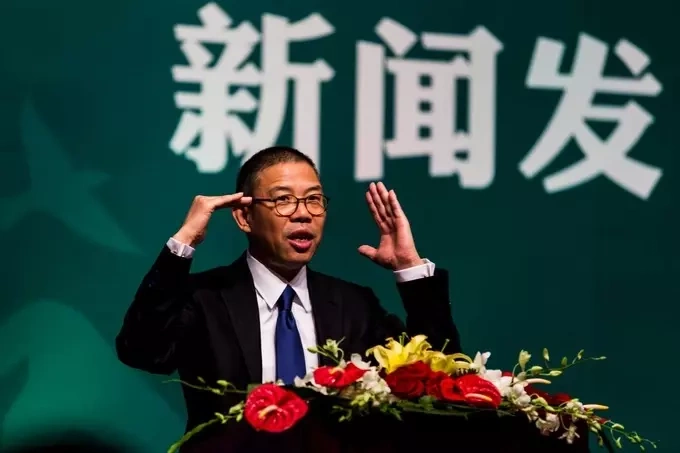
Zhong Shanshan, Chairman of Nongfu Spring Co., Ltd., delivers a speech at a press conference in Beijing, China, May 6, 2013. Photo by Oriental Image via Reuters |
The billionaire’s remarks quickly drew mixed responses, reigniting the debate over e-commerce platforms’ market power as they compete aggressively on price, subsidies and merchant traffic, according to ThinkChina magazine.
Supporters said Zhong voiced concerns shared by merchants and consumers over “platform dominance” as these platforms’ massive influence over pricing and traffic has left merchants increasingly reliant on discounts and paid exposure and consumers subject to algorithm-driven shopping.
They argued that these companies, supposedly built to eliminate middlemen, have instead become powerful intermediaries themselves and are squeezing both sides while ensuring themselves a steady profit.
Meanwhile, critics pointed out that Zhong overlooked the efficiency, competition and convenience e-commerce platforms have brought and that he was targeting the wrong problem by focusing on platforms instead of weak demand and excess supply.
Some also accused Zhong of using an old-school business mindset to attack the emerging platform commerce and defend the distribution model that has long underpinned Nongfu.
Sales channels were one of the factors contributing to the rise of Nongfu, which was founded by Zhong in 1996, besides water sources, marketing strategy and cost controls.
Zhong, a former journalist, had raised the capital to launch the firm from selling a nutritional product after several failed ventures, according to Bloomberg.
He once held the title of the richest man in China before he was overtaken in 2024 by Zhang Yiming, founder of TikTok parent ByteDance. Zhong briefly reclaimed the top spot later that year but now ranks second, with an estimated net worth of $60.9 billion, compared with Zhang’s $69.3 billion, according to Forbes’ real-time data.
Zhong has, in recent years, been vocal about his criticism of e-commerce platforms and price competition. In late 2024 he publicly took aim at Pinduoduo, the Chinese equivalent of Temu, for its pricing system, which he said has done great harm to China’s brands and industries, CNN reported.
“[The] Blind pursuit of low prices, especially through internet-driven price wars, is destroying the quality of Chinese products and undermining China’s economy,” he said at a company in early 2025, as quoted by the South China Morning Post.