China is experiencing one of the most significant healthcare transformations in the world. As the country’s population ages, urban lifestyles evolve, and chronic diseases become increasingly common, healthcare providers are under growing pressure to deliver effective long-term disease management solutions.
Among the conditions driving this transformation, diabetes stands out as one of the most urgent public health concerns.
Managing diabetes requires continuous monitoring, lifestyle adjustments, medication adherence, and regular interaction with healthcare professionals. Fortunately, advances in medical technology are making this process easier and more effective than ever before. Devices such as blood glucose monitors, continuous glucose monitoring systems, insulin pens, and insulin pumps are helping millions of patients gain greater control over their condition while reducing the risk of severe complications.
According to Renub Research, the China Diabetes Devices Market is expected to grow from US$ 7,199.70 million in 2025 to US$ 14,512 million by 2034, registering a compound annual growth rate (CAGR) of 8.11% between 2026 and 2034. This impressive growth highlights the increasing importance of diabetes technologies in one of the world’s largest healthcare markets.
As healthcare reforms continue, digital technologies advance, and awareness about diabetes management improves, China is emerging as one of the most dynamic markets for diabetes devices globally.
The Growing Diabetes Challenge in China
Diabetes has become a major public health issue across China.
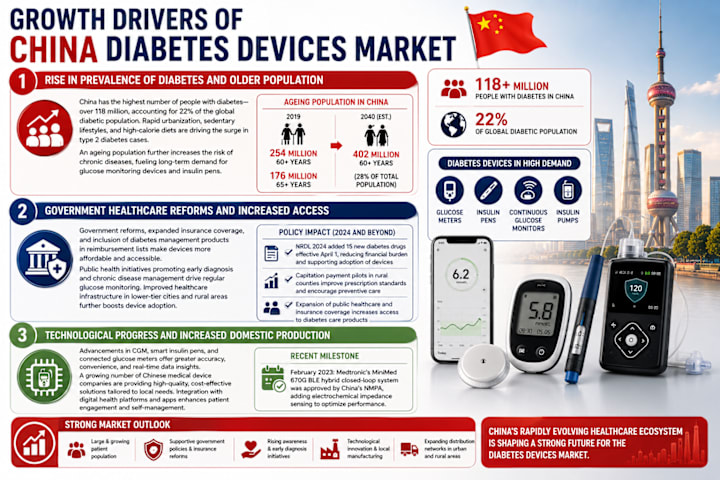
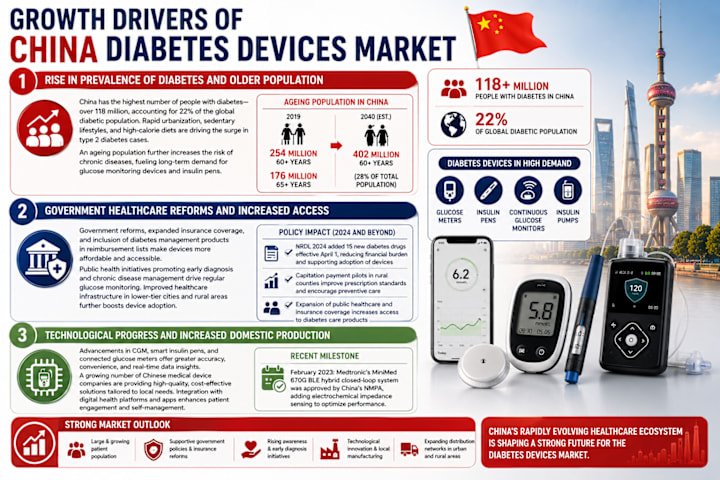
The country currently has the largest diabetic population in the world, accounting for a significant share of global diabetes cases. Rising urbanization, changing dietary habits, reduced physical activity, and increasing obesity rates have all contributed to the growing prevalence of type 2 diabetes.
The challenge is further amplified by demographic changes.
China’s population is aging rapidly, and older adults face a much higher risk of developing chronic diseases, including diabetes. As life expectancy increases and healthcare access improves, the number of people requiring long-term diabetes management is expected to continue rising.
For healthcare providers, this means finding effective ways to monitor and treat millions of patients while preventing costly complications such as cardiovascular disease, kidney failure, nerve damage, and vision impairment.
This growing burden has created strong demand for technologies that enable early detection, continuous monitoring, and better disease management.
Why Diabetes Devices Are Becoming Essential
Modern diabetes management depends heavily on technology.
Diabetes devices help patients track blood sugar levels, administer insulin accurately, and monitor treatment progress over time. These tools provide critical information that allows both patients and healthcare providers to make informed decisions regarding care.
Traditional blood glucose meters remain widely used because they offer a simple and affordable method of monitoring blood sugar levels. However, newer technologies are expanding the possibilities of diabetes management.
Continuous glucose monitoring systems provide real-time glucose data throughout the day, helping users understand how meals, exercise, stress, and medication affect blood sugar levels. Insulin pens and insulin pumps offer more precise and convenient methods of insulin delivery, improving treatment adherence and patient outcomes.
In addition, many modern devices are connected to mobile applications and cloud-based platforms that allow data sharing, remote monitoring, and personalized treatment adjustments.
These innovations are transforming diabetes care from a reactive process into a more proactive and data-driven experience.
An Aging Population Is Fueling Demand
One of the strongest growth drivers in China’s diabetes device market is the country’s rapidly aging population.
As people grow older, the risk of developing diabetes increases significantly. Older adults often experience metabolic changes, reduced physical activity, and other health conditions that contribute to diabetes development.
China’s demographic transition is occurring on a massive scale. Millions of citizens are entering older age groups each year, creating increased demand for healthcare services and chronic disease management tools.
For many elderly patients, diabetes devices provide a practical solution for maintaining independence while managing their condition effectively. Home-based monitoring systems reduce the need for frequent hospital visits and enable healthcare providers to monitor patients remotely.
The combination of rising diabetes prevalence and population aging is expected to remain a major factor supporting long-term market growth.
Healthcare Reforms Are Improving Access
Government healthcare reforms have played a critical role in expanding access to diabetes management technologies across China.
In recent years, authorities have implemented measures designed to improve healthcare affordability, expand insurance coverage, and encourage preventive care. These initiatives have helped make diabetes devices more accessible to a larger segment of the population.
Public healthcare programs increasingly support chronic disease management and early diagnosis, encouraging patients to monitor their condition more regularly. Insurance coverage for diabetes-related products has also improved, reducing financial barriers to treatment.
Infrastructure development has extended healthcare access beyond major urban centers into lower-tier cities and rural communities. This expansion is creating new opportunities for diabetes device manufacturers while helping improve patient outcomes nationwide.
As healthcare reforms continue, the adoption of diabetes management technologies is expected to accelerate further.
Digital Health Is Transforming Diabetes Management
China’s rapid embrace of digital technology has created a favorable environment for advanced healthcare solutions.
The country has one of the world’s largest digital ecosystems, with widespread smartphone usage, sophisticated mobile payment systems, and growing adoption of telemedicine services. These factors have contributed to the rapid growth of digital health applications.
Many diabetes devices now integrate directly with smartphones, allowing users to track glucose levels, receive alerts, analyze trends, and communicate with healthcare professionals in real time.
This connectivity encourages greater patient engagement and supports more personalized treatment approaches. Healthcare providers can review detailed patient data remotely, identify emerging issues, and adjust treatment plans more effectively.
The combination of healthcare technology and digital infrastructure is helping China develop a more connected and efficient healthcare system.
As digital health continues expanding, connected diabetes devices are expected to become increasingly important.
Continuous Glucose Monitoring Is Gaining Momentum
Among the most exciting developments in diabetes care is the growth of Continuous Glucose Monitoring technology.
CGM systems use wearable sensors that continuously measure glucose levels and provide real-time information throughout the day and night. Unlike traditional testing methods that require periodic finger-stick measurements, CGM devices offer a continuous stream of data.
This allows patients to identify trends, understand glucose fluctuations, and take corrective action before problems occur.
CGM technology has become particularly popular among individuals with type 1 diabetes and insulin-dependent type 2 diabetes. Urban patients, who generally have greater access to advanced healthcare technologies, have been among the earliest adopters.
The convenience of real-time monitoring, combined with improved accuracy and mobile connectivity, has made CGM one of the fastest-growing segments of China’s diabetes device market.
As awareness increases and costs gradually become more manageable, adoption is expected to expand across broader patient populations.
Self-Monitoring Devices Continue to Dominate
While advanced technologies attract significant attention, self-monitoring blood glucose devices remain the foundation of diabetes care in China.
Blood glucose meters, test strips, and lancets continue to be widely used because of their affordability, simplicity, and accessibility. These devices are particularly important in rural areas and among patients seeking cost-effective monitoring solutions.
Government programs promoting diabetes awareness and regular testing have further strengthened demand for self-monitoring devices.
Manufacturers continue improving product performance through better accuracy, faster testing times, enhanced portability, and smartphone integration. These innovations help maintain the relevance of self-monitoring technologies even as newer alternatives enter the market.
Given China’s enormous diabetic population, self-monitoring devices are expected to remain a critical component of diabetes management for years to come.
Insulin Delivery Technologies Are Evolving
Insulin administration is another area undergoing significant innovation.
Insulin pens have become increasingly popular due to their convenience, accuracy, and ease of use. Compared with traditional syringe-based methods, insulin pens simplify treatment while improving patient compliance.
Both reusable and disposable insulin pens are widely available, and domestic manufacturers have introduced affordable options that appeal to cost-conscious consumers.
Meanwhile, insulin pumps are gradually gaining acceptance among patients requiring intensive insulin therapy. These devices provide continuous insulin delivery and allow for more flexible glucose management.
Although insulin pumps remain relatively expensive compared with other treatment options, growing awareness and technological improvements are helping expand adoption.
As local manufacturers continue developing more affordable solutions, insulin delivery technologies are expected to become increasingly accessible.
Online Pharmacies Are Reshaping Distribution
The rise of e-commerce has significantly influenced China’s healthcare landscape.
Online pharmacies have emerged as an important distribution channel for diabetes devices and related consumables. Patients can conveniently purchase glucose monitors, test strips, sensors, insulin delivery products, and accessories without visiting physical stores.
Home delivery services, competitive pricing, and subscription-based purchasing models have made online channels particularly attractive for individuals managing chronic conditions.
Digital healthcare platforms are also contributing to this trend by integrating device purchases, monitoring services, and healthcare consultations into unified ecosystems.
As China’s digital economy continues expanding, online pharmacies are expected to capture an increasingly large share of diabetes device sales.
Challenges Remain
Despite strong growth prospects, the China diabetes devices market faces several challenges.
Cost remains one of the most significant barriers. Advanced technologies such as continuous glucose monitoring systems and insulin pumps can still be expensive for many patients, particularly in less-developed regions.
Although insurance coverage has improved, reimbursement policies vary across regions, creating disparities in access to advanced technologies.
Another challenge involves awareness and patient compliance. Some individuals remain unaware of the importance of regular glucose monitoring or may struggle to use devices consistently. Underdiagnosis and limited access to diabetes education programs can also affect treatment outcomes.
Addressing these issues will require ongoing investment in patient education, healthcare infrastructure, and support services.
Looking Ahead
The future of diabetes management in China appears increasingly connected, intelligent, and patient-focused.
Artificial intelligence, wearable technologies, remote monitoring systems, and predictive analytics are expected to play larger roles in helping patients manage their condition more effectively. Healthcare providers will increasingly rely on real-time data to personalize treatments and improve outcomes.
At the same time, continued healthcare reforms and growing domestic manufacturing capabilities are likely to make advanced technologies more affordable and accessible.
These trends position China as one of the most important markets for diabetes innovation over the next decade.
Final Thoughts
China’s diabetes devices market is experiencing remarkable growth driven by rising disease prevalence, an aging population, healthcare reforms, and rapid technological advancement. As millions of patients seek better ways to manage their condition, demand for innovative monitoring and insulin delivery solutions continues to increase.
With the market projected to grow from US$ 7,199.70 million in 2025 to US$ 14,512 million by 2034, the industry is entering a period of substantial opportunity. Continuous glucose monitoring systems, insulin pens, insulin pumps, and digital health platforms are transforming how diabetes is managed throughout the country.
As healthcare providers, policymakers, and technology companies work together to improve chronic disease management, China is poised to become a global leader in the future of diabetes care.