
Miit.gov.cn
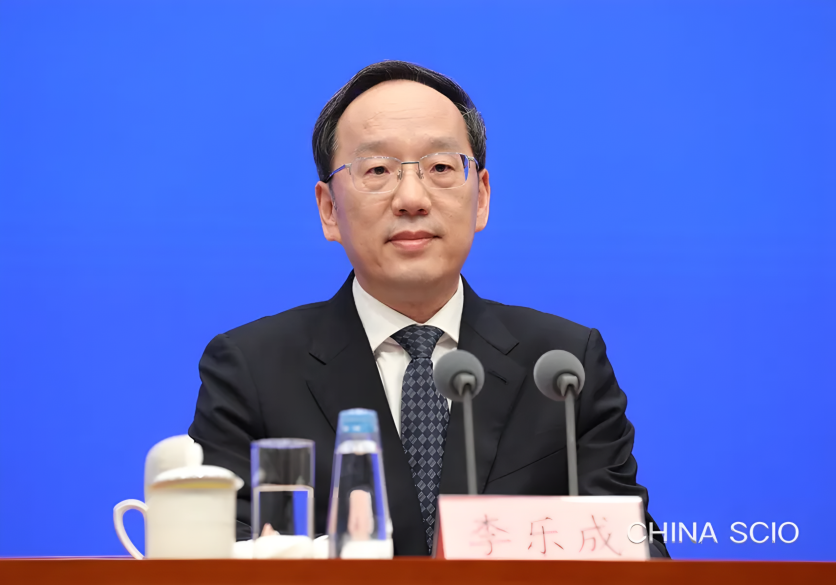
China’s Ministry of Industry and Information Technology has formalized nearly 200 key AI standards and confirmed that a city-level ethics review pilot program has moved into active operation across multiple Chinese cities — making China the only major jurisdiction on earth to require ethics review of AI projects before development begins, including, in principle, before model pre-training starts. The announcement, made at a State Council Information Office press conference in Beijing on August 26, 2026, marks the transition of China’s AI governance architecture from published policy frameworks into operational, locally enforced institutional compliance — and raises a question that experts have not yet answered: whether a framework built around procedural review, without specified risk thresholds, will catch harmful AI or merely certify that companies filed the right paperwork.
For any company developing or deploying AI systems for the Chinese market — or for any government evaluating whether to adopt China’s distributed governance model as a template — the architecture announced this week is no longer aspirational. It is active, it is mandatory, and it has a documented structural gap that its own designers have acknowledged.
Before the First Model Runs: Why the Timing of China’s Review Is Different
Every major jurisdiction that regulates AI applies its primary scrutiny at the pre-market stage — the point when a system is about to be deployed to users. The EU AI Act, whose high-risk conformity assessment obligations entered a phased rollout in 2026, requires documentation, testing, and third-party validation before a product is placed on the market. The United States has no mandatory pre-deployment review at the federal level for most AI applications.
China’s framework, formalized in the Administrative Measures for the Ethical Review and Services of Artificial Intelligence Science and Technology (Trial), issued jointly by MIIT and nine other government departments on March 20, 2026, requires review at an earlier stage entirely. Under the Measures, which took effect on April 3, 2026, every university, research institution, medical organization, and company engaged in AI activities in China must establish an internal AI ethics committee and submit projects for review before those projects commence. That requirement applies in principle before pre-training begins — not after a model is built and ready to ship.
This temporal distinction is structurally significant. A pre-market review catches a finished system. A pre-R&D review catches a plan. The EU’s conformity assessment, however demanding in its documentation requirements, is evaluating something that already exists. China’s ethics review, in theory, is evaluating something before any training data has been assembled. That is a governance intervention at a fundamentally earlier stage, and no Western framework does anything comparable.
The framework establishes a three-tier structure. Organizations may handle ethics review through internal committees. Where internal capacity is insufficient, they may delegate to accredited external ethics review service centers — a provision that several MIIT-affiliated research institutions have already moved to capitalize on, positioning themselves as compliance providers in what analysts are comparing to the GDPR consultancy boom that followed Europe’s data protection regulation. For projects that cross specific risk thresholds — those with strong influence on human behavior, emotions, or physical health; those capable of mobilizing public opinion algorithmically; or those involving highly autonomous automated decision-making in safety or health scenarios — a mandatory second round of review by a government-assigned expert panel is required.
Reviewers must reach a decision within 30 days of submission or formally indicate an extension. Approved projects face ongoing monitoring, with follow-up reviews at intervals of no more than 12 months for ordinary cases and six months for high-risk ones.
How Many Rules Does “Nearly 200” Actually Mean?
MIIT Vice Minister Xin Guobin’s confirmation that China has formalized nearly 200 key standards is a count, not a catalog — and the distinction matters for companies trying to assess their compliance exposure.
The corpus covers the full AI system lifecycle: model safety classification, data governance, application-scenario requirements for regulated industries, and vertical deployment guidance across healthcare, finance, transportation, and manufacturing. Standards in China’s framework occupy two categories: mandatory national standards (Guobiao, or GB standards) carry legal force and require compliance; recommended standards (GB/T) are voluntary but often become de facto requirements for market access or government procurement.
As of early 2026, China had one binding mandatory AI standard — governing labeling of AI-generated content — with a second mandatory standard targeting AI agent application security moving toward formal adoption. The bulk of the nearly 200 formalized standards are recommended rather than legally binding. For international companies, the practical compliance question is whether voluntary Chinese standards become de facto requirements for government contracts or for operating in regulated sectors — a pattern already visible in how China has used recommended standards as market-entry prerequisites in other technology domains.
The standards development pipeline feeding this corpus has accelerated dramatically in 2026. TC260 — China’s national cybersecurity and AI safety standardization committee — created a dedicated AI Safety Working Group in March 2026 and assigned it 16 AI safety standards in a single April 2026 tranche. A TC260 research report published in March mapped 11 distinct AI agent security threats across four capability dimensions — perception, planning, memory, and action — and proposed eight new standards, six of them prioritized for delivery within two years. This is a standards pipeline operating at industrial scale.
Where the City Pilot Runs — and What It Actually Requires
The city-level ethics review pilot, which MIIT officially launched on May 9, 2026, across provinces hosting national AI industrial innovation pilot zones, is structured around nine vertical sectors. Participating cities must establish a mandatory base-layer review covering the foundational elements of any AI system — its data, its algorithms, and its models — and must additionally select at least three of nine vertical application domains: manufacturing, education, science and technology, culture, healthcare, finance, agriculture, tourism, and consumer.
The institutional mechanics of each pilot city involve establishing an AI technology ethics review and service center, building connections into a national AI ethics risk monitoring service network, and developing training materials including regular “Ethics Classroom” sessions for companies operating in the zone. A case database of documented AI ethics risks is intended to support consistent enforcement across regions.
The August 26 announcement from MIIT Vice Minister Xin confirmed that this pilot has progressed from its initial provincial-zone focus to direct city-level operation — a scale-up that signals the program is moving toward the national rollout phase. MIIT has indicated a ten-province ethics pilot is underway with results expected to inform broader national expansion.
Critically, the framework is designed to complement rather than duplicate existing AI compliance obligations. Where AI systems are already subject to CAC algorithm registration requirements, deep synthesis management rules, or generative AI service obligations, additional expert ethics review may be exempted to reduce administrative burden — a provision designed to prevent companies from facing layered duplicative review processes for the same system.
Does Procedural Compliance Equal Safety?
The most significant open question in China’s governance architecture is not whether organizations will comply with it — they will, because they must — but whether compliance will produce the safety outcomes it is designed to achieve.
Independent analysts who have reviewed the Administrative Measures in detail have noted a structural gap. The framework specifies who reviews AI projects, through which institutional channels, on what timeline, and with what procedural documentation. What it does not specify is what level of identified risk causes a project to fail review, or what specific mitigations are required before a project can proceed.
AI governance expert Nesibe Kırış Can, who reviewed the six ethical assessment dimensions in the Administrative Measures for a detailed August 2026 analysis, wrote that after reading the six dimensions three times she found no threshold. Kırış Can noted that Chinese scholars themselves have raised the same concern about the broader ethics review system, and that these rules govern institutional procedure, not substantive risk — establishing who reviews, through what channel, on what timeline, while saying very little about what counts as acceptable risk or what mitigation is required.
Concordia AI, a nonprofit focused on AI safety in China, documented this procedural-vs-substantive tension in its fourth edition of the State of AI Safety in China report (covering July 2025 through June 2026), noting that concrete requirements for frontier AI risk “remain limited” under the current domestic framework.
This gap is not unique to China — the EU’s AI Act has faced similar critiques regarding whether procedural conformity assessments produce real-world safety outcomes. But the Chinese framework’s ambition is more sweeping: it applies to all AI activities, not only high-risk systems, and it requires review at the design phase rather than the deployment phase. A framework with broader temporal reach and no substantive thresholds creates an extensive compliance infrastructure that may or may not catch the specific harms it was designed to prevent.
Whether the city pilots evolve to specify substantive risk thresholds — making the review not just “did you file” but “did you demonstrate your system does not do X” — is, as of this writing, the defining open question for China’s AI governance trajectory.
China’s Model Versus the World’s: A Decision Framework
The architecture China is building differs from Western approaches in two structural dimensions, not one.
The first is jurisdictional — centralized vs. distributed enforcement. The EU AI Act is a single legislative instrument administered by a single regulatory body, the European AI Office, with obligations cascading down through national authorities to companies. China’s emerging model is structurally different: it embeds ethics review capacity at city and provincial level, into the same administrative zones that host AI innovation clusters. The ethics committees are local institutions, trained through MIIT curricula but accountable to regional authorities and industrial ecosystems. This distributed architecture scales rapidly across a geographically vast country without requiring a single central authority to review thousands of applications.
The second dimension is temporal — when in the AI development lifecycle governance occurs. The EU’s conformity assessment and the US’s sector-specific rules both operate primarily at the pre-market stage. China’s framework intervenes at the pre-R&D stage. This means governance is embedded into the design process, not applied as a gate before market entry. For AI developers, this translates into concrete compliance changes: ethics committee review must occur before a development project begins, not after a product is ready to ship.
The August 26 announcement also included confirmation that China’s 15th Five-Year Plan period (2026–2030) will accelerate development of 6G technology, with MIIT’s Director of Information and Communications Development Liu Yulin confirming that continuous 6G trials and standards development will be carried out to prepare for commercial deployment. The plan additionally commits China to cultivating major AI application scenarios for manufacturing through large-scale demonstration programs — signaling that AI governance and industrial policy are being developed in deliberate tandem, not as separate programs.
For the international AI governance community, the significance of the August 26 announcement is not the standards count. No jurisdiction has yet translated procedural ethics review into documented safety outcomes at scale. The city pilot program running through late 2026 is the first real-world test of whether China’s governance-through-infrastructure approach produces substantive results — and the answer, expected in the months ahead, will shape how governments globally decide whether distributed pre-R&D review is a model worth replicating.
Does China’s AI Governance Model Apply to Foreign Companies?
Any company engaged in AI research and development activities inside China — including international companies with Chinese research operations, joint ventures, or data centers — is subject to the Administrative Measures requirements to establish internal ethics committees and register them with the national science and technology management information platform. Where an organization lacks the internal capacity to run its own committee, delegation to an accredited external ethics review service center is permitted.
The Measures do not introduce a new product approval pathway distinct from the existing CAC algorithm filing system. They add a governance layer focused on how AI systems are developed and overseen from an ethics perspective, applicable to any AI activities conducted within China. International companies with China AI operations should assess whether their current compliance architectures can satisfy a pre-R&D review requirement that does not map to EU or US governance frameworks.
Frequently Asked Questions
What exactly does China require companies to do before starting an AI project?
Under the Administrative Measures for the Ethical Review and Services of Artificial Intelligence Science and Technology (Trial), which took effect April 3, 2026, any organization engaged in AI research and development in China — including universities, research institutions, and companies — must submit projects for institutional ethics review before development commences. Committees assess projects across six dimensions including controllability, trustworthiness, and the ability of users to intervene in system operation. For high-risk projects — those affecting human behavior or health, capable of mobilizing public opinion, or involving highly autonomous decision-making in safety scenarios — a mandatory second round of review by a government-assigned expert panel is required. Review must conclude within 30 days or a formal extension must be indicated.
How is China’s approach different from the EU AI Act’s requirements?
The EU AI Act’s conformity assessment applies at the pre-market stage — before a product is deployed to users — and focuses on high-risk AI systems across specific sectors defined in the Act’s annex. China’s framework applies at the pre-R&D stage — before development begins — and covers AI activities broadly, not only high-risk systems. A second structural difference: the EU framework specifies what systems are high-risk and what obligations those systems carry; China’s framework specifies the procedural process for review but does not, as of August 2026, specify what risk level causes a project to fail or what specific mitigations are required. Both frameworks have been critiqued for producing procedural compliance without guaranteeing substantive safety outcomes.
Which companies are required to establish AI ethics committees in China?
The requirement applies to all organizations engaged in AI research and development activities in China: universities, research institutes, medical organizations, and companies. There is no minimum size threshold specified in the published framework. Organizations without sufficient internal capacity may contract with accredited external ethics review service centers, a provision that has prompted several MIIT-affiliated institutions to position themselves as compliance providers. All ethics committees must be registered with the national science and technology management information platform.
What does the “no risk threshold” problem mean for companies and for AI safety?
Independent analysts who have reviewed the Administrative Measures in detail — including governance expert Nesibe Kırış Can and Concordia AI’s State of AI Safety in China 2026 report — note that the six ethical assessment dimensions defined in the framework govern the procedural process of review without specifying what level of identified risk causes a project to fail. For companies, this creates ambiguity: compliance means filing the correct documentation through the correct institutional channel, but it does not provide a clear standard for what their AI systems must actually demonstrate. For AI safety, the unresolved question is whether procedural compliance without substantive thresholds can reliably identify and halt genuinely harmful AI development before it begins — or whether it primarily certifies that organizations have functioning bureaucratic processes. Concordia AI’s fourth-edition report noted that concrete requirements for frontier AI risk “remain limited” under the current domestic framework.