When a South Korean firm pulled the plug on a multibillion-dollar investment last year, it was a major blow to Indonesia’s plans to build an integrated battery-manufacturing ecosystem – until a group of Chinese companies stepped into the breach.
Project Titan aims to tap Indonesia’s vast nickel reserves in East Halmahera – the epicentre for mining the sought-after metal – before shipping refined and processed material to make batteries for electric vehicles (EVs) more than 2,000 kilometres away in a factory in West Java.
Even before South Korean battery firm LG Energy Solution scrapped its planned $8.45 billion investment in Project Titan, citing “various factors” including market conditions, years of stalled feasibility studies had cast doubt on the initiative – a pillar of Indonesia’s goal to use its nickel riches to become a global battery manufacturing hub and a base for EV production in the region.
The $6-billion investment and cooperation framework struck earlier this year between state companies and a Chinese consortium keeps Project Titan alive, but it also highlights Indonesia’s heavy dependence on China for capital, technology and materials in battery manufacturing.
“We get cash but there is no tech transfer or skilled labour jobs,” Zulfikar Rakhmat, director of the China-Indonesia Desk at the Jakarta-based Center of Economic and Law Studies, told Climate Home News. Indonesia’s dependence on China for funding, nickel smelting and processing capacity is “almost total”, he added.
Already have an account?
Log in here →
For 15 years, Climate Home News has rigorously reported on the decisions shaping our climate.
Join the community of readers who make this work possible.
Join free and keep reading →
It takes less than a minute.
When a South Korean firm pulled the plug on a multibillion-dollar investment last year, it was a major blow to Indonesia’s plans to build an integrated battery-manufacturing ecosystem – until a group of Chinese companies stepped into the breach.
Project Titan aims to tap Indonesia’s vast nickel reserves in East Halmahera – the epicentre for mining the sought-after metal – before shipping refined and processed material to make batteries for electric vehicles (EVs) more than 2,000 kilometres away in a factory in West Java.
Even before South Korean battery firm LG Energy Solution scrapped its planned $8.45 billion investment in Project Titan, citing “various factors” including market conditions, years of stalled feasibility studies had cast doubt on the initiative – a pillar of Indonesia’s goal to use its nickel riches to become a global battery manufacturing hub and a base for EV production in the region.
The $6-billion investment and cooperation framework struck earlier this year between state companies and a Chinese consortium keeps Project Titan alive, but it also highlights Indonesia’s heavy dependence on China for capital, technology and materials in battery manufacturing.
“We get cash but there is no tech transfer or skilled labour jobs,” Zulfikar Rakhmat, director of the China-Indonesia Desk at the Jakarta-based Center of Economic and Law Studies, told Climate Home News. Indonesia’s dependence on China for funding, nickel smelting and processing capacity is “almost total”, he added.
And at a time when cheaper nickel-free battery alternatives are winning over the EV market, China’s outsized role could bring additional commercial risks for Indonesia’s emerging battery industry.
“If Indonesia’s battery chain is seen as entirely Chinese-owned and coal-powered, its product will struggle to enter the Western markets,” Rakhmat added, referring to efforts by countries, including the European Union, to break their dependence on Chinese cleantech and reduce imports of carbon-intensive goods.
A Chinese tale of two halves: steel and batteries
Chinese investment in industrial projects to develop Indonesia’s nickel reserves – the world’s largest – is not new.
China was “the main engine” behind the country’s successful push to refine its nickel domestically after the government banned the export of raw ore in 2020, said Berlin Syahputra Situmorang, a researcher at the Indonesian Initiative for Sustainable Mining.
China, which imported most of Indonesia’s raw nickel ore prior to the ban, invested billions of dollars in building the country’s refining capacity.
Large, mostly coal-powered industrial parks sprang up near mines to refine nickel, some of which have been associated with extensive environmental and human rights abuses.

By 2025, Indonesia produced two-thirds of the world’s raw nickel supply and boasted 43% of nickel refining capacity. Yet three-quarters of the country’s refining capacity is controlled by Chinese firms, according to research by the Washington-based research organisation C4ADS.
And while the Indonesian government talked about developing its mineral wealth to power the batteries needed for the energy transition, Indonesia’s real success was to develop a stainless steel industry, the biggest consumer of nickel globally.
More than 80% of Indonesia’s nickel supplied the stainless steel sector in 2025, with only 17% going into the EV battery supply chain, according to analysis by the Centre for Research on Energy and Clean Air (CREA).
“It’s a tale of two different parts,” said Lloyd Hain, managing director of Xenith Market Services, an Australian mining and supply chain consultancy. “Indonesian stainless steel goes all over the world. The battery side, however, has been a completely different story.”
An emerging battery ecosystem
Developing a battery industry has proved a lot more difficult. Several plants to process nickel into battery-grade materials are planned or under construction across the country, but many remain at early stages of development.
Still, Indonesia’s battery exports exceeded $1 billion in 2025, according to data from the UN Comtrade Database. By 2028, CREA estimates that 30% of Indonesia’s nickel production will go towards making battery materials.
The nation’s first battery cell plant in Karawang, West Java, began operating in 2024. It was developed by South Korean car maker Hyundai and LG Energy Solution, which continues to operate the facility despite withdrawing from Project Titan.
Project Titan, the flagship integrated battery project, aims to develop 20 gigawatt hours (GWh) of capacity to produce nickel-based EV batteries as well as energy storage batteries to support the country’s goal of rolling out 100 GW of solar capacity in the next four years.
Under the deal agreed this year, it will be operated by Indonesian state companies and a consortium including China’s Zhejiang Huayou Cobalt and battery manufacturer EVE Energy.
Another $5.9-billion joint venture between state firms and a consortium led by Chinese battery giant CATL will develop nickel mining, processing and a battery-recycling factory in East Halmahera as well as a 6.9 GWh battery facility in Karawang, with plans to scale.

Collaboration with Chinese firms “is expected to encourage technology transfer so that national companies can become leaders in their own country”, Minister of Energy and Mineral Resources Bahlil Lahadalia said in a statement about Project Titan.
Foreign companies investing in Indonesia are required to partner with the Indonesia Battery Corporation (IBC), a state-owned enterprise made up of state mining and energy firms, tasked with establishing the capabilities for developing a battery and EV ecosystem.
It is the complexity of making batteries that underlies Indonesia’s dependence on Chinese know-how, said Situmorang of the Indonesian Initiative for Sustainable Mining.
Without a transfer of technology, Indonesia “risks remaining dependent on external players for the most advanced parts of the value chain”, Situmorang told Climate Home News.
Forging a path of its own
Indonesia’s reliance on China does not stop at money and technical knowledge. It also relies on Chinese imports of key battery materials, such as lithium and graphite.
That means Indonesia should aim to diversify its investment partners by working more closely with South Korean companies and seek long-term lithium and graphite supply deals with major producers such as Australia, said Rakhmat of the Center of Economic and Law Studies.
It must also invest in domestic research and development as well as nurturing its own engineering talent, he added.

Eventually, however, the Indonesian government will need to decide whether it wants to integrate its battery ecosystem “completely and unconditionally” into China’s EV supply chain “or go its own way”, said Shen Wei, a research fellow at the UK-based Institute of Development Studies.
He warned that it would be “inherently difficult” for Indonesia to continue to learn from China while simultaneously trying to compete with it.
In a sign of tension between Indonesia’s efforts to capture more value from its resources and the Chinese firms that have bankrolled the industry’s expansion, the Chinese Chamber of Commerce wrote to President Prabowo Subianto in May warning that recent policies, including a sharp reduction in nickel ore production quotas to push up prices, could undermine existing projects and future investment.
The Chinese Chamber of Commerce in Indonesia did not respond to a request for comment, nor did Indonesia’s Ministry of Energy and Mineral Resources or the Ministry of Investment and Downstream Industry.
A damaging myth: “Nickel is everything, forever”
The rapid shift towards nickel-free EV batteries poses another threat to Indonesia’s plans.
China is driving global adoption of lithium iron phosphate (LFP) batteries, a battery chemistry which relies on more common materials, is cheaper to produce and is better suited for frequent charge and discharge, making it an attractive alternative to power electric two- and three-wheelers, urban EVs and stationary power storage.
LFP batteries accounted for more than 55% of EV batteries deployed globally last year, driven by China and imports of Chinese-made vehicles by emerging market countries, according to the International Energy Agency. They also accounted for about 90% of battery storage deployment.
“If Indonesia stays too fixed on a ‘nickel equals EV future’ mindset, there’s a risk of missing where the bulk of the market is actually going,” Situmorang said, noting that in Indonesia, most of the EVs sold in 2025 used LFP batteries.
Nickel-based batteries, which can pack more energy in each battery, are still in demand for long-range and premium EVs popular in the US, Europe and upper-end Asian markets. Outside China, almost 80% of EV batteries used nickel-containing types in 2025.
Rakhmat said Indonesia is adapting its manufacturing strategy, targeting its nickel-based batteries for the export market and boosting production of LFP batteries to meet domestic demand.
Several Chinese firms are already investing to manufacture LFP batteries in Indonesia.
But Rakhmat said the realisation of changes in the market “came very late” and that many local officials still incorrectly believe that “nickel is everything and forever”.
Without a robust industrial policy and a strategy to create sustained domestic demand for “Made in Indonesia” batteries, “there is a possibility that we will be left behind,” he warned.
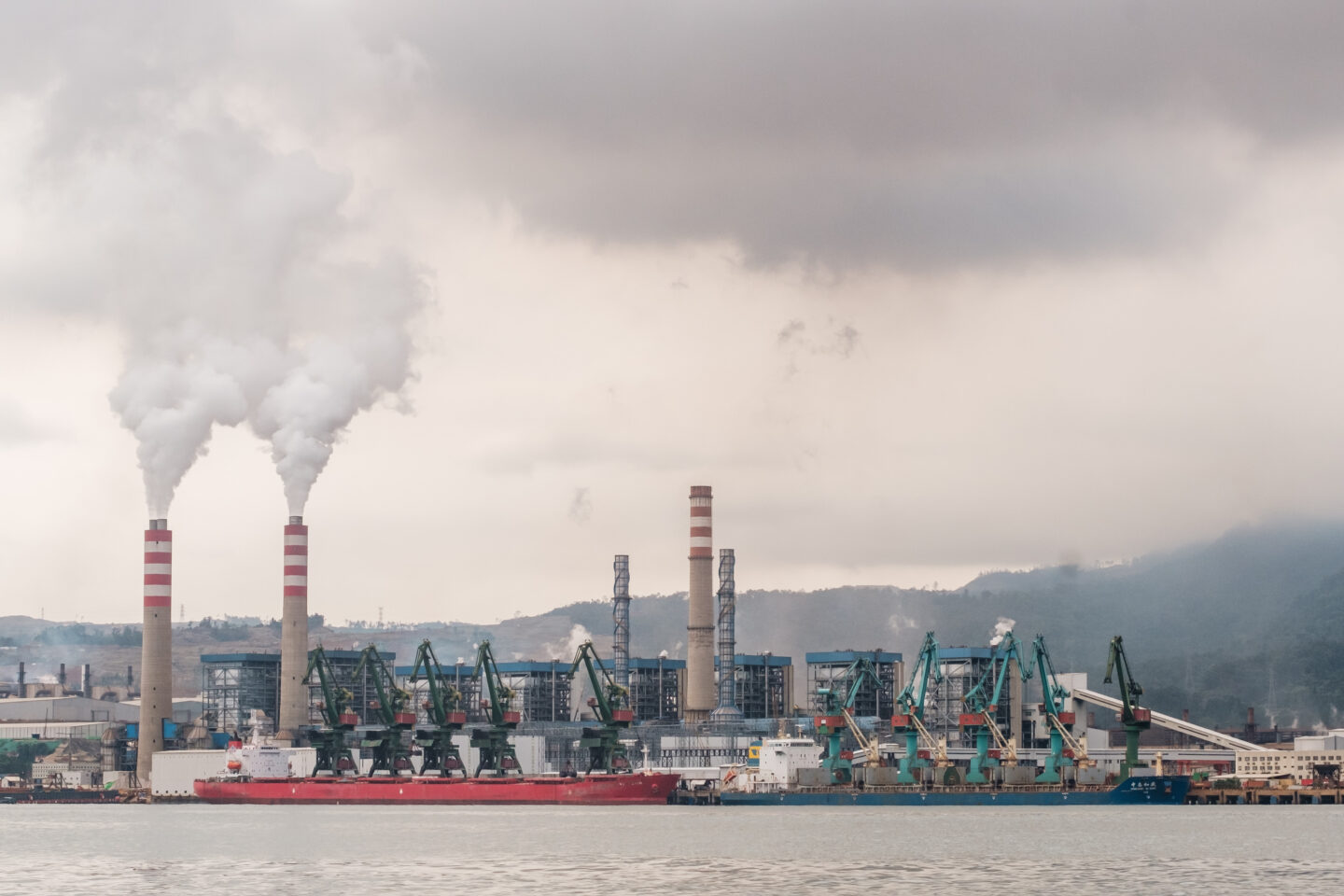
Main image: A view over the PT Virtue Dragon nickel industrial complex in Konawe, Southeast Sulawesi, Indonesia (Photo: Ulet Ifansasti/Getty Images)