Today’s ESG Updates
- China Raises Millions in Green Bonds: China attracted strong investor demand for its latest green bond issuance, with Asia-Pacific buyers accounting for 80% of orders alongside broad international participation. The proceeds will support projects focused on clean energy, pollution control, and climate change mitigation.
- Factories in Europe Suffer from Iran War: Europe’s manufacturing sector weakened as disruptions linked to the Iran conflict weighed on industrial activity. Germany’s manufacturing engine stalled completely, while French factories slipped into contraction for the first time since November.
- Anthropic Prepares an IPO: AI company Anthropic confidentially filed for an initial public offering in the United States. The filing follows major investment activity that has significantly boosted the company’s valuation, although details regarding the offering remain undisclosed.
- Rio Tinto Launches a Clean Aluminium Project: Rio Tinto unveiled a new low-carbon aluminium initiative designed as a bridge toward ELYSIS, its carbon-free anode joint venture with Alcoa. Backed by the Canadian federal government and Quebec, the project aims to eliminate direct greenhouse gas emissions from the aluminium smelting process.
China reports high demand on its green bonds
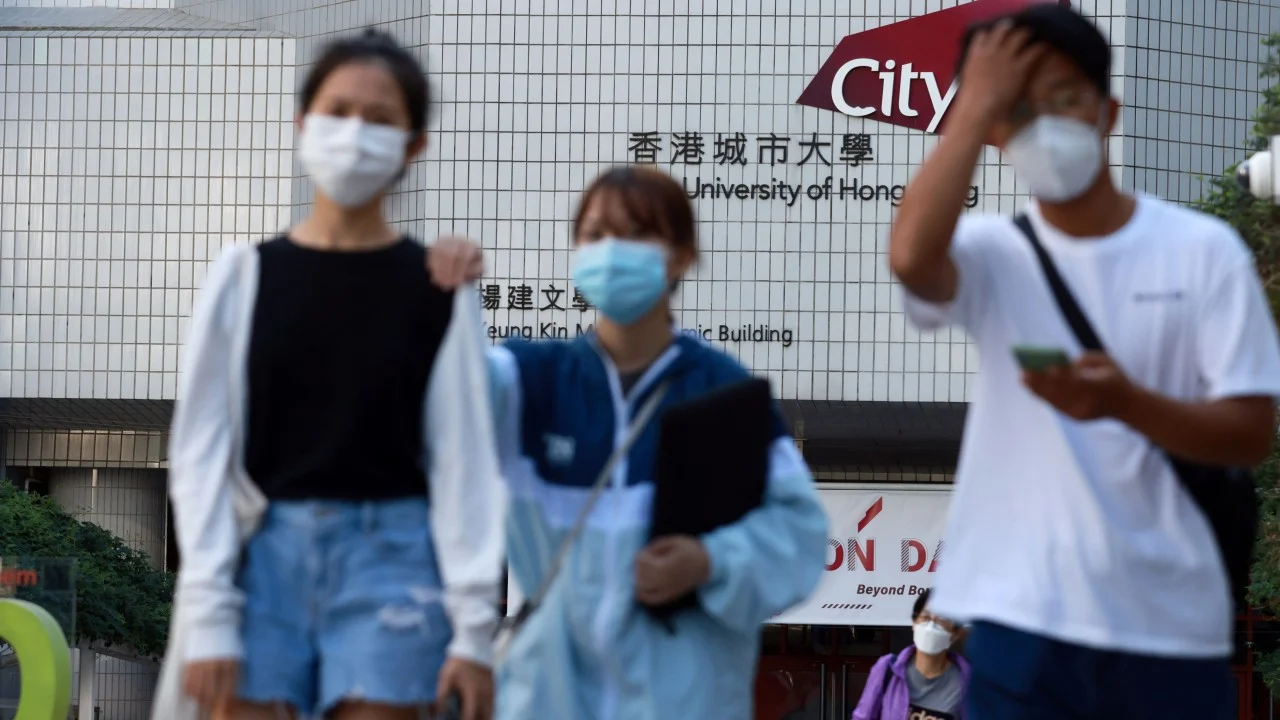
China’s Ministry of Finance has demonstrated that Chinese green debt remains highly in demand, pricing RMB 6 billion (roughly $885 million) in sovereign green bonds in Hong Kong to staggering demand. The sale, completed on May 28, raised subscriptions totaling RMB 62.4 billion—about $9.2 billion—making the offering oversubscribed more than tenfold. The three-year tranche, carrying a 1.42 percent coupon, was nearly ten times covered, while the five-year paper at 1.56 percent drew eleven times the available allocation.
The offering is Beijing’s first green bond issuance in Hong Kong, following a debut in London in April 2025. The structure is clean: two equal RMB 3 billion tranches, with proceeds directed to eligible green expenditures under China’s sovereign green-bond framework—funding clean energy, pollution control, and climate adaptation projects. Investor appetite was broad geographically, with Asia-Pacific buyers accounting for 80 percent of orders, but global participation was meaningful. Sovereign wealth funds and supranationals accounted for 31 percent of demand, banks for 47 percent, and asset managers and insurers for 20 percent. Crucially, dedicated green and sustainable investors accounted for 35 percent of orders, signaling this was not merely a yield hunt but genuine ESG capital at work.
Beyond the environmental branding, the issuance serves a larger strategic purpose. It deepens Hong Kong’s offshore renminbi market—already handling roughly three-quarters of global offshore yuan payments—while giving international investors a new benchmark-priced safe asset. With global central banks gradually diversifying reserves and China’s currency gaining traction, the sale quietly advances Beijing’s long-term goal of renminbi internationalization. Hong Kong Financial Secretary Paul Chan framed it as a pillar of the city’s “Finance+” strategy, linking global capital to mainland green projects. In a market hungry for both yield and credible climate exposure, China’s sovereign green paper is maturing from novelty to benchmark.
***
Further reading: China’s Green Bond Sale Attracts $9 Billion In Investor Demand
Klimado – Navigating climate complexity just got easier. Klimado offers a user-friendly platform for tracking local and global environmental shifts, making it an essential tool for climate-aware individuals and organizations.
Iran war causes soaring costs for European factories

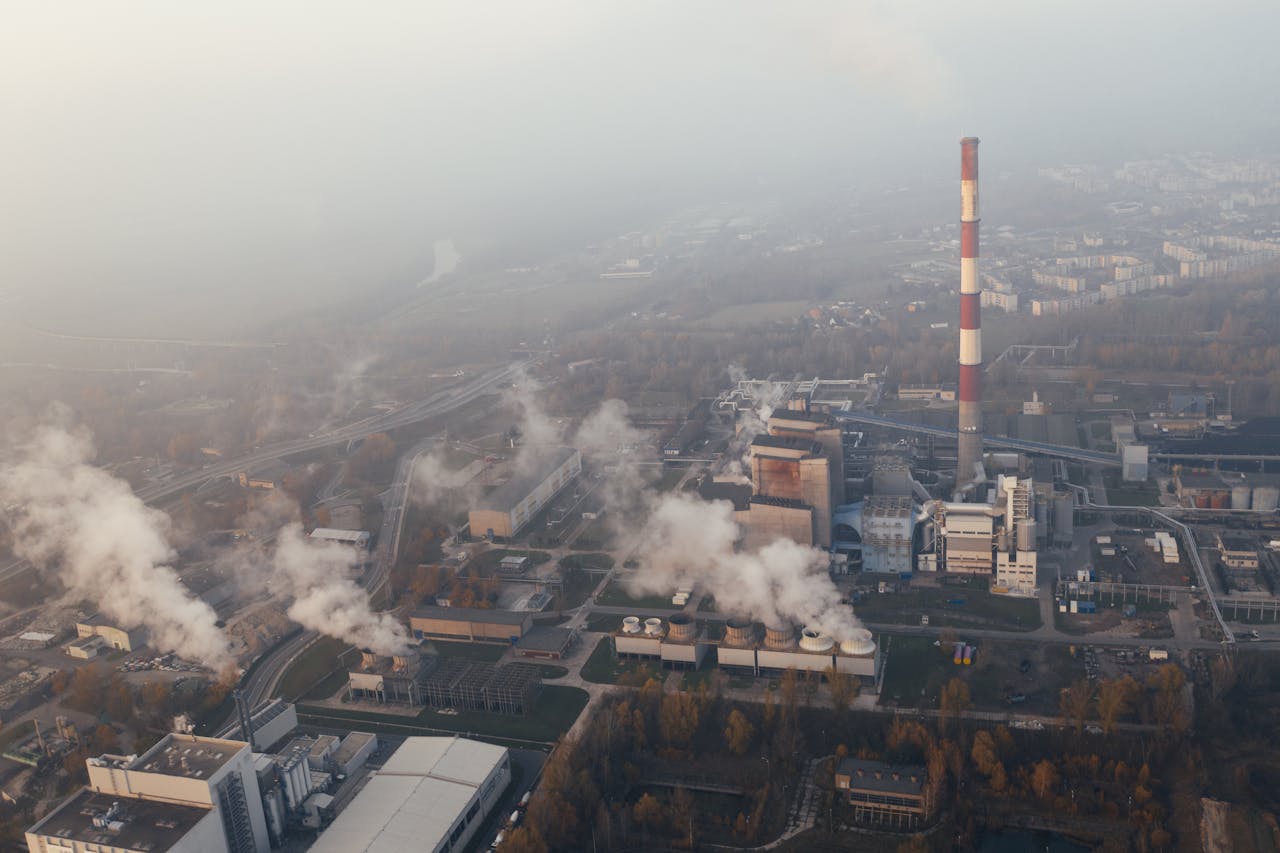
The Iran war is no longer a distant geopolitical headline—it is a direct tax on European factories. May’s purchasing managers’ surveys reveal that the conflict, now in its fourth month, has slammed the eurozone’s manufacturing sector just as it was starting to adapt. S&P Global’s Eurozone Manufacturing PMI slipped to 51.6 from April’s near four-year high of 52.2, a reading that, while still above the 50.0 growth threshold, masks acute underlying stress. Germany’s manufacturing engine stalled entirely, while French factories fell into contraction for the first time since November. Across the Channel, British producers raised output prices at the fastest clip since June 2022 as raw material costs surged at the quickest pace in four years.
The war has upended trade flows through the Strait of Hormuz, jolting global energy and commodity markets and stretching supplier delivery times to multi-year highs. With the heads of the IEA, IMF, World Bank, and WTO jointly warning of strained global energy supplies, the European Central Bank is expected to hike rates to prevent this cost shock from embedding itself in core inflation.
Yet the narrative diverges sharply across the Atlantic and Pacific. American and Asian manufacturers are not retreating—they are hoarding. U.S. factory activity hit a four-year high, with the ISM manufacturing index jumping to 54.0 as businesses front-loaded orders to build inventory buffers against further disruption. Asia followed suit: China’s private-sector gauge expanded for a sixth consecutive month, South Korea’s PMI hit a five-year peak at 54.8, and Taiwan, Vietnam, and Japan all logged solid growth.
***
Further reading: Factories face soaring costs as Iran war causes supply shocks
Related Articles
Here is a list of articles selected by our Editorial Board that have gained significant interest from the public:
Anthropic confidentially files for IPO

Anthropic has formally filed for its public debut, capping a remarkable ascent that has transformed the AI safety startup into a near-trillion-dollar enterprise. The company, which just closed a $65 billion funding round at a $965 billion valuation, is targeting a fall listing that would rank among the largest technology IPOs in history.
The numbers are staggering. Anthropic’s annualized revenue run rate has surged past $47 billion, driven overwhelmingly by enterprise demand for its Claude coding and productivity tools. Unlike consumer-centric rivals, roughly 80 percent of its revenue comes from business customers. The filing also reveals a company approaching profitability—projecting its first operating profit this quarter, years ahead of earlier estimates.
Yet the S-1 underscores the cost of dominance. Anthropic is paying SpaceX $1.25 billion monthly—$15 billion annually—for access to the Colossus data centers powering its models, a stark reminder that in today’s AI economy, compute is the new oil and landlords may matter more than landlords.
***
Further reading: Anthropic confidentially files to go public
Rio Tinto launches a low carbon aluminium project in Canada

Rio Tinto has fired up the first major primary aluminum smelter expansion in the West in over a decade, commissioning a $1.5 billion low-carbon project at its Arvida complex in Quebec. The facility deploys the company’s proprietary AP60 technology, which—powered by Quebec’s hydroelectric grid—produces roughly one-sixth the greenhouse gas emissions of the global industry average and halves the carbon footprint of the adjacent legacy smelter. When fully operational by year-end 2026, it will add 160,000 metric tons of annual capacity while cutting particulate emissions by up to 90 percent.
The project is a bridge to ELYSIS, Rio Tinto’s carbon-free anode joint venture with Alcoa, backed by Ottawa and Quebec, which aims to eliminate direct smelting emissions. By retiring older Arvida potrooms and replacing them with AP60 output, Rio Tinto is reducing annual CO2-equivalent emissions by approximately 290,000 tons. In a sector where decarbonization typically moves at glacial speed, this is a rare example of industrial climate ambition translating into steel and concrete.
***
Further reading: Rio Tinto Commissions $1.5 Billion Low Carbon Aluminum Project in Canada
Editor’s Note: The opinions expressed here by the authors are their own, not those of impakter.com — In the Cover Photo: A nuclear power plant in Jiangxi, China; Cover Photo Credit: jason hu