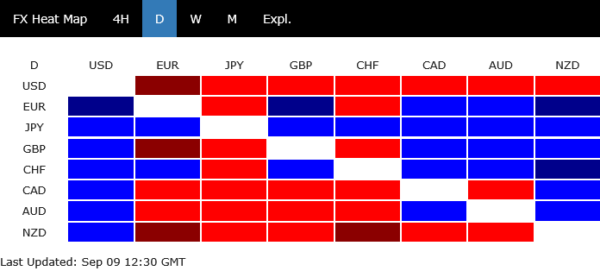
What’s happening: Brent oil crossed $100 on Wednesday after the US destroyed five Iranian crude tankers and Houthi attacks widened the Saudi energy risk map, extending oil’s rise to roughly 25% since early August. Yet Dollar is broadly weaker rather than stronger, Gold and Silver are recovering, Bitcoin and Ethereum are firmer, Swiss Franc is holding up despite no obvious SNB rate story, and European equities are falling.
Why it matters: For most of the war, oil spikes strengthened Dollar through defensive demand plus hawkish Fed repricing, and Wednesday had every textbook ingredient for that same pattern, oil above $100, fresh military escalation, weaker equities. Instead, one of the chain’s most important links broke. The leading explanations are that Fed hikes are already priced too low for oil to move the ceiling further, or that other central banks (ECB, BoJ, RBA, BoE) now have their own live tightening debates, so oil is no longer uniquely hawkish for the Fed. Neither is confirmed yet, which is why Thursday’s ECB decision and Friday’s US CPI matter more than Wednesday’s move itself.
Brent Broke $100. Dollar Went the Other Way.
Brent crossed $100 on Wednesday on exactly the kind of Middle East escalation that spent much of the past seven months strengthening Dollar. The US military destroyed five Iranian crude tankers on Tuesday following an attempted Iranian attack on a US warship, according to CENTCOM, while accelerating Houthi attacks on Saudi energy facilities have widened the physical-risk map beyond the Strait of Hormuz. Oil has now risen roughly 25% since early August and reached its highest level in about six weeks, though Brent remains well below the $126 peak seen in April.
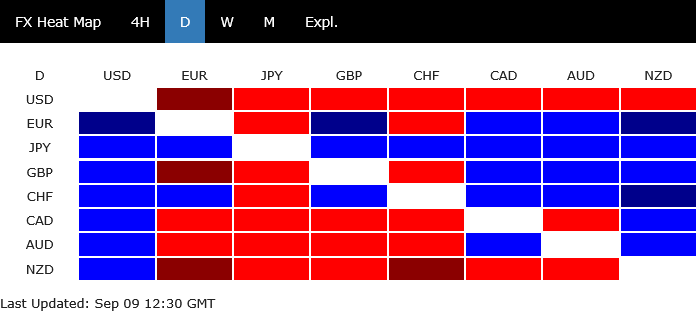
Yet the market response looks unusually different this time. Dollar is broadly weaker across the major currencies. Gold and Silver are recovering. Bitcoin and Ethereum are firmer. Swiss Franc is holding up reasonably well despite the SNB having little obvious rate-hike story to offer. European equities, meanwhile, are falling, so this is not simply a case of geopolitical risk disappearing. The strange part is that Dollar is not capturing the defensive and relative-rate support that accompanied many earlier escalation episodes.
Wednesday’s Escalation at a Glance
- US destroyed five Iranian crude tankers Tuesday, after an attempted Iranian attack on a US warship, per CENTCOM.
- Houthi attacks on Saudi energy facilities widened the physical-risk map beyond the Strait of Hormuz.
- Oil: up roughly 25% since early August, highest level in about six weeks, still well below April’s $126 peak.
The Old Oil-to-Dollar Chain Has Worked for Most of the War
For much of the conflict, the sequence was easy to recognize. Oil rose, inflation risks increased, markets priced more monetary tightening, and Dollar benefited. It often received two forms of support simultaneously: defensive demand during geopolitical stress and a stronger relative-rate position when higher energy prices pushed expectations toward a more hawkish Fed.
That same mechanism frequently worked against Gold and Silver when rising rate expectations and Dollar strength outweighed the geopolitical impulse. Currencies backed by central banks with less tightening capacity could also struggle on relative rates. Wednesday should therefore have been a textbook session for the old playbook: oil above $100, fresh military escalation and weaker equities.
Instead, one of its most important links broke.
The Facts Are Clearer Than the Explanation
Dollar is broadly lower. Gold and Silver are rebounding. Swiss Franc is mixed rather than clearly weak. Crypto is firmer. European equities are down.
Those observations matter because the oil catalyst itself is hardly ambiguous. Direct US-Iran military action had actually eased for roughly a month before restarting toward the end of August, so the latest flare-up represents renewed acceleration rather than background noise from an unchanging conflict. Houthi strikes against Saudi energy infrastructure also increase the risk that supply disruption spreads geographically.
Oil is therefore behaving as though the escalation matters.
Dollar is not behaving the way it usually did when it mattered.
The Old Playbook vs. Wednesday’s Session
| Old Playbook (Most of the War) | Wednesday | |
|---|---|---|
| Dollar | Received defensive demand plus hawkish-rate support | Broadly weaker across major currencies |
| Gold & Silver | Often pressured by rising rate expectations and Dollar strength | Recovering |
| Trigger ingredients | Oil above $100, fresh military escalation, weaker equities | All present, textbook setup, yet the chain didn’t fire |
Maybe the Fed Has Less Room Left to Reprice
The strongest possible explanation is that the Fed side of the old transmission mechanism is running into diminishing returns.
Recent market pricing has kept cumulative Fed hikes below two across the forward path. If investors already believe the tightening cycle has a relatively low ceiling, another jump in oil may still affect when hikes occur without convincing markets that the Fed ultimately has to go much further.
That distinction matters. Earlier in the war, a fresh energy shock could generate a larger shift in the expected policy path and therefore stronger support for Dollar. If the perceived ceiling is now harder to move, oil can rise without producing the same rates response.
It is a plausible explanation. It is not yet proven.
Or Maybe Everyone Else Is Catching Up
There is also a relative-policy argument.
The Fed is no longer the only major central bank facing an active tightening debate. The European Central Bank decides policy on Thursday, while the Bank of Japan meets on September 18 with markets already expecting another move. RBA and BoE officials have also become increasingly explicit about renewed inflation risks.
That changes what higher oil means for currencies. If an energy shock raises tightening expectations globally rather than primarily in the US, the Fed loses some of the relative advantage that previously helped translate higher crude directly into a stronger Dollar.
Put differently: higher oil may still be hawkish, but it is not uniquely hawkish for the Fed.
Central Banks With Live Tightening Debates
- ECB: decision Thursday.
- BoJ: meets September 18, markets already expect another move.
- RBA and BoE: officials increasingly explicit about renewed inflation risks.
Has Direct US Involvement Changed the Geopolitical Trade?
There is a third possibility, but it deserves much more caution.
The US is again a direct military participant. American forces are striking Iranian assets, while US warships themselves are being targeted. It is possible that this changes how investors express geopolitical risk compared with phases of the conflict in which the US was less directly exposed.
There is not enough evidence to say Dollar’s defensive role has weakened because of that shift. Tuesday alone argues against making such a claim: Dollar was still attracting support from Middle East risk aversion only 24 hours earlier. But if the next major escalation headline again sends oil higher while Dollar falls, the question becomes harder to ignore.
One Strange Day Is Still Just One Strange Day
That is the necessary restraint in the whole argument.
Wednesday has broken a pattern that worked repeatedly through much of the war. It has not established a replacement.
Positioning before Thursday’s ECB decision and Friday’s US CPI could be distorting the move. Profit-taking or unrelated flows may also be involved. The evidence supplied does not tell us which explanation is correct, and trying to force one would overstate what a single session can show.
The best description is therefore simple: Wednesday is unusual. It is not yet a new regime.
ECB First, US CPI Next
Fortunately, the market does not have to wait long for a better test.
Thursday’s ECB decision can test whether the relative-rates story is becoming more global. If tighter ECB expectations continue supporting Euro even with oil above $100, the argument that other central banks are catching up with the Fed gains credibility.
Friday’s US CPI is an even more important test. If inflation surprises on the upside and Treasury yields and Dollar still fail to respond convincingly, that would suggest the old oil-Fed-Dollar relationship has genuinely lost some power. If hot CPI immediately brings back higher yields, Dollar strength and pressure on precious metals, Wednesday will probably look like an isolated interruption.
That is where the report should stop rather than force an answer that markets have not yet provided.
Brent has broken $100. The old war playbook broke with it for one session. ECB and CPI will tell us whether that was the beginning of something—or just noise.
Related Coverage
Precious Metals Deep Dive
Silver Outperforms Gold as Ratio Reverses From Resistance. Can Silver Lead the Next Breakout? — a break above 67.47 would strengthen Silver’s rebound, but 4,510.90 in Gold is the real test of whether Silver is genuinely leading.
FX & Trade Watch
From Tariffs to Bans: Why USD/CAD Barely Blinks at the US-Canada Trade War — why oil near $100 remains a far stronger immediate driver of CAD than the latest escalation in trade restrictions.
Global Inflation Watch
China Inflation Splits in Two as Producer Costs Surge but Consumers Stay Cool — CPI up just 0.8% y/y while PPI climbed 3.8% and industrial input costs surged 5.8%, showing commodity pressure building upstream faster than at the consumer level.
FAQ
Why didn’t Dollar rally when Brent broke $100?
The old wartime pattern relied on Dollar getting both defensive demand and hawkish Fed repricing when oil rose. Wednesday had the same trigger ingredients, oil above $100, fresh military escalation, weaker equities, but Dollar still fell broadly, suggesting the transmission chain may be losing power rather than simply pausing.
Is the Fed still the primary channel connecting oil to Dollar strength?
Possibly not as uniquely as before. The ECB decides policy Thursday, the BoJ meets September 18 with another hike expected, and RBA and BoE officials are flagging renewed inflation risk too. A global oil shock may now lift tightening expectations everywhere rather than giving the Fed a unique relative-rate edge.
What would confirm this is more than a one-day anomaly?
Two tests: whether Euro holds up against oil above $100 after Thursday’s ECB decision, and whether Friday’s US CPI, if it surprises hot, brings back higher Treasury yields and Dollar strength. If both come back as usual, Wednesday likely was an isolated interruption rather than a genuine shift.
Key Takeaways
- Brent crossed $100 Wednesday after the US destroyed five Iranian crude tankers and Houthi attacks widened the Saudi risk map, extending oil’s rise to roughly 25% since early August.
- Despite a textbook wartime setup, oil above $100, fresh military escalation, weaker equities, Dollar fell broadly instead of rallying, breaking a pattern that held for most of the conflict.
- Two candidate explanations: cumulative Fed hikes are already priced below two on the forward curve, leaving little room for oil to move the ceiling, and other central banks (ECB, BoJ, RBA, BoE) now have their own live tightening debates, so oil is no longer uniquely hawkish for the Fed.
- A third possibility, that direct US military involvement has changed how investors price the geopolitical trade, is flagged as unconfirmed and needs more evidence.
- Thursday’s ECB decision and Friday’s US CPI are the next real tests of whether Wednesday’s break from the old playbook is a genuine shift or an isolated session.
What to Watch Next
Thursday’s ECB decision tests whether the relative-rates story is becoming more global, does tighter ECB pricing keep supporting Euro even with oil above $100. Friday’s US CPI is the bigger test: a hot print that still fails to lift Treasury yields and Dollar would suggest the old oil-Fed-Dollar relationship has genuinely lost power, while a hot print that immediately brings back higher yields and Dollar strength would make Wednesday look like an isolated interruption.