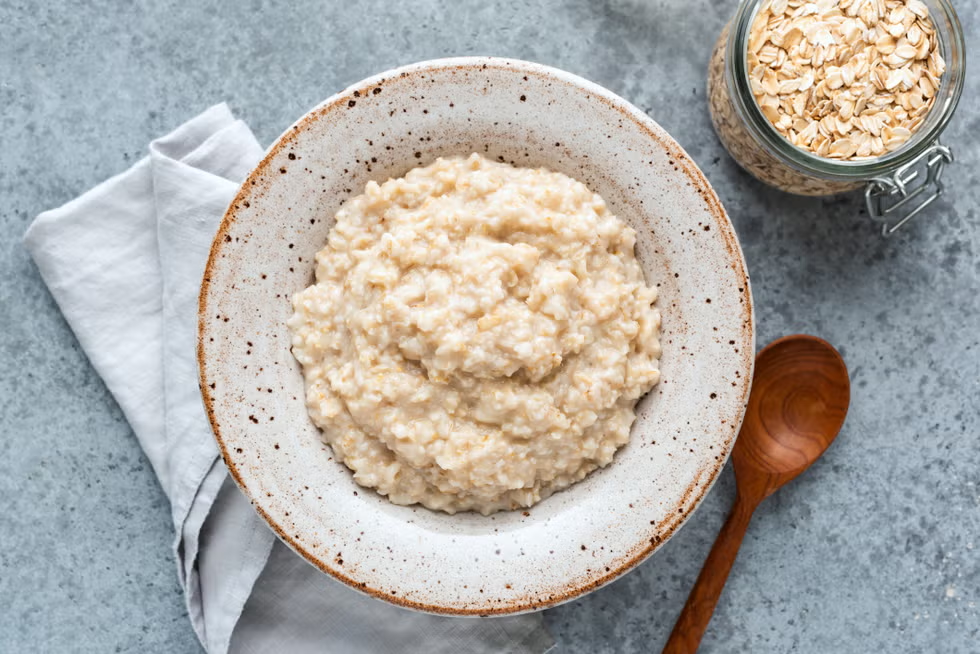
You know the old saying… Eat breakfast like a king, lunch like a prince and supper like a pauper. Perhaps, though, it’s time for an update. Because mounting evidence suggests that – from a nutritional perspective – Queen Camilla’s daily breakfast is actually hard to beat.
In his book, Cooking & The Crown, the Queen’s son Tom Parker Bowles wrote that, for at least part of the year: ‘My mother, Queen Camilla, eats porridge every day – plain, aside from a little of her own honey. The hives sit at the back of a field at Ray Mill, the house in which my sister and I spent the latter part of our youth.’
Breaking your fast with porridge has the backing of the British Heart Foundation, which points out that oats contain the soluble fibre beta-glucan, which – providing you eat 3g or more daily – can help lower your cholesterol levels.
A 40g serving of oats also provides around 3g of fibre, or 7.5g per 100g, making it one of the ‘high fibre’ foods linked to a host of health benefits, including a lower risk of type 2 diabetes and cardiovascular disease.

So far so good. But Queen Camilla is said to take her porridge with full-fat milk. This, we’ve long been told, is bad for our hearts. Shouldn’t we all be sipping plant-based ‘mylks’ instead? Yet last year, Tesco sold more than three million extra litres of full-fat milk than it did two years ago – a rise of more than 100%. The supermarket attributes the rise to ‘super-health-conscious Gen Zers taking to it in a big way… as nutritionists revise their views and state that, as part of a balanced diet, full-fat dairy can actually be beneficial.’
Dr Michael Mosley was a fan, writing on his Fast 800 website that ‘Dairy is an excellent, natural source of calcium, essential for healthy bones, but not many are aware of another, equally important nutrient called iodine. One small glass of cow’s milk (full-fat, semi-skimmed or skimmed) contains almost 70% of our recommended daily intake of iodine.’
Iodine helps the body make a hormone called thyroxine, which in turn influences your metabolism (or how well you convert food into energy). Low iodine levels have been linked to weight gain and mood swings.
But what about the relative benefits of full-fat vs skimmed milk? A glass of skimmed milk contains less than two-thirds of the calories in the same glass of full-fat milk, Dr Mosley explained. But in a study of 18,438 American women, those who ate the most full-fat dairy were also the least likely to gain a major amount of weight across a decade. It’s not the only study to have concluded that full-fat milk drinkers tend to be slimmer (and also have lower blood pressure). Why? The higher saturated fat in full-fat milk does boost your LDL (the ‘bad’ cholesterol associated with heart disease, he explains. But: ‘It also boosts levels of “good cholesterol”, known as HDL, and this appears to balance out the damage done by higher LDL.’
It may also have a higher vitamin content, explains Dr Emily Leeming, nutritionist, microbiome research fellow and author of Genius Gut. ‘Some of the vitamins found in milk, like A, D and E, are fat-soluble, so they will be found in higher quantities in full-fat over skimmed. Protein, calcium and B vitamins stay the same, though.’
So if want to breakfast like a queen, all you need is a box of oats, a splash of milk – oh, and your own beehives.