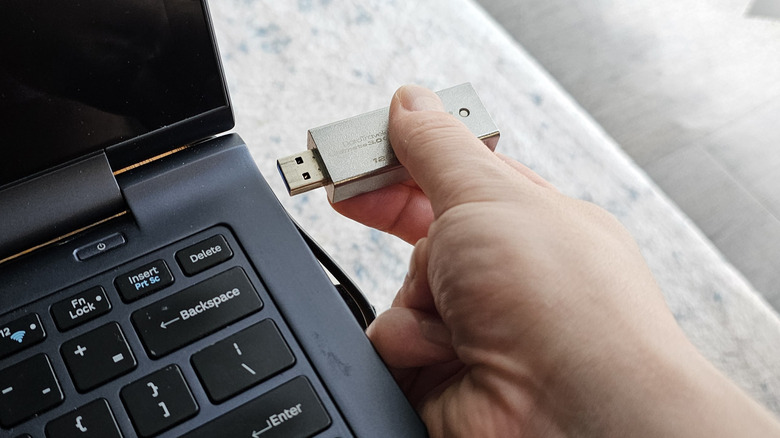
I mean, they’ve been around forever.
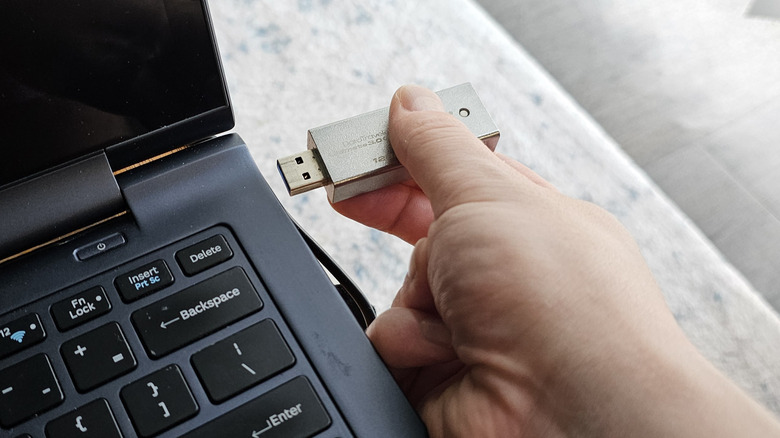
The humble USB flash drive has been among the most enduring pieces of consumer technology. After unseating the floppy disk as the portable storage medium du jour, flash drives began to hit the consumer market in the early 2000s, and they’ve been collecting dust at the bottom of backpacks and desk drawers ever since. Whereas floppy disks held very little data, flash drives came off the top rope with multiple whole megabytes of capacity and much faster data transfer rates. Those figures improved over time, scaling as flash storage increased in capability. But has the flash drive finally reached the end of the road?
The Museum of Obsolete Media still rates USB flash drives at a 1, indicating a low risk of obsolescence. As long as USB ports don’t go the way of the dodo, neither will these convenient little drives. The increasing cost of other storage mediums is likely to prolong their popularity, too. But while there’s no direct evidence of declining flash drive sales, they’ve fallen out of favor as people deal more regularly with large files and faster data transfer capabilities on newer hardware. Increasingly, more capable devices are needed, especially for people working in IT or creative professions.
So, what are thumb drives still good for, and should you be transitioning away from them? That depends.
SSDs are faster than flash drives, durable and ludicrously capacious
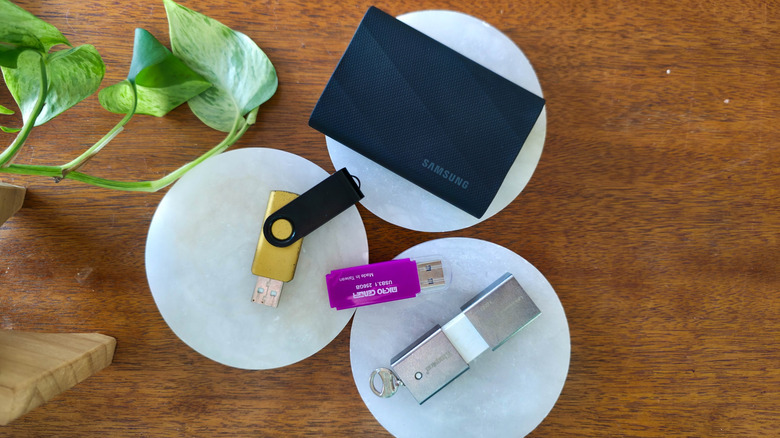
If flash drives no longer feel flashy, that can be chalked up to their increasing impracticality. Their relatively small capacities — most brands top out at 128GB — make them useless when dealing with large files. Many people now deal with larger files than ever. New smartphones can produce libraries of 4K video which take up roughly 1GB for every minute of footage at high frame rates. ZIP archives, smartphone or PC backups and other such files can easily exceed the capacity of a thumb drive. Even if your files fit on a flash drive, they’ll transfer at relatively slow speeds.
SSDs pick up the slack. The best SSDs tend to have larger capacities of 1TB or more and much faster transfer speeds. They’re also more durable, with portable SSDs often clad in protective housings, and they tend to use higher quality memory controllers. The ease with which they can outlast an average flash drive, all else being equal, makes them better long-term investments. And whereas older SSDs could be somewhat bulky, newer models are eminently pocketable. While not as small as flash drives, they hardly take up space in most bags.
Lastly, there’s USB-C, which is the only type of data port on some newer laptops. USB-C flash drives do exist, but SSDs make things much simpler by using a cable. Most popular portable SSDs include both a USB Type-A and Type-C cable, allowing the user to choose the better option for their personal needs.
The rising cost of SSDs makes flash drives a more practical choice
Whatever downward trajectory the humble flash drive may have been on, the AI boom has upended that gravity. Thanks to the surge in demand for data center storage and memory, the price of an SSD has skyrocketed since late 2025, and PC sales have fallen. After stabilizing at dirt-cheap prices that made data hoarding more economical than ever, the rush of new demand sent prices into the stratosphere. The 4TB Samsung 990 Pro SSD I used in my last PC build cost me $318 in November 2025, but Amazon lists it for $1,100 at the time of this writing. As if to rub salt in the wound, Samsung’s slower 990 costs even more than the original.
Meanwhile, a cursory look at the Amazon listings for USB flash drives reveals a landscape much less likely to induce heart palpitations. They’ve increased in price, but the rate of increase has lagged that of SSDs and HDDs. Additionally, they come in lower storage capacities, which further reduces the per-unit cost. A five-pack of PNY 64GB USB 3.0 flash drives will only run you $43 as of this writing, which is a far lower per-gigabyte cost than that of the Samsung 990. For most people who aren’t shooting reams of 4K video and just need to move a few documents or store some tax filings, flash drives are once again the more attractive option. It’s no wonder that Google Trends data shows a massive spike in search interest beginning in early 2026 for terms like “USB flash drive portable” and “USB flash drive 128GB.”
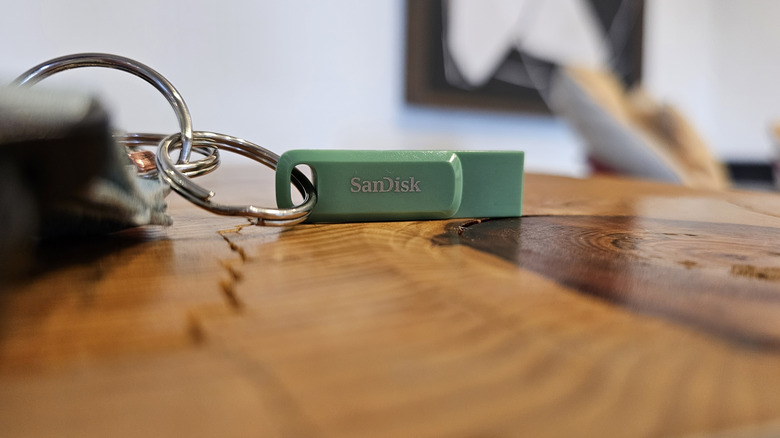
Moreover, flash drives still have their traditional silver bullet use cases. Want to create bootable media to install a Linux distro or Windows 11 instance on a machine? No use wasting a whole SSD for that. Ditto for running portable, zero-footprint OSes like Tail OS, carrying around a toolbox of diagnostics and repair tools or simply throwing on a keychain so you have access to portable storage in a pinch.