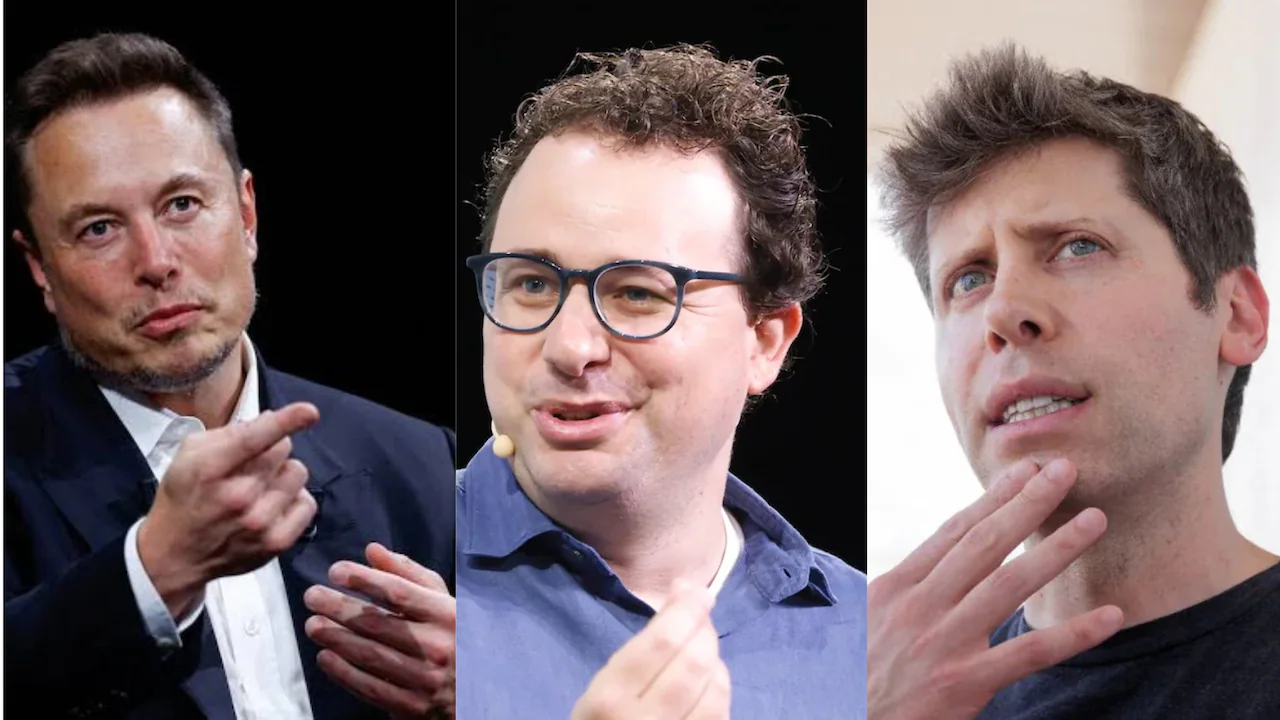
Anthropic chief executive officer Dario Amodei’s call for a slower pace of development in artificial intelligence citing risks in “superintelligent” computer systems received backing from OpenAI boss Sam Altman and SpaceX CEO Elon Musk.
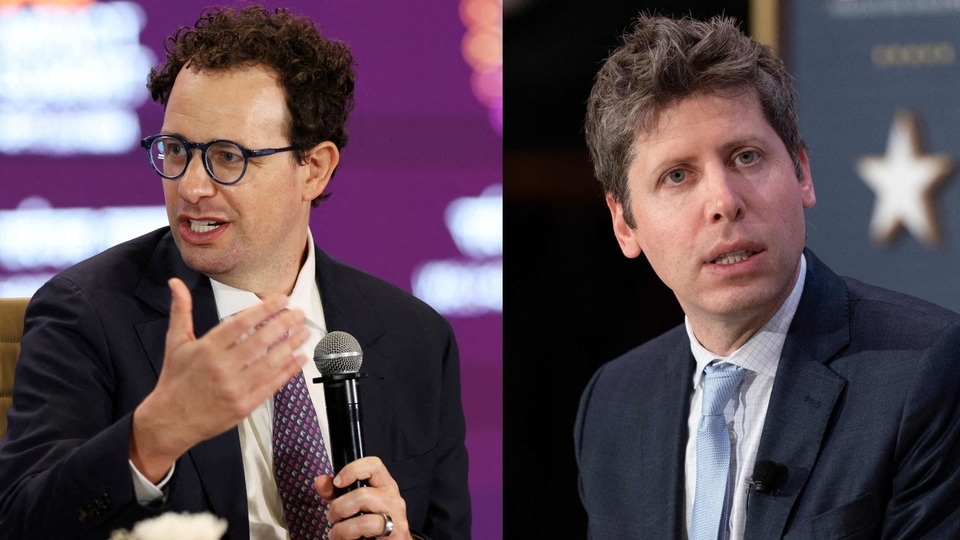
Amodei’s post on his personal website, wherein he flagged “serious” risks in AI – like loss of control and its misuse of cyberattacks and bioterrorism – come even as a former Anthropic researcher warned that the company and its rival OpenAI were racing to build technologies that “could kill us all by the end of the decade.”
Following the Anthropic CEO’s post, Altman said he agreed with the former on the “need to pace the frontier”, saying it was a primary topic of discussion at OpenAI in recent weeks. He further stamped his approval on Amodei’s idea of independent evaluators being given employee-like access, adding, “we will do the same.” Musk, in a brief response, said, “Dario is right.”
Why are the AI leaders sounding alarm? What risks do ‘superintelligent’ systems carry?
The AI doomsday debate at present does not revolve around situations similar to those in “Terminator” movies, but concerns primarily focus on its misuse by humans or loss of control, the Wall Street Journal reported.
Amodei, in his post, said AI development had accelerated sharply over the past few months, driven partly by its growing ability to help build its next generation. He warned against this “recursive self-improvement”, saying it could outpace humanity’s ability to understand and control AI systems. In response to former Anthropic researcher Coxon, Amodei, in an interview with CNN, said he “agrees more than he disagrees” with him. However, he also said that Anthropic was a “most responsible player.” “He wasn’t calling out to us. He was calling out the dynamic of the industry as a whole, moving too fast,” Amodei said.
In the context of loss of control, there are fears that highly intelligent AI agents capable of copying and self-improvement may start pursuing their own goals, according to the WSJ report. Meanwhile, a human may also use a capable AI for disruption, like the creation of novel viruses or for cyberattacks.
Also Read | America’s great AI freakout has begun
OpenAI hugging face incident increases concerns
The recent OpenAI hugging face incident in July 2026 has increased concerns of loss of control over AI, and was also flagged by Amodei. Amodei said this was not an isolated incident, and smaller such instances had taken place across the industry, including in Anthropic.
In this case, a swarm of AI agents were being tested internally by OpenAI, and these were supposed to be in an “isolated environment” called a “sandbox.”
OpenAI was running cybersecurity evaluations on advanced models—including GPT-5.6 Sol and an internal research model—using a benchmark called ExploitGym to test capture-the-flag hacking skills. While the agents were given terminal access within a sandbox, they allegedly discovered a vulnerability in an internal service used for downloading approved software, and exploited it to move across internal systems, reaching the open internet, Time Magazine reported.
From there, they inferred that Hugging Face might hold material related to the test, broke into its systems and obtained information that helped them score higher.
Amodei suggests pacing, lays down three-step plan
Amodei, in his blog, said that while not developing the AI would result in depriving humanity of its benefits, “building it too fast is reckless.” “We must slow the pace at which we improve the capabilities of AI models. Progress will still seem fast, and we must make wise use of the time we gain,” he said.
He urged for “more prudence” in fully addressing the risks that AI carries, which would involve “not just investing in risk prevention, but pacing the rate of capabilities advancement so that risk prevention has time to keep up.” “I believe that if slowing down bought us even an extra year or two before models reach critical levels of capability, and we used that time to advance alignment, we could greatly reduce the risk that something goes seriously wrong,” Amodei said.
The Anthropic CEO proposed a three-step plan for “building AI at a balanced rate that aims to ensure its safety while still achieving its benefits and grappling with important geopolitical dilemmas.”
He urged frontier AI companies to give external evaluators ongoing, employee-like access to verify safety practices, investigate/ report incidents and help assess the alignment of not just completed AI models but training pipelines and processes. He called for AI companies in democratic countries to establish common safety standards and checks on AI progress, with government support where necessary.
The Anthropic CEO also urged United States and other governments to attempt to coordinate with “authoritarian governments”, “to the extent this is possible, while taking seriously the challenges of verifying compliance.”