
A mobile phone survived a free fall from the stratosphere at an altitude of more than 30,600 meters in Sweden, in an experiment designed to test the limits of a protective case. The device was released from a stratospheric balloon without a parachute and eventually landed in a wooded area in the northern part of the country.
The feat was carried out by Rhinoshield and Sent Into Space as part of a durability test for the AirX case, an accessory made from a single recyclable material. The experiment was intended not only to demonstrate the product’s ability to withstand an extreme impact, but also to highlight the possibility of combining durability and sustainability in technology accessories.
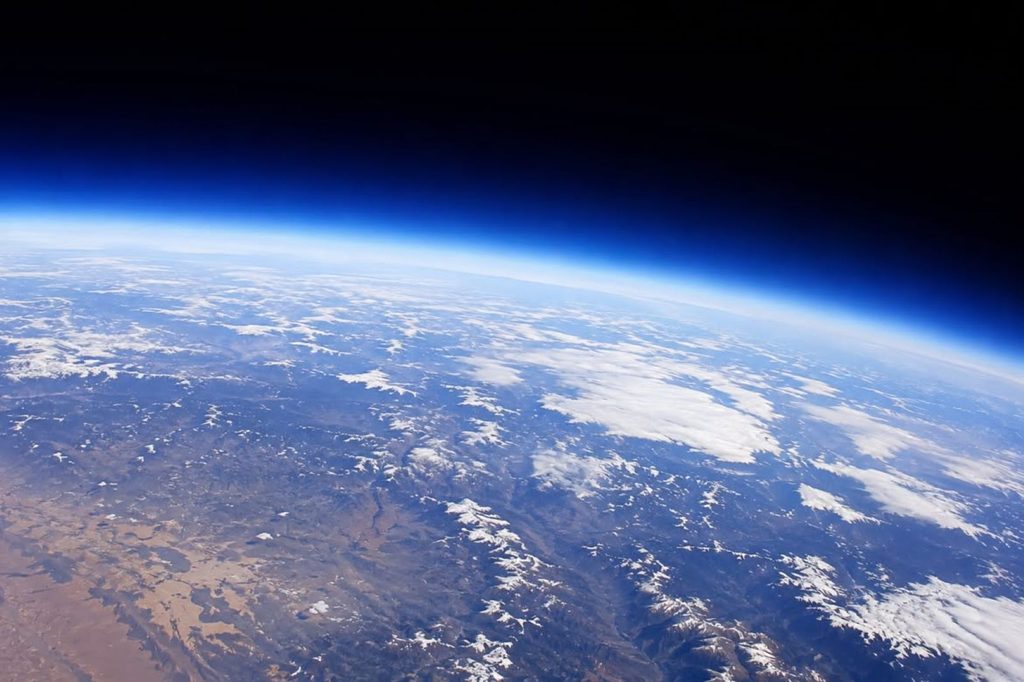
The launch took place from the Esrange Space Center in Kiruna, in the Lapland region. From there, the team used a stratospheric balloon to carry the device to an altitude of 30,607 meters, a distance equivalent to more than three times the height of Mount Everest.
A mobile phone fell from the stratosphere without a parachute and broke a Guinness World Record
One of the most striking aspects of the test was that the phone was released without any parachute system. This condition was essential to meet the criteria established by Guinness World Records for the category in which the achievement was registered.
During the descent, the device faced conditions very different from those experienced during a conventional fall. At such an altitude, temperatures and atmospheric pressure are considerably lower than at the Earth’s surface, while the phone had to remain protected throughout the journey until reaching the ground.
The protective case played a central role in the experiment. According to its developers, its design is intended to absorb the energy generated upon impact and protect the device without relying on a combination of different materials. This feature is intended to make the case easier to recycle once it reaches the end of its useful life.
The altitude of more than 30 kilometers is far above the typical cruising altitude of commercial aircraft and is approximately three times the elevation of Mount Everest. The experiment therefore took a durability test normally conducted under controlled conditions and placed it in a far more extreme environment.
The device was recovered after the fall
Once the descent, which lasted approximately 25 minutes, was completed, the team had to locate the phone in a large wooded area. The search lasted more than five hours and covered an area of nearly two square kilometers before the team responsible for the experiment managed to find it.
The device was eventually recovered with no apparent damage after withstanding the impact with the ground. The protection provided by the case allowed the team to inspect the phone and assess its condition following the fall.
The achievement was recognized by Guinness World Records under the category of the greatest drop of a mobile phone protected by a case onto natural land formations. The experiment therefore transformed a demonstration of technological durability into an international record.