From a statistical standpoint, Wall Street has enjoyed having President Donald Trump in the White House. The average annualized returns for the Dow Jones Industrial Average (DJINDICES:^DJI), S&P 500 (SNPINDEX:^GSPC), and Nasdaq Composite (NASDAQINDEX:^IXIC) have been considerably higher under Trump than under most other presidents since the late 1890s.
Outsize stock market gains during Trump’s non-consecutive second term have primarily been powered by the artificial intelligence (AI) infrastructure build-out.
Missed AI’s “Act 1”? Act 2 Could Be 15x Bigger. Most investors think they missed the AI boat because they didn’t buy Nvidia in 2005. But according to our analysts, we’re only at the end of “Act 1″—the R&D phase. “Act 2” is the global rollout. Continue »
Unfortunately, a new threat has entered the picture, which has the ability to upend the AI-driven bull market and President Trump’s economy. I’m talking about the Federal Reserve’s rate-hiking cycle.

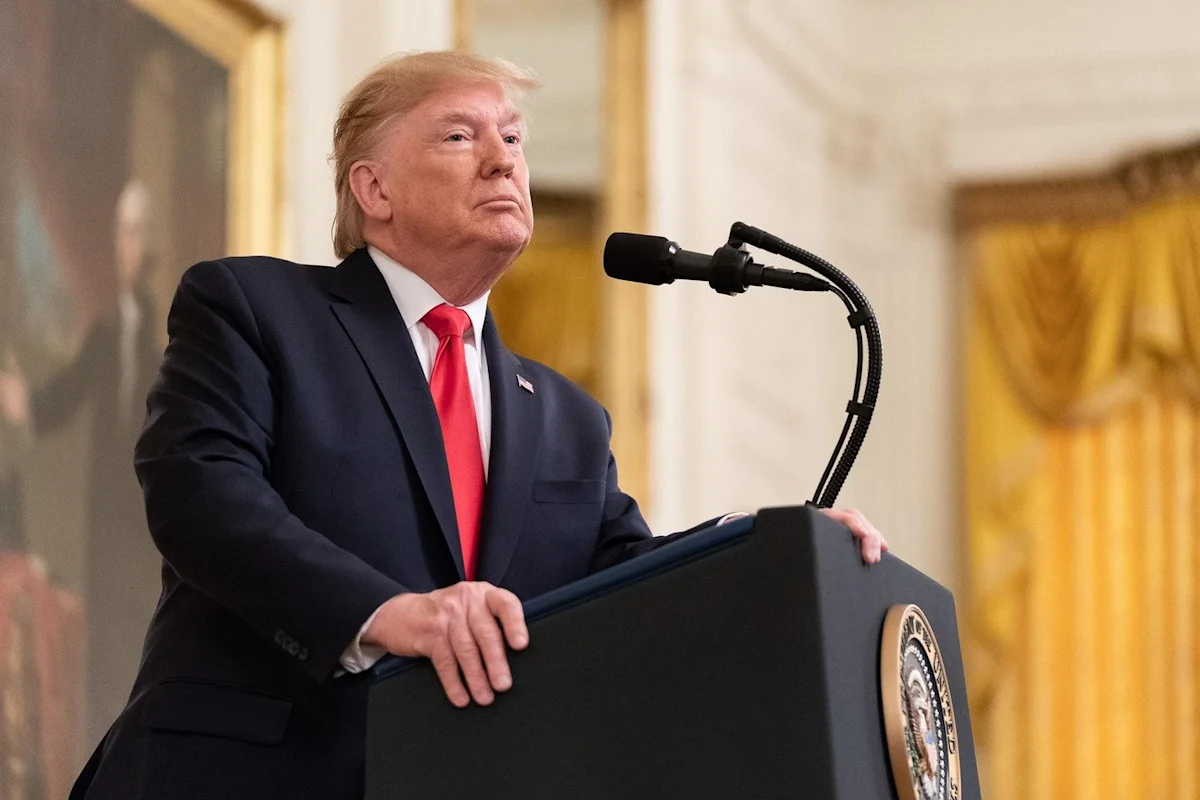
Rate hikes can do a number on stocks and Trump’s economy. Image source: Official White House Photo by Shealah Craighead, courtesy of the National Archives.
Rate hikes can squash the stock market’s leading catalyst
Better-than-expected corporate earnings, fueled by the AI data center build-out, have been the catalyst fueling the Dow’s, S&P 500’s, and Nasdaq’s push to record highs. Demand for graphics processing units (GPUs) and high-bandwidth memory (HBM) is off the charts, leading to supply shortages and exceptional pricing power for the companies behind these products.
From an investment perspective, insatiable demand coupled with persistent supply shortages is a favorable scenario. We’ve watched the gross margin for GPU kingpin Nvidia (NASDAQ:NVDA) and HBM titan Micron Technology (NASDAQ:MU) go through the roof.
But with Kevin Warsh and the Federal Open Market Committee (FOMC) kicking off a rate-hiking cycle on Sept. 16, Wall Street has been put on notice.
This build-out is being financed, in part, by debt. If businesses respond by slowing down this expansion, even marginally, it could be dire for the stock market.
Let’s not forget that the stock market entered 2026 at its second-priciest valuation over nearly 156 years. Stocks are arguably priced for perfection. If rate hikes lead to slower AI growth rates and/or a re-rating of premium stock valuations, it could mark an abrupt end to the AI-driven bull market.

Image source: Getty Images.
Higher lending costs could clobber Trump’s economy
But it’s not just the stock market that may suffer as the FOMC looks to rein in inflation. While Fed Chair Warsh still views monetary policy as accommodative and highlighted strong productivity growth at the September FOMC meeting, history suggests U.S. M2 money supply could be the culprit that upends the economy.