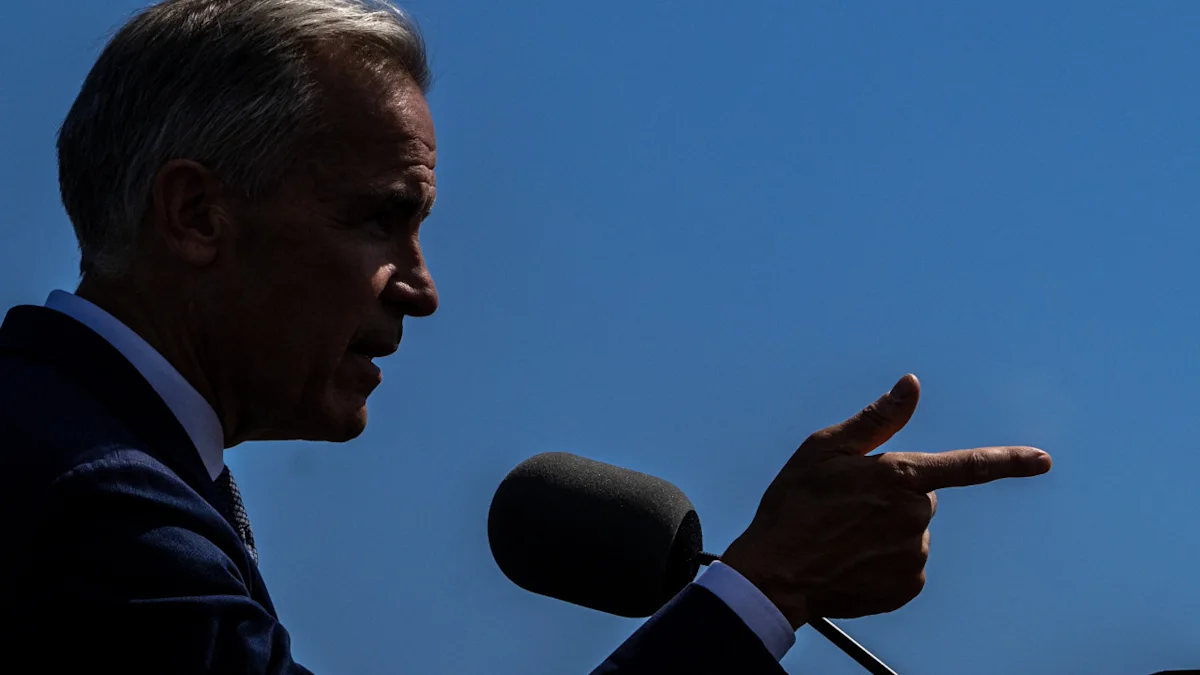
Prime Minister Mark Carney says the Trump administration is more interested in “doing memes” and “throwing shade” than striking a real trade deal.
Speaking to reporters in Ottawa on Tuesday, Carney said talks can resume “when the Americans stop doing memes, stop throwing shade, stop trying to be tough and start being serious about having those discussions.” He called recent U.S. Cabinet-level mockery of Canada’s military “beneath their office” — pointing to Treasury Secretary Scott Bessent’s comments belittling Canada’s economy, Defence Secretary Pete Hegseth’s mocking social media post about Canadian cadets, and President Donald Trump’s move to rename Lake Ontario to “Lake America.”
Despite Carney’s fighting stance — and whatever happens next in Washington — Canadians end up feeling the consequences in their own shopping carts.
On September 8, 2026, Ottawa’s retaliatory tariffs on hundreds of American products take effect — a direct response to the 50% U.S. tariff that hit C$27.6 billion of Canadian exports on August 22, days after trade talks between the two countries collapsed. Finance Canada says its countermeasures are designed to match the U.S. rate “dollar for dollar,” with tariffs of 15%, 25% or 50% depending on the product.
The stakes extend well beyond one shopping list. Canada and the U.S. exchange more than $700 billion in goods every year, and the current standoff marks a sharp break from that decades-long trading relationship. Trade analysts warn the bigger risk for some workers may not be higher retail prices at all, but job losses at export-dependent Canadian businesses, such as furniture makers and steel producers, now facing 50% U.S. duties on what they sell south of the border.
Don’t Miss
What changes on September 8
The new list leans heavily toward industrial inputs — steel, aluminum, pulp and paper, agricultural equipment — but it also touches goods Canadians buy directly, including appliances, electronics, smartphones, cosmetics, clothing and footwear.
Ottawa revised the list after its initial announcement, dropping fish and seafood entirely, citing a risk of broader economic harm to that sector. These countermeasures are separate from Canada’s existing 25% tariffs on U.S. autos, steel and aluminum, in place since 2025 — though the steel and aluminum rate also doubles to 50% on September 8.
Economist Trevor Tombe wrote that he estimates the retaliatory tariffs will add about C$4 billion in costs across the economy, pushing average consumer prices up by roughly 0.25%. And the burden isn’t shared evenly: Households earning under $30,000 a year stand to lose more than 0.5% of their disposable income, and Tombe calculates a family with kids could pay roughly $250 more a year because of the tariffs.
Other economists expect a milder hit overall. McMaster University’s Colin Mang, speaking to BNN, points to what happened the last time Canada rolled out counter-tariffs: Tariffed items ran about 6% pricier than comparable goods, adding roughly 0.3 percentage points to inflation, with retailers absorbing much of the cost rather than passing it all on to shoppers.
What to do before the deadline
Goods already in transit to Canada on September 8 are exempt from the new tariffs, but anything purchased or shipped afterward is not. That means if there is a U.S.-made appliance, gadget or favourite cosmetics brand on your list, buying before the deadline avoids the surtax outright.
Carleton University’s Ian Lee suggested in a Bloomberg interview that some Canadians will simply look for a non-American alternative instead — a shift that can blunt the price impact, since retailers competing against untariffed imports have less room to raise prices.
For everyday grocery and household shopping, the honest answer from most economists is that the average Canadian won’t notice a dramatic shift at the checkout. But if money is tight, or a bigger American-made purchase was already on your radar this fall, checking the country of origin now — and deciding whether to buy before September 8 or shop the Canadian or non-U.S. alternative — is the one concrete step that puts the decision back in your hands before Ottawa’s tariffs, not just Washington’s, start showing up on the receipt.
By the numbers: Canada’s September 8 tariffs
$27.6 billion — value of U.S. imports facing Canada’s new tariffs
15% to 50% — tariff rate range, matched to the equivalent U.S. rate
700+ — U.S. products affected
$4 billion — estimated added cost to the Canadian economy (Tombe estimate)
$250 — estimated extra yearly cost for a family with kids (Tombe estimate)
0.25% — estimated increase in average consumer prices
What To Read Next
The most expensive financial mistakes are often the ones you don’t see coming. Join 19,000+ Canadians who get the money moves, risks and opportunities shaping their finances — delivered free each week. Subscribe now.