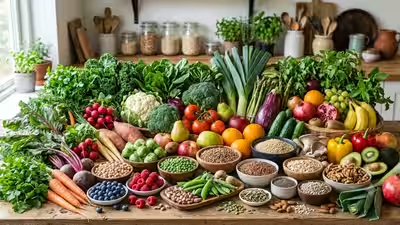
For years, healthy eating advice has focused on cutting back. Eat less sugar. Less salt. Less processed food. But one of the most interesting findings in nutrition research isn’t about eating less at all. It’s about eating more, more variety, to be exact.A large citizen-science research project known as the American Gut Project found that people who ate more than 30 different plant foods each week had significantly more diverse gut microbiomes than those who ate 10 or fewer. The findings, published in the journal mSystems in 2018 by researchers from the University of California San Diego, the University of Colorado Boulder, and collaborators, have since become one of the most widely discussed pieces of gut health research.And before you imagine eating 30 bowls of salad every week, that’s not what the study means.
It’s about variety, not quantity
Most of us tend to eat the same foods over and over. The same breakfast. The same vegetables with dinner. The same handful of fruits we know we like.The American Gut Project suggests that our gut may prefer a little more adventure.Researchers analyzed dietary information and stool samples from more than 10,000 participants across the United States, the United Kingdom, and Australia. One pattern stood out. People who reported eating over 30 different plant foods every week consistently had a richer and more diverse collection of gut microbes than those whose diets included fewer than 10 plant foods.
What counts as plant food?
Here’s where many people are pleasantly surprised.The researchers weren’t talking only about fruits and vegetables.Plant foods included beans, lentils, peas, whole grains, nuts, seeds, herbs, spices, leafy greens, berries, mushrooms, and even foods like oats, chickpeas, quinoa, and brown rice. Different colors and varieties counted separately too. Red cabbage and green cabbage, for example, were considered different plant foods because they contain different compounds.That means reaching 30 isn’t as intimidating as it first sounds.Imagine starting your day with oats, almonds, flaxseeds, banana, and cinnamon. That’s already five different plant foods before breakfast is over.Lunch could include brown rice, spinach, tomatoes, onions, chickpeas, coriander, and cucumber. Dinner might feature lentils, cauliflower, peas, turmeric, garlic, ginger, and mustard seeds.For someone eating a varied diet, especially in countries like India where meals naturally include several spices, pulses, and vegetables, the target can be surprisingly achievable.
Why does variety matter?
Different plants contain different types of dietary fiber and natural compounds called polyphenols. Your body doesn’t digest many of these substances completely. Instead, they travel to the colon, where gut microbes feed on them.Think of it this way. If your gut is home to a large community of microbes, each species has its own favorite foods. Feed them all the same thing every day, and only certain microbes thrive. Offer a wider menu, and more species can flourish.Researchers believe this diversity helps create a more balanced ecosystem inside the gut.
It’s not just about probiotics
Walk through any supermarket and you’ll see shelves full of probiotic drinks, yogurts, and supplements promising better gut health.But many scientists now argue that feeding the microbes you already have may be just as important as introducing new ones.Researchers behind the American Gut Project noted that dietary diversity appeared to have a stronger association with microbial diversity than simply following vegetarian, vegan, or omnivorous eating patterns. In other words, eating a broad range of plant foods may matter more than fitting into a particular diet label.That’s encouraging because it makes gut health less about buying specialty products and more about making everyday meals a little more varied.
What does this look like in real life?
Nobody needs to count every bite forever.Instead, think across an entire week rather than a single day.Swap white rice for millets one day and quinoa another. Rotate between rajma, black chana, moong dal, and masoor dal. Add fresh herbs instead of using only one garnish. Choose seasonal fruits instead of sticking to apples and bananas all year. Sprinkle seeds over curd or salads. Experiment with vegetables you don’t usually buy.Small changes add up surprisingly fast.And variety has another advantage. It often makes meals more enjoyable.
One study doesn’t tell the whole story
The American Gut Project was observational, meaning it identified associations rather than proving cause and effect. People who eat a wider variety of plants may also have other healthy habits that contribute to better gut health.Still, its findings fit well with a growing body of research. Large organizations, including the Harvard T.H. Chan School of Public Health and the World Health Organization, have long encouraged eating a wide variety of plant-based foods because they provide nutrients that work together in ways individual foods cannot.So, while scientists continue to unravel the complexities of the gut microbiome, one message has remained remarkably consistent: diversity on your plate is generally a good thing.The next time you’re planning meals, you don’t necessarily need a new supplement or an expensive wellness trend. You may simply need a few more colors, a couple of extra spices, another type of bean, or a fruit you haven’t eaten in months. Your gut microbes are likely to appreciate the variety.