For Nike, the numbers out of China make one thing clear — the athletic giant still has a lot of ground to recover in its second-largest market that accounts for around 15 percent of global revenue.
In the latest 2026 third quarter, revenue in Greater China declined 10 percent, with online sales down 21 percent. Greater China footwear revenues also fell 10 percent in the quarter.
Nike brand’s third-quarter revenues were $11 billion, up 1 percent, primarily due to declines in EMEA (Europe, Middle East and Africa) and Greater China, partially offset by growth in North America.
“We are moving with urgency,” Elliott Hill, Nike’s president and chief executive officer, said during the most recent earnings call, noting that the brand’s China comeback is still in its early phase.
According to local former employees, who requested anonymity, Nike’s problem stretched back over five years.
Under the leadership of its former CEO John Donahoe, Nike’s then DTC-first approach meant that the company could own consumer data and improve margins, but the shift marginalized its wholesale partners such as Topsorts and Pou Sheng. Those partners helped the brand build a robust retail network — one that reached millions of consumers at key retail outlets, in particular in lower-tiered markets.
To fix Nike’s retail woes, Hill, who rejoined the company a year and a half ago, made a major personnel change — he tapped Cathy Sparks, a 25-year Nike veteran, to succeed a local veteran, Angela Dong, as the vice president and general manager of Greater China. Dong — who has been with Nike for over 20 years, was the CEO of Nike Greater China and had oversight for the outdoor sub-brand All Conditions Gear (ACG) globally for over a year — has recently been named a partner at the Chinese private equity firm HongShan.
Sparks, who only assumed the new role a little over two weeks ago, inherits a business under pressure.
Apart from brick-and-mortar mishaps, the brand was lacking momentum online. During last November’s Singles’ Day shopping festival, Fila and Adidas — traditionally smaller players in the market — surpassed Nike in sales rankings for the first time, finishing first and second respectively.
In addition, the competitive squeeze shows little sign of easing. According to Bernstein Research, Nike’s inventory clearance in China should start to stabilize in the second half of 2026, by which point rivals old and new will have further consolidated their gains while entering the mainstream.
For example, On Running is seen as a staple for both business entrepreneurs and the middle-class, Adidas has morphed into a fashion world darling, Anta has become a poster child of “Chinamaxxing,” and a crop of specialty brands — Salomon, Hoka, and Guangzhou-based Kailas among them — have quietly built loyal followings of their own.

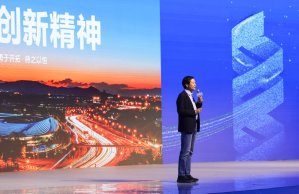
Lei Jun, founder of the Chinese tech company Xiaomi, is often seen in On Running sneakers.
VCG/VCG via Getty Images
“Anta has built a portfolio architecture through acquisition, placing distinct brands across price tiers and consumer segments so that a downturn in one segment gets absorbed by another. On Running and Hoka have taken the opposite approach — deep specialization in a single performance category where focused credibility commands premium pricing. Adidas has found traction by giving its China team real autonomy to build from local consumer culture rather than executing a global template,” said Wei Kan, founder of the consulting firm Conduit Asia and a former Nike and Converse APAC executive for almost 15 years.
“Each of these models works, but they work for different structural reasons. The competitive pressure is highest for any brand that hasn’t yet defined its strategy in the new consumer and market landscape,” he added.
For Kan, as Chinese consumers shift to an “activity-first and community-first” approach to sports, a brand must exist not only “in awareness” but “in the consumer’s actual routine.”
“I find myself shopping the same way,” said Kan. “By category need and cultural curiosity, not brand default. For trail running, I look at specialists. For everyday wear, I gravitate toward heritage brands with real history and subcultural roots.”
On the product end, Kan thinks that by merely adjusting colorways, adding regional collaborations, and tweaking fits on existing global platforms will not cut it in a market that is more demanding than ever.
“The brands gaining ground in China have figured out that product development rooted in local consumer insights consistently outperforms adapted global lines overall. That gap between adapting what you have and building from what the consumer needs is where many international brands are losing,” Kan added, pointing to examples of local brands that are releasing sneaker technology — such as carbon-plate racing shoes — calibrated for local climate, specific race calendars, and foot shapes of Chinese runners.
On the branding front, he pointed to Nike’s Chinese New Year campaign as a move in the right direction. Conceptualized by Nike’s in-house creative team and shot by the comedic actor and director Zhang Dapeng, the “Use Sports to Break the Paradox” three-part series takes aim at the time-honored tradition of awkward Lunar New Year questions from relatives, offering comedic resolutions rooted in sport.
A similar playbook — leaning on Gen Z nostalgia — was on display at Nike’s Air Max Day activations, which brought a convenience store pop-up to Shanghai and a ghost market experience to Beijing.
Nike’s convenience store in Shanghai and the ghost market in Beijing.
Courtesy
“It shows that they are recalibrating on the messaging side, the next step is whether that same instinct reaches the innovation and product pipeline,” said Kan.
To wit, the brand has taken a localized approach to renew excitement around its ACG brand, which was previously positioned as a supplementary product line.
In February, ACG opened its first-ever standalone store worldwide, the ACG Base Camp, at Beijing’s Sanlitun shopping mall, staking a claim in the Northern China market.
Inside the ACG Base Camp store in Beijing.
Courtesy of Nike
During an interview with local media, Fitz Paccione, general manager of ACG Greater China, emphasized the need to organize more hiking and exploring activities in the Chongli district, which was once a key site for the 2022 Beijing Winter Olympics.
“The Chinese consumer needs the best under all conditions, this is what we think will drive distinction for us in the market,” said Paccione, who said the brand is investing in Chongli as its base camp — a starting point to bring users outdoors. “Earning and driving trail running credibility, that’s mission number one for us,” added Paccione.
An ACG event in Chongli.
Courtesy
With hard shell jackets priced at around 3,099 renminbi, or $454, and a focus on trail running, hiking, and outdoor exploration, ACG is Nike’s bid to compete directly with premium outdoor rivals such as Arc’teryx, Klattermusen, and Mammut in the Chinese market.
Later this month, ACG will open its second Base Camp format at Nanjing’s MixC shopping mall, in hopes of cementing ACG’s position in a crowded outdoor market.
For Chinese netizens, the store opening has been somewhat overshadowed by skepticism over Nike’s late entry into trail running; however, the brand might be able to find its footing with a less hardcore audience.
Women’s basketball player Yang Liwei, who attended the ACG Beijing store opening, offered a telling perspective — her top priority for picking outdoor gear is warmth. “ACG’s layering approach feels very beginner-friendly and easy to get into,” she said.