How the CCP weaponizes classic “non-democratic” Western culture to criticize modern Western ideas of human rights and democracy.
by Massimo Introvigne
China’s new interest in Greek and Latin feels like a surprising twist in a campus novel. Just as Western universities were preparing to bury the classics, Beijing arrives with flowers, a string quartet, and a luxury hotel reservation. “The New Yorker” recently highlighted this unexpected relationship. It observed that departments in the United States and the UK, once protectors of Plato and Cicero, now close down like small-town cinemas. They face accusations of being ethnocentric, colonialist, or, on bad days, seen as breeding grounds for so-called “fascist” and “anti-democratic” thinkers. Plato has become too risky for Princeton but seems perfectly safe in Beijing.
In this void steps China, which, as one Western scholar told “The New Yorker,” may soon “become the main protector of the Western classics.” Professors who struggle at home with shared offices and limited budgets suddenly find themselves flying business class to China. They stay in hotels where the breakfast buffet alone could support a small liberal arts college. Upon arrival, they are greeted by thousands of students who study Greek declensions with the same enthusiasm usually reserved for K-pop idols.
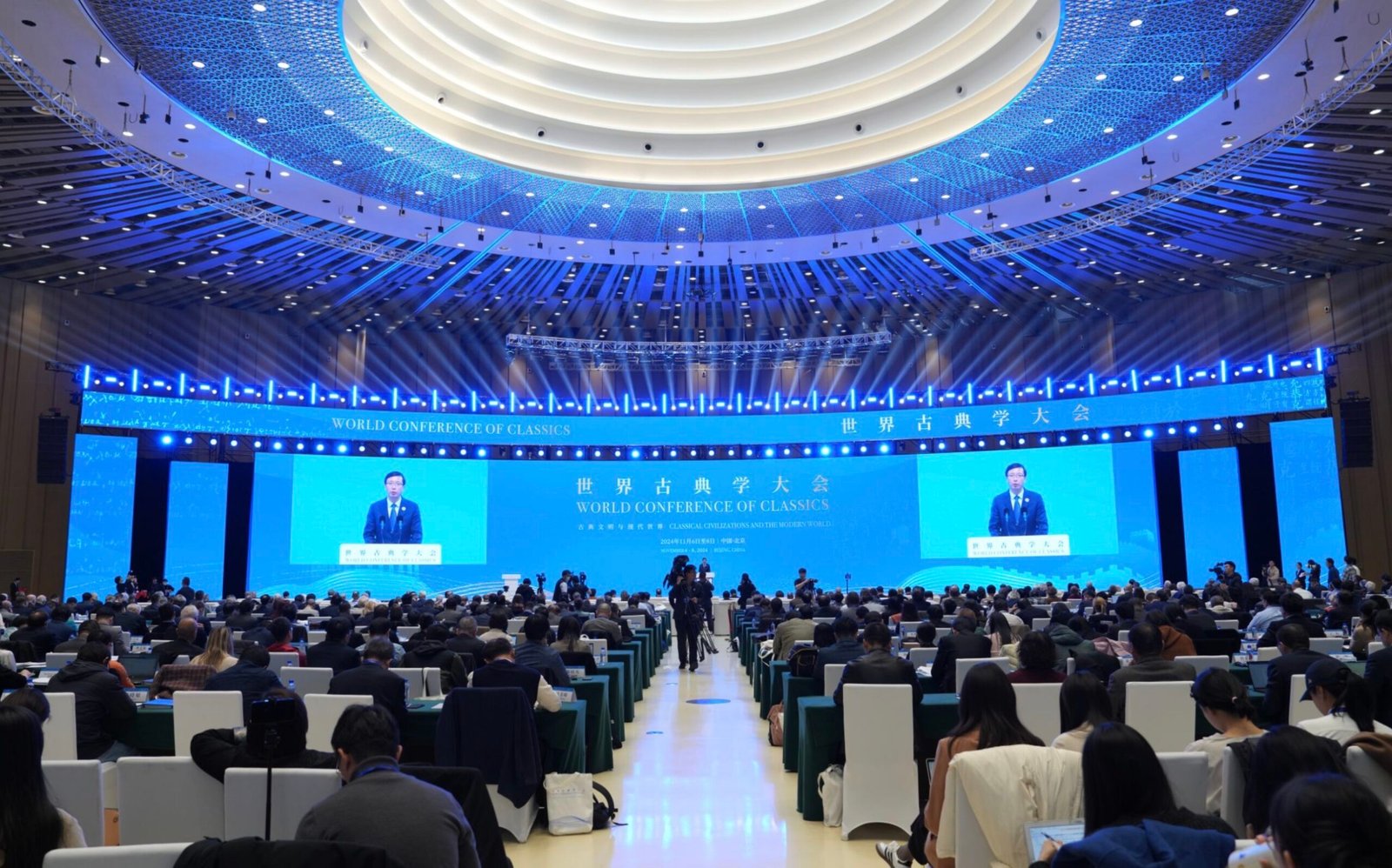
The highlight of this new cultural diplomacy was the 2024 World Conference of Classics, held at the Yanqi Lake international convention center near Beijing. Western attendees called it the most extravagant academic event they had ever experienced. The gathering featured shiny marble floors and sparkling translation booths. The keynote speaker was not an academic but China’s chief of propaganda, Li Shulei. When propaganda ministers start quoting Plato, the classics have clearly entered a new global phase.
While “The New Yorker” focused on the spectacle, Chinese state media provided the ideological direction. Their reports stated that “The meeting required adherence to the correct political direction in classical studies, maintaining theoretical clarity and unwavering resolve at all times, and building a foundational theoretical system for classical studies guided by Xi Jinping Thought on Culture. The entire academy must mobilize its strength to successfully run the Chinese Institute of Classical Civilization, while also strengthening Party building, team building, discipline building, and infrastructure development. It is essential to improve communication capabilities and accurately grasp General Secretary Xi Jinping’s significant statements, clearly projecting China’s voice on the global stage.” One can imagine Plato being surprised at being included in “team building,” but the Party is never hesitant to expand the canon.
There is also a geopolitical aspect to consider. China has long cultivated Greece as a friendly presence within the European Union. Chinese companies have seized on Greece’s economic troubles to acquire parts of strategic infrastructure, including ports. The Greeks, known for protecting their ancient heritage, are not indifferent to flattery. Praise their philosophers, and they will listen. Criticize them, and they will remember. Beijing understands this well: soft power often starts with a respectful nod to Plato.
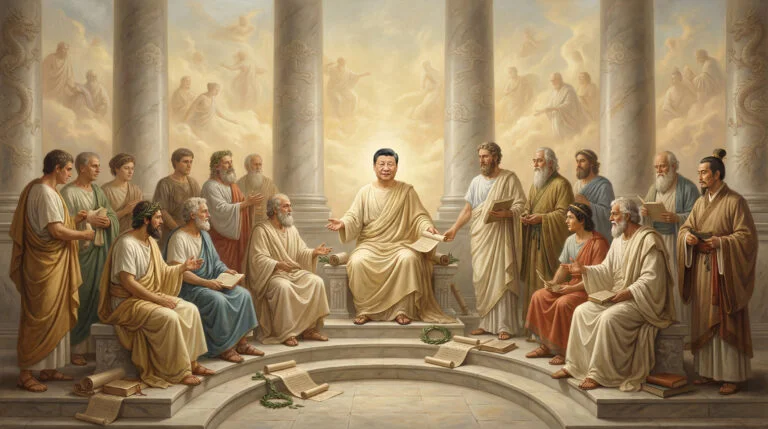
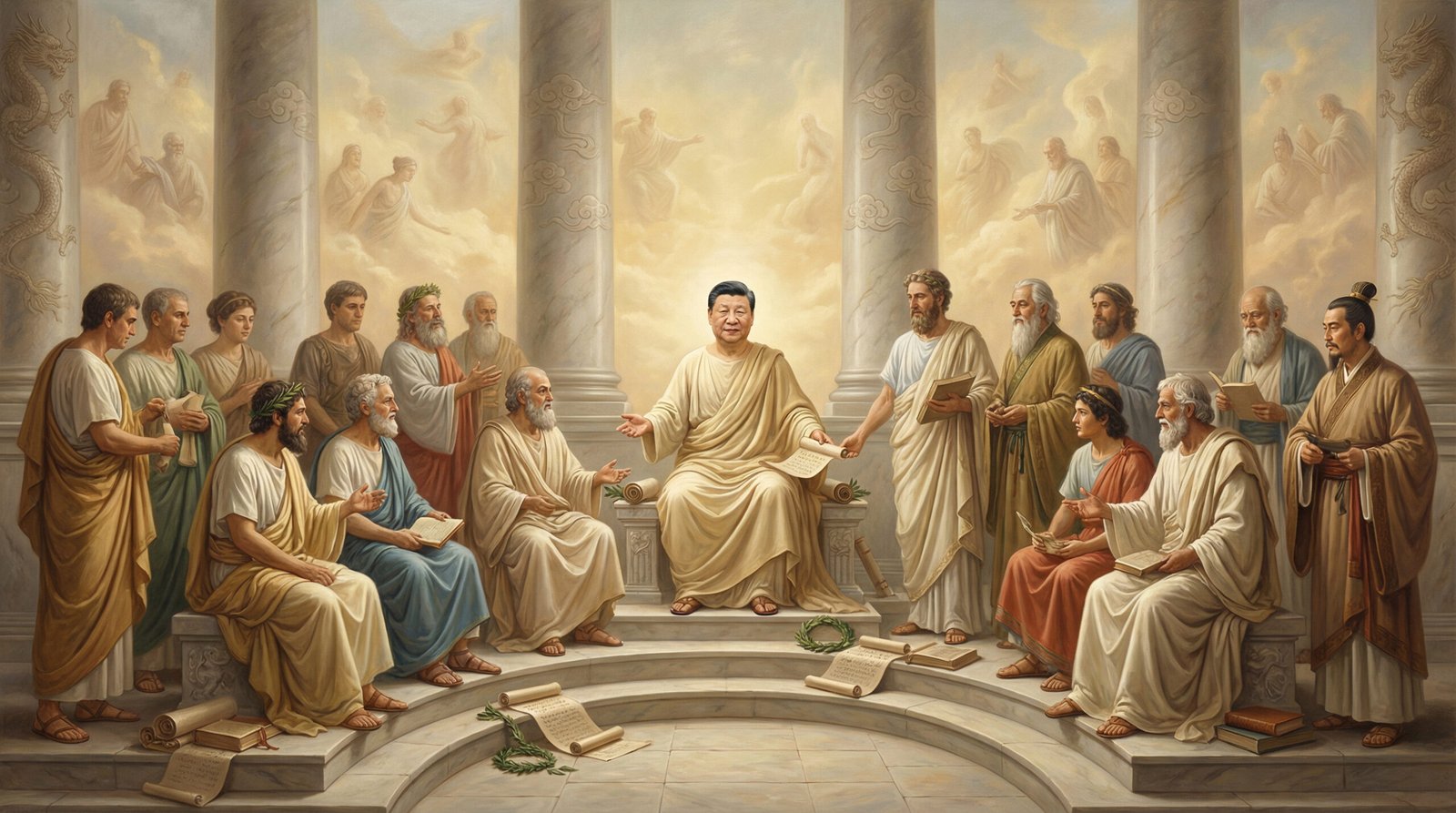
Yet, the deeper reason for China’s classical passion comes directly from Xi Jinping. As “The New Yorker” noted, a letter Xi wrote for the opening of the Center of Greek and Chinese Ancient Civilizations in Athens emphasized a division. “The letter codified the idea that the modern West—defined by liberalism, constitutionalism, and multi-party democracy—could be separated, conceptually, from the ancient West, as represented by Greece and Rome. In China’s civilization-building cause, the former was an ideological adversary; the latter could become an ally.” It is a neat conceptual move: keep the Parthenon, discard the Parliament.
This is central to the point. The same “anti-democratic” elements in Plato that cause certain Western scholars distress are viewed positively by Xi Jinping. The Chinese Communist Party has recognized that the Greek and Latin classics can be used as tools—not against Persia or Carthage, but against “liberalism, constitutionalism, and multi-party democracy.” Meanwhile, the West’s own retreat from classical education allows China to present itself, confidently, as “the main protector of the Western classics.”
The Chinese often joke that they now produce “Italian” handbags and “German” cars better than the Italians and Germans themselves. The next claim might be that they teach Greek and Latin better than the universities that once regarded these subjects as their legacy. However, like the handbags and cars, the Chinese approach carries a quiet but clear label: a political agenda sewn firmly into the fabric.

Massimo Introvigne (born June 14, 1955 in Rome) is an Italian sociologist of religions. He is the founder and managing director of the Center for Studies on New Religions (CESNUR), an international network of scholars who study new religious movements. Introvigne is the author of some 70 books and more than 100 articles in the field of sociology of religion. He was the main author of the Enciclopedia delle religioni in Italia (Encyclopedia of Religions in Italy). He is a member of the editorial board for the Interdisciplinary Journal of Research on Religion and of the executive board of University of California Press’ Nova Religio. From January 5 to December 31, 2011, he has served as the “Representative on combating racism, xenophobia and discrimination, with a special focus on discrimination against Christians and members of other religions” of the Organization for Security and Co-operation in Europe (OSCE). From 2012 to 2015 he served as chairperson of the Observatory of Religious Liberty, instituted by the Italian Ministry of Foreign Affairs in order to monitor problems of religious liberty on a worldwide scale.