Published on
February 25, 2026

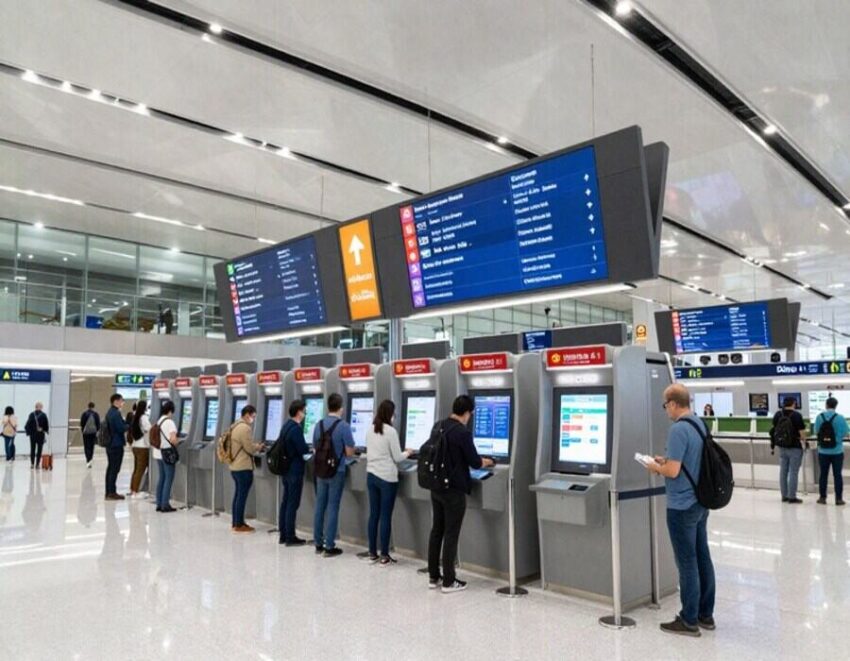
Image generated with Ai
Thailand, alongside Japan, Vietnam, South Korea, Malaysia, Taiwan, and several other countries, is set to experience a significant transformation in travel connectivity with the launch of Hong Kong’s new Terminal 2. This state-of-the-art terminal, opening in May 2026, promises to redefine the passenger experience by offering faster, smarter travel solutions that connect key regional destinations. With cutting-edge technologies, streamlined processes, and an expanded range of services, Terminal 2 will serve as a pivotal hub, enhancing efficiency and comfort for travelers across Asia and beyond. This new gateway will ensure seamless journeys, making Hong Kong International Airport a true global leader in aviation.
Hong Kong International Airport (HKIA) is on the cusp of a major milestone with the anticipated opening of Terminal 2 (T2) on May 27, 2026. This development marks a key step in the expansion of the airport, as it ushers in a new era of enhanced passenger experiences and infrastructure improvements. Fred Lam, Chairman of the Airport Authority, made this announcement during the Lunar New Year festivities, while Mable Chan, the Secretary for Transport and Logistics, confirmed that the Three-Runway System (3RS) would also become fully operational by that date, strengthening HKIA’s capabilities and offering more efficient service to both passengers and cargo.
Enhanced Departure Facilities at Terminal 2
Terminal 2 will primarily serve short-haul and regional flights, aiming to streamline operations and provide a seamless experience for travelers. Featuring modernized check-in counters, self-check-in kiosks, and baggage drop stations, the terminal is designed to enhance efficiency while also adopting cutting-edge smart technologies. These advancements will help expedite the check-in process, allowing passengers to enjoy a more convenient and faster start to their journey.
The new terminal will host various airlines that focus on regional connectivity, including Hong Kong Airlines, HK Express, and Greater Bay Airlines. These carriers, along with other regional routes in Southeast Asia, will operate out of Terminal 2, ensuring smoother traffic distribution between terminals. Long-haul and full-service flights will continue to operate from the already established Terminal 1. This division will contribute to balancing the passenger flow while maintaining the high standard of service that travelers expect.
Smart Technologies to Optimize Passenger Experience
Passengers traveling through Terminal 2 will benefit from the integration of advanced technologies. From automated check-in kiosks to digital baggage handling systems, the airport is working to ensure the passenger journey is as efficient and pleasant as possible. This investment in technology is part of Hong Kong’s broader commitment to maintaining its position as a global aviation leader.
In addition to these features, the terminal’s design focuses on providing a modern and aesthetically pleasing atmosphere. With expansive, open spaces, natural lighting, and intuitive wayfinding systems, Terminal 2 is expected to set a new benchmark in airport design.
Advertisement
Advertisement
Future Expansion and Capacity
By the end of 2026, the goal is for Terminal 2 to handle up to 15 million passengers annually. This is just the beginning, as the terminal’s capacity can be expanded as demand increases. The full airside concourse, which will include dedicated gates, is set to open in 2027, further enhancing the terminal’s ability to accommodate growing passenger numbers.
The terminal will be easily accessible via the Airport Express, where passengers will be able to use the same platform as Terminal 1. Additionally, the new terminal will be connected to various transportation options such as buses, taxis, private cars, and coaches. Clear signage will guide passengers to and from the expanded landside zone, making it easier to navigate between the two terminals.
The 11 Skies Retail and Entertainment Complex
In addition to its role as a transit hub, Terminal 2 will feature the vibrant 11 Skies retail and entertainment complex, transforming it into a destination in its own right. This new addition is expected to offer a broad range of shopping, dining, and entertainment options, providing passengers with a diverse array of experiences during their time at the airport.
11 Skies is expected to elevate the retail experience to new heights, with high-end luxury stores, international brands, and local specialties. Dining options will also cater to a variety of tastes, from quick bites to fine dining, offering travelers the opportunity to relax and recharge before their flight.
Supporting Hong Kong’s Role in the Greater Bay Area
The expansion of Terminal 2 is part of Hong Kong’s ongoing efforts to strengthen its position within the Greater Bay Area and solidify its role as a key player in the global aviation and logistics industry. With over 220 destinations served by 140 airlines, HKIA continues to be one of the busiest and most important airports in the world. In 2025, passenger traffic is expected to rise by 15%, reaching a total of 61 million, while cargo throughput will exceed 5 million tonnes. These figures underscore Hong Kong’s strategic significance as an international aviation hub.
The redevelopment is also part of a broader HKD 141.5 billion, three-runway expansion project. This decade-long modernization effort aims to expand HKIA’s infrastructure and ensure the airport remains equipped to meet the demands of an increasingly globalized and interconnected world.
What Passengers Should Know
As Terminal 2’s opening date approaches, passengers are encouraged to stay updated on the latest announcements from airlines regarding the relocation of check-in counters. The terminal’s upgraded facilities will make travel more convenient and streamlined, but passengers should be aware of any adjustments or new procedures that may apply to their airline or flight.
For travelers making their way through Hong Kong International Airport in the near future, here’s a quick overview of what will be available at Terminal 2:
- Domestic and Regional Airlines:
- Hong Kong Airlines
- HK Express
- Greater Bay Airlines
- Top Destinations Served:
- Southeast Asia (Including Thailand, Vietnam, Malaysia, Philippines)
- Japan
- South Korea
- Taiwan
- Mainland China
- Global Connectivity:
- Access to over 220 destinations via 140 airlines, solidifying Hong Kong as a top aviation hub.
Thailand, Japan, Vietnam, South Korea, Malaysia, Taiwan, and others will experience a major boost in travel connectivity with Hong Kong’s groundbreaking Terminal 2. Set to open in May 2026, the terminal promises faster, smarter travel with cutting-edge technologies and seamless journeys for regional passengers.
The opening of Terminal 2 at Hong Kong International Airport represents a significant step forward in the airport’s ongoing modernization efforts. With state-of-the-art facilities, smart technologies, and an expanded retail and entertainment offering, T2 will cater to both the growing number of passengers and the evolving needs of the aviation industry. By 2026, passengers will experience a seamless, efficient, and enjoyable travel experience as they pass through one of the world’s most modern airports.
This expansion is crucial not only for maintaining Hong Kong’s status as a leading global aviation and logistics hub but also for supporting the development of the Greater Bay Area, ensuring that the airport remains at the forefront of international connectivity and economic growth. With T2’s opening, HKIA is set to enter a new era of air travel and passenger service.