[The content of this article has been produced by our advertising partner.]
The Mid-Levels occupies a distinctive position on Hong Kong Island. Set immediately above Central, the enviable location allows residents to live at the heart of Asia’s financial centre while retaining daily access to established green space – a combination that has long been regarded as a privilege.
For many newcomers to Hong Kong, expatriates and internationally mobile professionals alike, residence in this part of the city is compelling. Workplaces are easily reached on foot; beaches and hiking trails are also close at hand. This proximity between work, nature and recreation defines the neighbourhood as a prime residential district valued for access, discretion and long-term appeal.
It is within this spatial logic that Central Residence by the Park is located. Adjoining the Hong Kong Zoological and Botanical Gardens and Hong Kong Park, the development occupies a site awash with long-protected greenery. Selected residences benefit from picturesque views taking in mature trees and established parkland, a feature rarely associated with Central addresses, and one that changes daily living in practical ways.
The surrounding area reflects Central’s institutional character, with Government House nearby and tree-lined residential streets that have formed part of the district’s upper-tier housing stock for decades. Central Station is within easy walking distance, providing direct access to the city’s transport network and business districts without reliance on private vehicles.
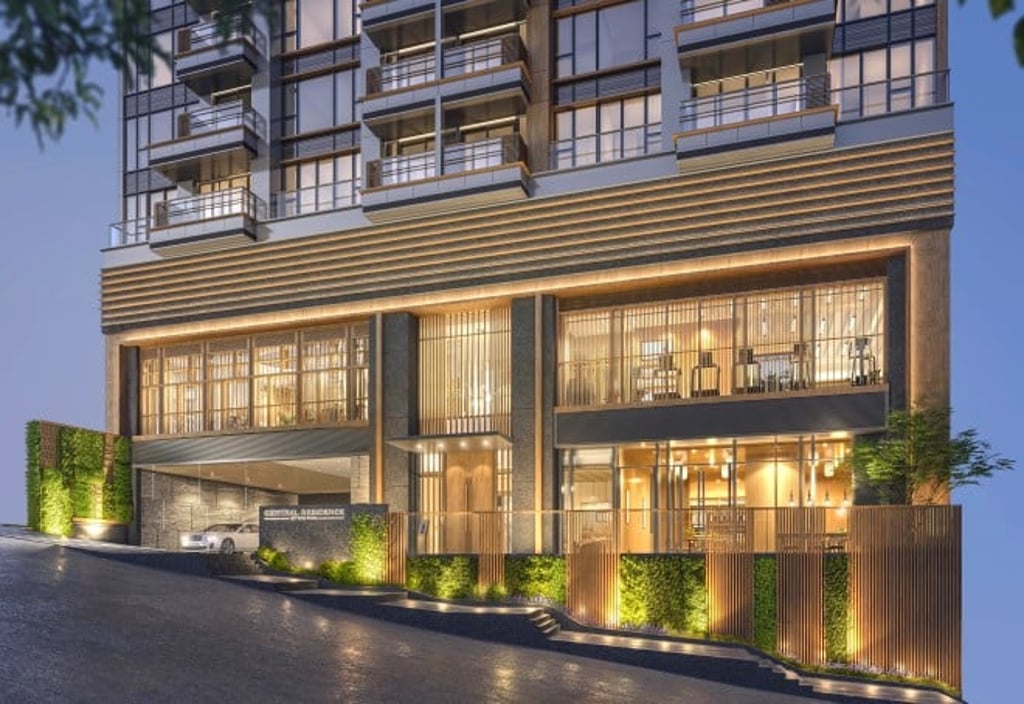
It is against this backdrop of proximity and institutional weight that the design approach of Central Residence by the Park can be read. The project adopts a subtle architectural language, informed by Japanese practice, that responds carefully to its immediate surroundings.
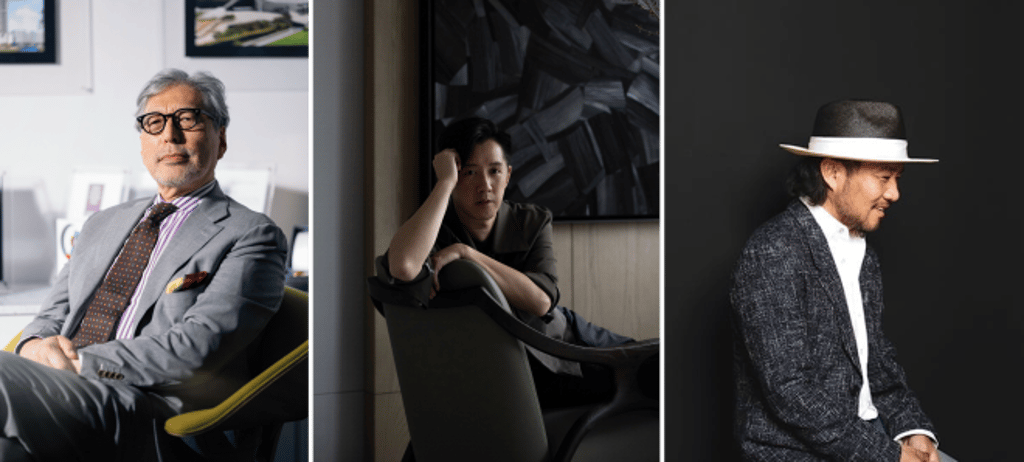
The project was led by Tange Associates under Paul Kenkō Tange, whose work draws from a lineage associated with Japanese modernism. A grand covered car drop-off area provides residents with a welcoming gesture of prestige, comfort and ease while protecting them from rain or strong sunlight. The two-storey car park accommodates 39 parking spaces, a provision that is highly sought-after in the Mid-Levels area.
The project façade is organised around the concepts of “Shima”, meaning stripes, and “Koushi”, referring to latticework. These ideas are interpreted through repetition and depth, producing a surface that responds to light and shadow across the day. Visual interest is generated through proportion and layering, avoiding overt display.
An in-town private club
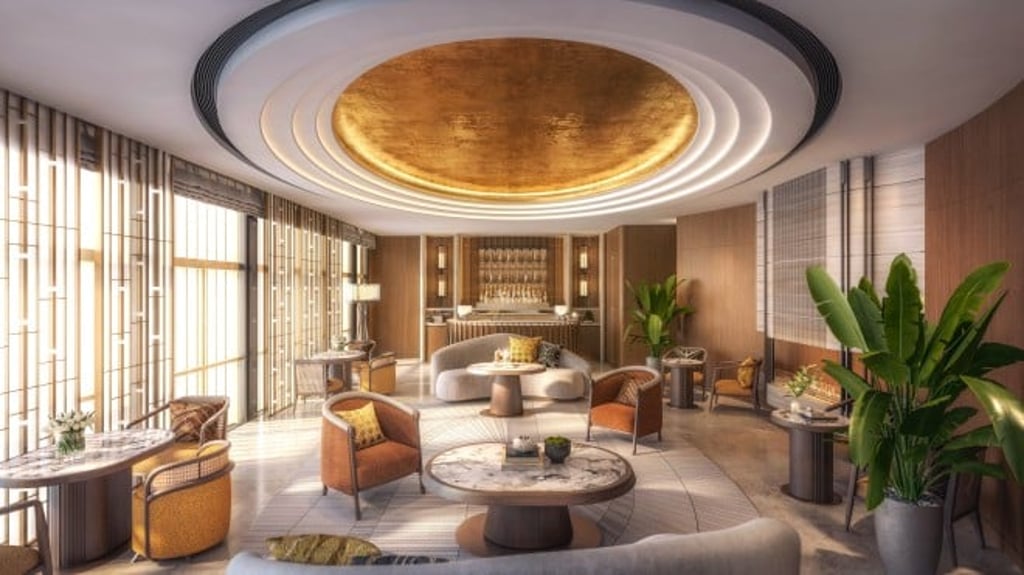
Interior design for the residents’ clubhouse, Club Central, was undertaken by André Fu Studio. While Fu is best known for hospitality projects, his design language here has been applied to shared residential facilities intended for frequent use.
Club Central is designed as an in-town private club for the development’s 99 residences. Facilities include a lounge, dining room and 24-hour gym. Materials have been selected for texture and comfort, with fabrics, timber tones and controlled lighting used to moderate scale. Washi paper appears as a reference to Japanese craft, contributing surface richness without visual excess.
Gardens as built extension
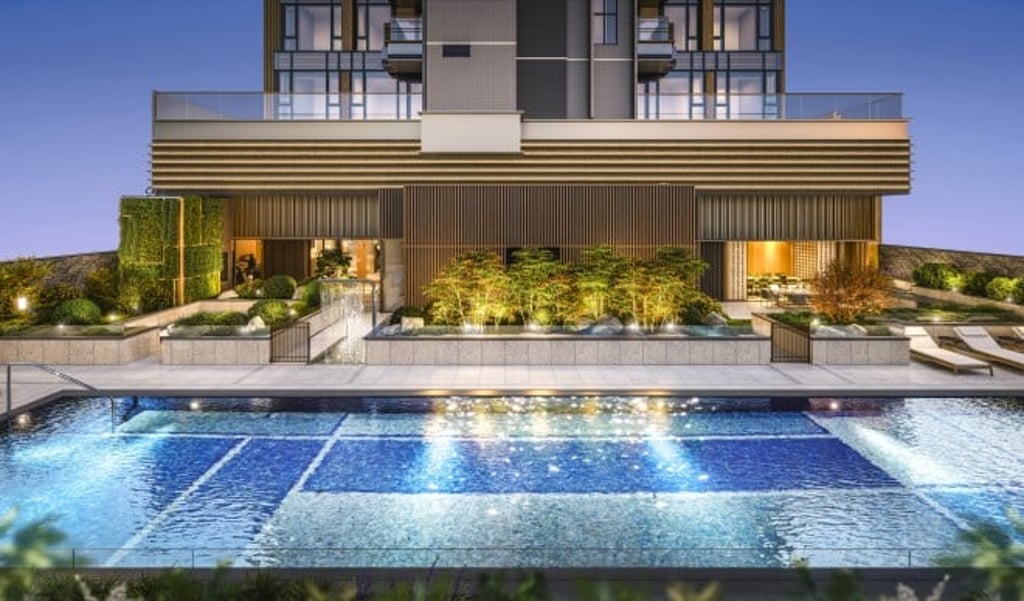
External spaces were designed by 1moku Landscape Design Studio, led by Hirofumi Suga. The work is guided by the Japanese principle of Teioku Ichinyo, which treats architecture and gardens as a unified composition.
Planting, water features and circulation routes are arranged to complement the building envelope, allowing outdoor areas to function as extensions of interior space. The gardens are structured as a sequence of smaller zones, encouraging movement and pause.
Neighbourhood by accumulation
The experience of living in the Mid-Levels is not defined solely by what is contained in a single development. Much of its appeal lies in the accumulation of amenities across the surrounding neighbourhood.
Supermarkets, neighbourhood restaurants, cafés and fitness studios are spread across Robinson Road, Kennedy Road and adjacent streets, many serving residents who have remained in the area for years. Dining options range from casual local establishments to internationally recognised venues. Cultural facilities in Central, including galleries, performance spaces and heritage buildings, are within easy walking distance or just a short ride away.
Green space is a defining feature of this neighbourhood. The Hong Kong Zoological and Botanical Gardens, established in the 19th century, provide walking paths, shaded seating areas and curated plant collections. Hong Kong Park offers lawns, water features and aviaries, creating recreational space in a dense urban environment.
Walking routes such as Bowen Road add to these options, allowing the Mid-Levels to connect with higher elevations and open views across the harbour. From this part of Hong Kong Island, weekend excursions to scenic hiking trails such as the Peak Circle Walk and Morning Trail are easily arranged, while beaches including Repulse Bay, Deep Water Bay and Shek O are also within a short journey.
Residential continuity
The Mid-levels as a prime residential location has traditionally attracted international professionals, established families and long-term Hong Kong residents. Turnover tends to be lower than in newer districts, and many households remain in the area across different life stages. This continuity has helped sustain local services and community networks.
Education also contributes to long-term appeal. A number of sought-after international and local schools are located nearby, including St Paul’s Co-educational College, Island School, German Swiss International School and Ying Wa Girls’ School.
Central Residence by the Park is grounded in conditions that have long informed residential life in Mid-Levels Central. Its setting, design approach and provision align with a fabric of urban living valued for continuity, access and discretion.